Top Aerospace Steel Types for Industry Applications and Innovations?
Aerospace Steel plays a critical role in the aviation and space industries. The demand for high-performance materials continues to grow. Engineers seek innovative solutions to enhance safety, performance, and efficiency. Various types of aerospace steel are designed for specific applications.
These steel types exhibit unique properties. Some offer high strength, while others provide excellent corrosion resistance. Each application presents its own challenges. Understanding these properties is essential for the industry. However, the versatility of aerospace steel can sometimes lead to confusion in material selection.
Many companies strive to adopt the latest innovations. They might overlook some traditional solutions. An effective balance between new technologies and established materials is often necessary. As the aerospace landscape evolves, so too must our understanding of aerospace steel and its applications.
Overview of Aerospace Steel and Its Importance in the Industry
Aerospace steel plays a crucial role in the industry, offering strength and durability essential for aircraft and spacecraft. According to a report by MarketsandMarkets, the global aerospace steel market is projected to reach $20 billion by 2025. This growth reflects the increasing need for high-performance materials in aviation.
Steel types like stainless and tool steel are vital. Stainless steel provides excellent corrosion resistance. It is invaluable in harsh environments. Tool steel, on the other hand, offers high wear resistance, making it suitable for critical load-bearing components. Some experts argue that the steel selection process often lacks depth. There is potential for errors in material choice, impacting safety and performance.
Moreover, innovations in alloy compositions are noteworthy. New steel grades are engineered for lower weight and enhanced strength. However, challenges remain. For instance, the manufacturing processes may not keep pace with evolving material requirements. This gap can lead to suboptimal performance in aerospace applications, urging a re-evaluation of standards and practices.
Top Aerospace Steel Types for Industry Applications
This chart illustrates the different types of aerospace steel utilized in the industry, alongside their density and tensile strength, showcasing their relevance and importance in aerospace applications.
Common Types of Steel Used in Aerospace Applications
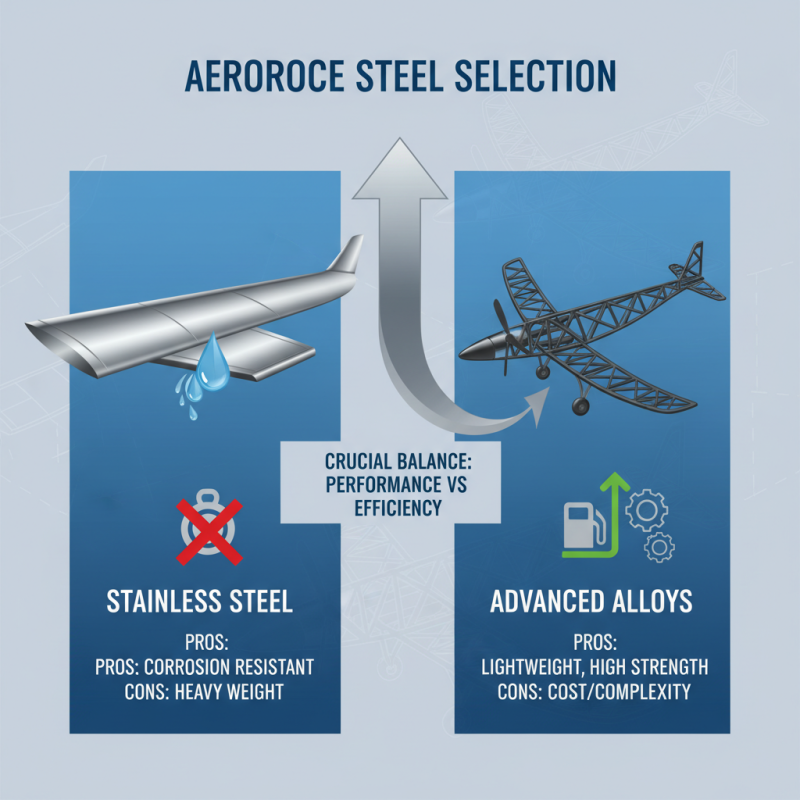
In aerospace applications, selecting the right type of steel is crucial. Different steel types offer unique advantages. Stainless steel is common due to its excellent corrosion resistance. It withstands harsh environments, making it ideal for aircraft components. However, it can be heavy, which is a concern for fuel efficiency.
Another popular choice is titanium alloy steel. This material is known for its high strength-to-weight ratio. It allows for lighter designs without compromising durability. However, it can be more expensive and harder to work with. This might lead to increased manufacturing challenges.
Carbon steel is also utilized in aerospace. It is not as resistant to corrosion as stainless steel but is more affordable. It is often used in less exposed parts. The choice of steel often comes down to balancing cost, weight, and performance. Each option has its own drawbacks and requires careful consideration.
Innovative Developments in Aerospace Steel Technology
Innovative developments in aerospace steel technology are transforming the industry. Lightweight materials are essential for increasing fuel efficiency. Advanced high-strength steels (AHSS) now play a crucial role. These materials enhance performance while reducing weight significantly.
Recent research focused on alloy compositions reveals promising results. Innovative processes improve steel toughness and ductility. This ensures better performance in extreme conditions. Manufacturers are exploring hybrid steel technologies to achieve superior results. The integration of titanium and aluminum with steel is becoming common.
However, challenges persist. Production costs for advanced materials can be high. The need for recycling and sustainability adds complexity. Engineers must ensure that new solutions meet safety standards. Balancing innovation and practicality is not simple. Industry players must collaborate to address these hurdles effectively.
Factors Influencing the Selection of Aerospace Steel Types
When selecting aerospace steel types, several factors come into play. The primary consideration is strength. Aerospace applications require materials that can withstand extreme conditions. Steel must resist high pressures and temperatures. This need often leads to the choice of alloys that offer improved performance.
Another factor is weight. Aerospace components should be as lightweight as possible. This often conflicts with the need for strength. Engineers face the challenge of finding the right balance. Sometimes, lighter materials, such as titanium, are favored despite higher costs. Steel, however, remains preferred for its cost-effectiveness and durability.
Corrosion resistance also influences material choice. Aerospace components are exposed to harsh environments. Steel types must resist rust and oxidation. Surface treatments can enhance this property. However, they may add complexity to manufacturing. The desire for improved performance often leads to trade-offs. Decisions may not always result in the most optimal solutions. Balancing these factors remains a critical challenge for engineers in the aerospace industry.
Top Aerospace Steel Types for Industry Applications and Innovations
| Steel Type |
Density (g/cm³) |
Yield Strength (MPa) |
Tensile Strength (MPa) |
Corrosion Resistance |
| 4130 Steel |
7.85 |
460 |
580 |
Moderate |
| AISI 321 |
7.98 |
500 |
700 |
High |
| Inconel 718 |
8.19 |
930 |
1,260 |
Very High |
| AISI 304 |
7.93 |
215 |
505 |
High |
| AISI 316 |
7.98 |
290 |
580 |
Very High |
Future Trends in Aerospace Steel for Advanced Applications
The aerospace industry is evolving rapidly. New steel types are emerging to meet complex demands. Innovations are driving improvements in strength, weight, and durability. Lightweight steel alloys are becoming increasingly popular. They provide essential properties without adding unnecessary weight to aircraft.
Future trends show a focus on sustainability. Recycled steel is gaining traction. This approach reduces waste and minimizes environmental impact. Advanced manufacturing techniques, like 3D printing, are reshaping steel production. These methods allow for intricate designs and precise specifications. However, challenges remain in mass production and consistency.
Research is ongoing to enhance the thermal resistance of aerospace steel. Improved heat resistance can lead to better performance in extreme conditions. There’s a need for more data on long-term fatigue performance in real-world settings. Engineers must address these gaps to ensure reliability and safety. The ongoing quest for innovation must balance efficiency with sustainability and safety.