Top Alloy Steel Bar Applications and Benefits for Industries Today?
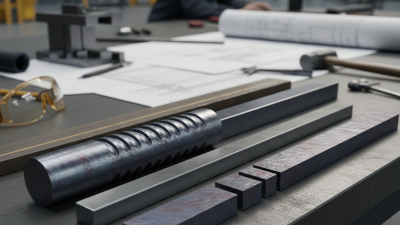
Alloy steel bars are essential materials across various industries. Their unique properties provide significant advantages. These bars are known for their strength and durability. Industries depend on alloy steel bars in numerous applications.
One major benefit of alloy steel bars is their versatility. They can be tailored to meet specific needs. This adaptability makes them ideal for construction and manufacturing. In automotive applications, they improve vehicle performance. Furthermore, alloy steel bars resist wear and corrosion, enhancing their lifespan.
However, not all alloy steel bars are created equal. The selection of the right type requires careful consideration. Factors such as composition and processing can affect performance. Industries must assess their requirements thoroughly. The right choice can lead to increased efficiency and reduced costs. Overall, understanding alloy steel bars' applications is crucial for modern industries.
Top Alloy Steel Bar Applications in Modern Industries
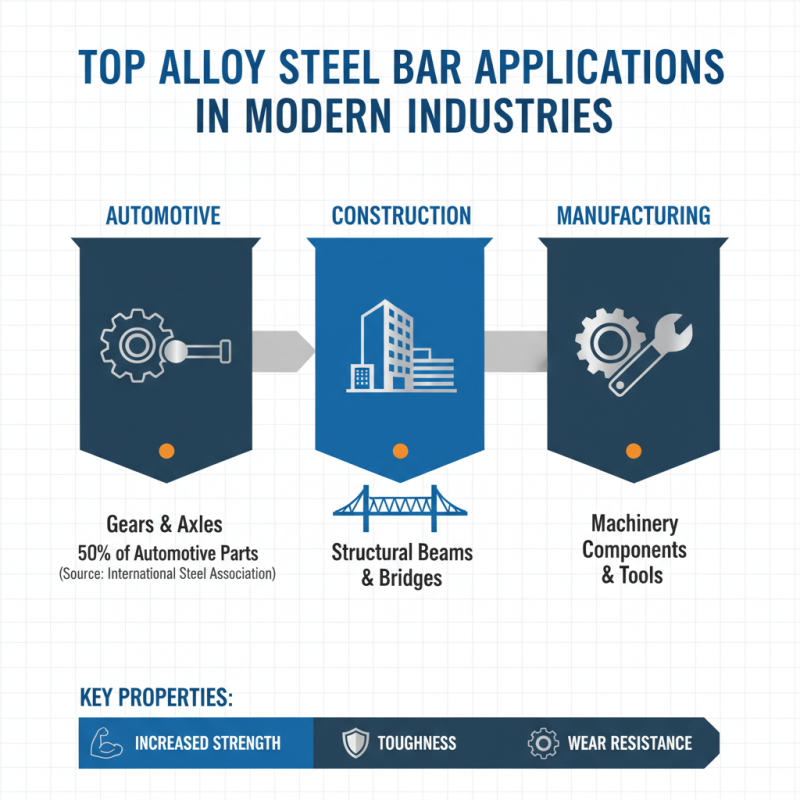
Alloy steel bars are crucial in various industries due to their exceptional properties. These steel bars offer increased strength, toughness, and wear resistance. They find applications in the automotive, construction, and manufacturing sectors. The automotive industry, for instance, heavily utilizes alloy steel bars for producing gears and axles. According to the International Steel Association, around 50% of all automotive parts are made with high-strength alloy steels.
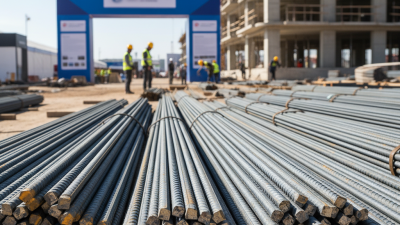
The construction industry also benefits greatly from alloy steel bars. These materials provide structural integrity in buildings, bridges, and pipelines. A recent report indicated that the demand for alloy steel in construction is expected to grow by 5% annually, driven by infrastructure development. The versatility of these bars makes them suitable for a wide range of applications.
**Tips**: When selecting alloy steel bars, consider their composition. The right mix of elements enhances performance. Always consult with a metallurgical expert for specific applications. Also, remember that proper surface treatment can significantly improve corrosion resistance. Not all applications are the same, and sometimes trial and error is necessary to find the best fit.
Key Benefits of Alloy Steel Bars for Manufacturing Processes
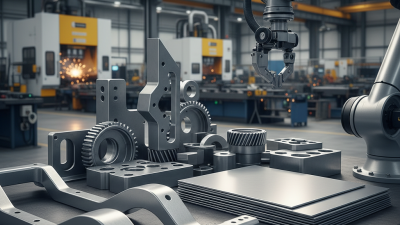
Alloy steel bars are crucial in today's manufacturing landscape. They offer a combination of strength and durability that is hard to match. These bars are made from a mixture of iron and various other elements, resulting in enhanced properties compared to standard steel. Industries like automotive, aerospace, and construction heavily rely on them.
One prominent benefit of alloy steel bars is their high tensile strength. This allows manufacturers to create components that can withstand heavy loads and stress. These bars also exhibit good wear resistance, particularly valuable in applications like machinery parts. However, not all alloy steel compositions perform equally. Selecting the right alloy is critical and often requires careful analysis.
Another advantage is corrosion resistance. Many alloy steels are designed to resist rust and degradation, leading to longer-lasting products. Yet, the cost can be higher compared to regular steel. Companies must evaluate their budget versus the benefits. There is a trade-off between initial investment and long-term performance. Understanding these elements is essential for making informed decisions in manufacturing processes.
Comparative Analysis of Alloy Steel Bars vs. Other Materials
Alloy steel bars have gained significant traction in various industries. Their unique composition provides enhanced strength and durability. In sectors like construction and automotive manufacturing, these bars are preferred for their ability to withstand heavy loads.
When comparing alloy steel bars to other materials, the differences become evident. For example, while carbon steel might be cheaper, its strength and tension resistance fall short. On the other hand, stainless steel resists corrosion better but is often cost-prohibitive for some applications. Alloy steel, in contrast, strikes a balance. It offers good hardness, tensile strength, and resistance to wear, making it a versatile choice.
However, selecting the right material can be challenging. Industries may overlook the specific needs of their projects when making material choices. Understanding the properties and applications of alloy steel is vital. It ensures that manufacturers can leverage its full potential while avoiding costs associated with material failure. In such cases, an informed decision can significantly influence project outcomes.
Top Alloy Steel Bar Applications and Benefits for Industries Today
| Application |
Industry |
Benefits of Alloy Steel Bars |
Comparison with Other Materials |
| Construction |
Building and Infrastructure |
High strength, durability, and corrosion resistance |
More durable than traditional steel |
| Automotive |
Vehicle Manufacturing |
Lightweight, improved mechanical properties |
Outperforms aluminum in strength-to-weight ratio |
| Aerospace |
Aircraft Manufacturing |
High fatigue resistance and temperature stability |
Superior to titanium in certain applications |
| Oil and Gas |
Energy Sector |
Resistance to extreme conditions and shock loading |
More reliable than conventional materials in harsh environments |
| Manufacturing |
Machinery Production |
Versatile, easy to fabricate, and good wear resistance |
Inferior wear resistance compared to high-performance plastics |
Sustainability and Recycling of Alloy Steel Bars in Production
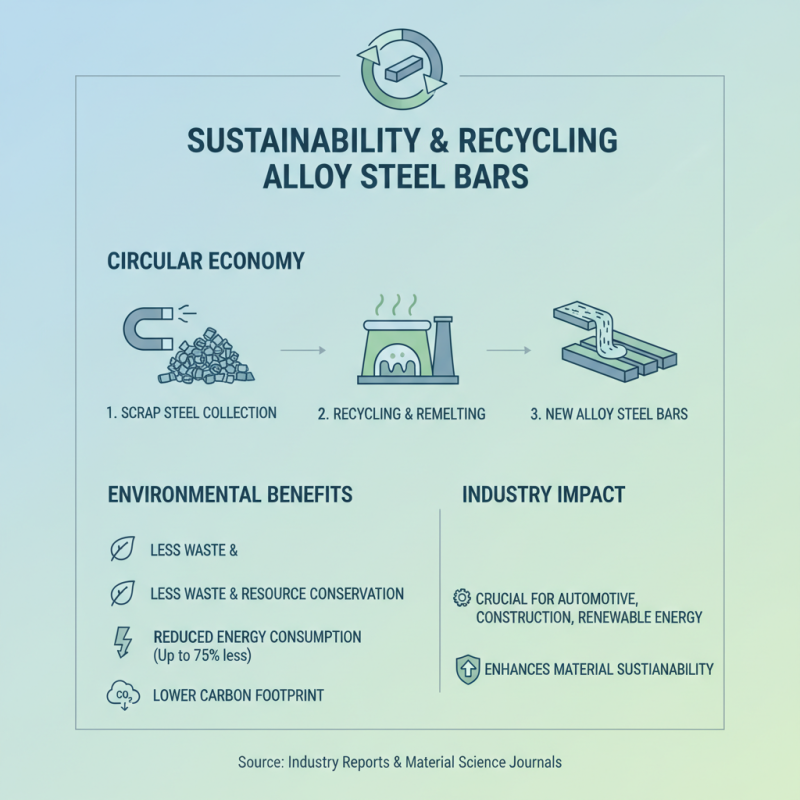
Alloy steel bars play a significant role in various industries, particularly considering their sustainability. The production of these bars involves recycling scrap steel, which reduces waste and conserves natural resources. This process uses less energy compared to creating steel from raw materials. Additionally, recycled material has a lower carbon footprint.
However, the recycling process is not without challenges. The quality of recycled steel can vary, affecting its mechanical properties. Ensuring consistency is vital for industrial applications. Industries must invest in advanced sorting and refining technologies. Sustainable practices should be balanced with performance needs.
Utilizing alloy steel bars also promotes a closed-loop system in manufacturing. This approach supports a circular economy model. It encourages companies to view waste as a resource. Still, many organizations struggle to adopt these practices fully. Resistance to change and knowledge gaps pose hurdles. Addressing these challenges is essential for achieving true sustainability in alloy steel bar production.
Future Trends in Alloy Steel Bar Usage Across Various Sectors
The trend of alloy steel bar usage is evolving rapidly across various industries. Innovative applications are emerging in sectors such as aerospace, automotive, and construction. Alloy steel bars are favored for their strength, durability, and resistance to wear and corrosion. As industries seek more sustainable materials, alloy steel bars demonstrate an excellent balance between performance and eco-friendliness.
Tips: Consider the specific alloy composition when selecting steel bars. Different alloys offer varied properties, impacting their suitability for specific applications.
In the automotive sector, lightweight and high-strength bars are gaining traction. Manufacturers aim to enhance fuel efficiency while maintaining safety standards. The push for electric vehicles also drives the need for advanced materials. Aerospace industries are focused on alloy bars that withstand extreme conditions. Engineers must constantly refine their choices.
Tips: Regularly assess the properties of alloy steel bars based on new developments. Staying informed can lead to better material selection and improved project outcomes.
The construction industry trends toward prefabricated components made from alloy steel. This shift is driven by the need for quicker assembly and increased strength. As sustainability regulations tighten, industries must adapt and innovate. Relying solely on traditional methods may not always be viable. Exploring novel applications could ensure competitiveness and compliance with future standards.
Top Alloy Steel Bar Applications and Benefits
This chart illustrates the usage rates of alloy steel bars across various industries. Automotive applications lead in usage rate, followed by construction and aerospace. These materials are favored for their strength and versatility, vital in modern engineering applications.