What is Alloy Steel Tools and Their Applications in Various Industries?
Alloy Steel Tools play a crucial role in various industries, combining strength and durability. These tools are made from a mix of iron and other elements, enhancing their properties. Industries such as automotive, aerospace, and construction rely heavily on these tools for their unique capabilities.
In the automotive sector, Alloy Steel Tools are essential for manufacturing precision parts. Their resistance to wear and tear makes them ideal for high-performance vehicles. Similarly, in aerospace, these tools ensure safety and reliability, as they can withstand extreme conditions.
Despite their benefits, challenges exist. Not all Alloy Steel Tools are created equal. Some may not meet specific industry standards, which could lead to failures. Understanding these nuances is essential for businesses aiming to optimize their production processes. An informed choice in tool selection can vastly improve efficiency and reduce costs.
Definition and Composition of Alloy Steel Tools
Alloy steel tools are an essential part of various industries. These tools are made from a mix of iron and other elements. The most common alloying elements include chromium, nickel, and molybdenum. This combination enhances their mechanical properties. Alloy steels offer improved strength, hardness, and wear resistance compared to standard carbon steels.
The composition of alloy steels varies based on their intended application. For example, tools requiring high toughness may contain vanadium. This addition helps prevent chipping and cracking. Similarly, higher chromium content can improve corrosion resistance, making these tools ideal for harsh environments. The performance of alloy steel tools is notable in industries such as automotive, aerospace, and manufacturing.
Despite their advantages, alloy steels can be challenging to work with. They may require specialized heat treatment to achieve desired properties. Poor heat treatment can lead to tool failure. It’s crucial to understand the specific requirements of each alloy steel type. Not all options are suitable for every application, and incorrect use can lead to inefficiencies. Considering these factors is key to maximizing the potential of alloy steel tools.
Properties of Alloy Steel That Enhance Tool Performance
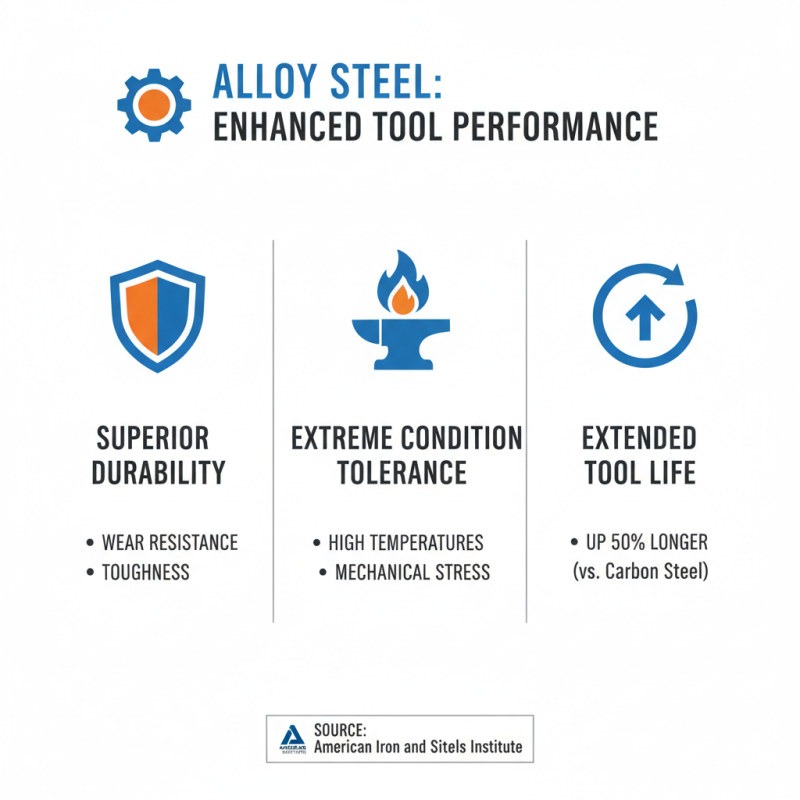
Alloy steel tools are essential in various industries due to their unique properties. The incorporation of elements like chromium, molybdenum, and vanadium enhances wear resistance and toughness. This combination allows tools to withstand extreme stress and high temperatures. For instance, according to a report by the American Iron and Steel Institute, alloy steels can improve tool life by up to 50% compared to standard carbon steels.
The high tensile strength of alloy steel greatly contributes to its performance. It ensures the tools maintain their shape and edge under pressure. Many industries, including automotive and aerospace, benefit from this characteristic. A study by the National Institute of Standards and Technology highlighted that alloy steel tools can reduce production costs significantly while enhancing productivity. However, the cost of alloy steel can be higher than that of regular steels, prompting some businesses to weigh the benefits against their budgets.
Despite these advantages, challenges remain. The manufacturing process of alloy steel tools can lead to inconsistencies in quality if not monitored carefully. Moreover, not every application benefits equally from alloy tools. Certain tasks might still be better served by simpler materials. This complexity illustrates the need for careful selection of materials based on specific tool requirements.
Common Applications of Alloy Steel Tools in Manufacturing Industries
Alloy steel tools are widely used across manufacturing industries for their durability and strength. These tools enhance precision and efficiency in various applications. Common uses include cutting, drilling, and shaping materials. Their superior hardness makes them ideal for processes that require high wear resistance.
In automotive manufacturing, alloy steel tools play a critical role. They are essential for creating components that withstand high pressure and stress. Similarly, in construction, these tools help in shaping structural elements with accuracy. Their application ensures longevity and reliability, crucial for safety standards.
Tips: When selecting alloy steel tools, consider the specific requirements of your projects. Understand the type of steel needed for different tasks. Regular maintenance of tools can extend their lifespan, improving your overall productivity. Balancing cost and performance is vital. Not all jobs require the highest grade of steel; sometimes, a lower grade can suffice while still achieving your goals.
Advantages of Alloy Steel Tools Over Other Tool Materials
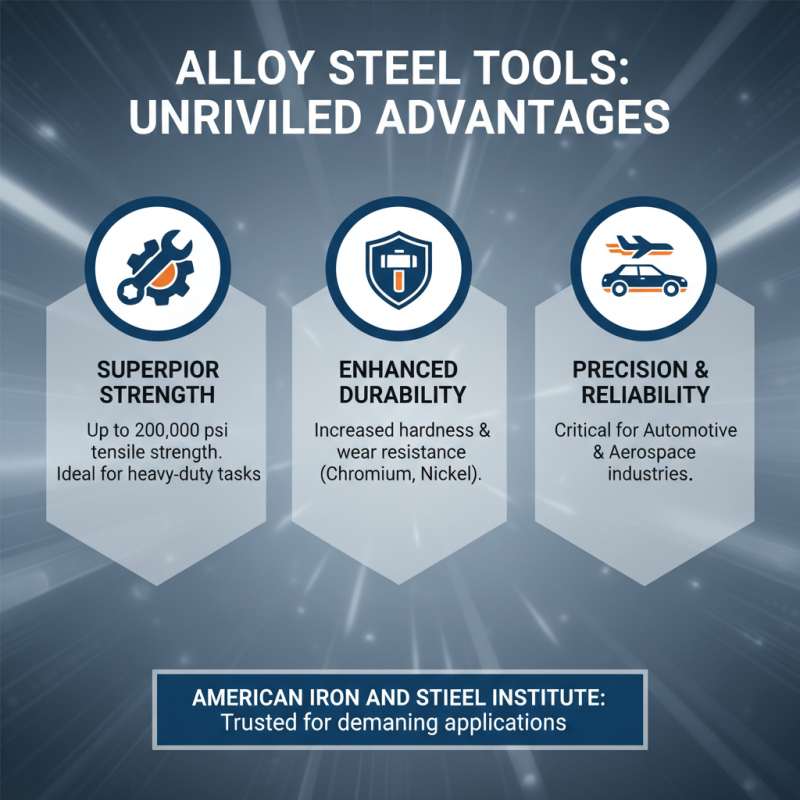
Alloy steel tools stand out due to their enhanced properties. The combination of elements like chromium and nickel results in increased hardness and resistance to wear. According to a report by the American Iron and Steel Institute, alloy steel’s tensile strength can reach up to 200,000 psi, making it ideal for heavy-duty applications. The resilience of these tools is crucial in industries such as automotive and aerospace, where precision and durability are non-negotiable.
One significant advantage of alloy steel tools is their excellent toughness. Unlike standard carbon steel, alloy steels can withstand shock loading. This is vital for machining operations that involve sudden changes in pressure. However, proper heat treatment is necessary for optimal performance, and neglecting this step can compromise tool longevity. The versatility of alloy steel also enables the production of specialized tools tailored for specific tasks. In construction, for example, these tools maintain integrity in demanding conditions, showcasing their essential role.
Alloy steel tools offer a favorable cost-to-performance ratio. Although they may have a higher initial cost than basic materials, their longevity reduces replacement frequency. A study by the Metalworking Technology Institute indicated that using alloy steel tools can improve operational efficiency by up to 25%. Yet, there is a need for ongoing evaluation of tool performance against emerging materials that may challenge their status. Testing and feedback loops are essential for continual improvement in tool applications.
Future Trends in Alloy Steel Tool Development and Usage
The future of alloy steel tools is promising, driven by advancements in materials science. According to a recent market analysis by Industry Research Reports, the global alloy steel market is projected to reach $200 billion by 2026, with a CAGR of 4.5%. This growth is largely attributed to the increasing demand in automotive, aerospace, and manufacturing sectors. Alloy steel tools are favored for their durability and strength, particularly in high-stress applications.
Innovations in alloy compositions are reshaping tool performance. For instance, new heat treatment processes enhance toughness while reducing wear rates. Recent studies from the American Society for Metals indicate that tools made from advanced alloy steels can exhibit a 20% increase in lifespan compared to traditional steels. However, there are challenges. The environmental impact of steel production remains significant. Efficient recycling methods and greener manufacturing practices need to be explored.
The rise of automation in industries might also influence alloy steel tool design. With the integration of smart technologies, tools might soon incorporate sensors for real-time performance tracking. This could lead to more efficient maintenance strategies but requires substantial investment in R&D. The balance between innovation and sustainability will be crucial as industries strive toward a more resilient future.
What is Alloy Steel Tools and Their Applications in Various Industries? - Future Trends in Alloy Steel Tool Development and Usage
| Application Industry |
Types of Alloy Steel Tools |
Key Properties |
Future Trends |
| Manufacturing |
Cutting Tools |
High hardness, wear resistance |
Increased automation, smart tools |
| Construction |
Drilling Equipment |
Toughness, high fatigue strength |
Sustainable materials, eco-friendly practices |
| Automotive |
Stamping Dies |
Ductility, strength, and resistance to deformation |
Lightweight materials, enhanced durability |
| Aerospace |
Machining Tools |
High-temperature resistance, lightweight |
Advanced alloys, increased efficiency |
| Oil and Gas |
Piping and Valves |
Corrosion resistance, strength |
Improved safety features, longevity |