Gangtuo
Integrity, Innovation, And Win-Win
Contact us

Top Alloy Steel Tools for Your 2026 Procurement Needs?

In the fast-evolving landscape of manufacturing, selecting the right tools is crucial. As we approach 2026, the focus on Alloy Steel Tools has intensified. These tools are renowned for their durability and strength. Industries rely heavily on them for heavy-duty applications, and procurement decisions must be strategic.

Alloy Steel Tools offer a balance of performance and cost-effectiveness. However, not all options are created equal. Organizations must assess their specific needs carefully. Quality differs significantly among manufacturers. It’s essential to consider factors like the alloy composition and manufacturing process. Leaning on expert reviews and reliable sources can guide procurement choices.

Adapting to technological advancements is another challenge. As new materials and techniques emerge, staying informed is key. Companies may find themselves overwhelmed by choices. This uncertainty can lead to misaligned investments. Careful consideration and research will help identify the most suitable Alloy Steel Tools for your organization's future.

Top Alloy Steel Tools for Your 2026 Procurement Needs?

Overview of Alloy Steel and Its Advantages in Tool Manufacturing

Top Alloy Steel Tools for Your 2026 Procurement Needs?

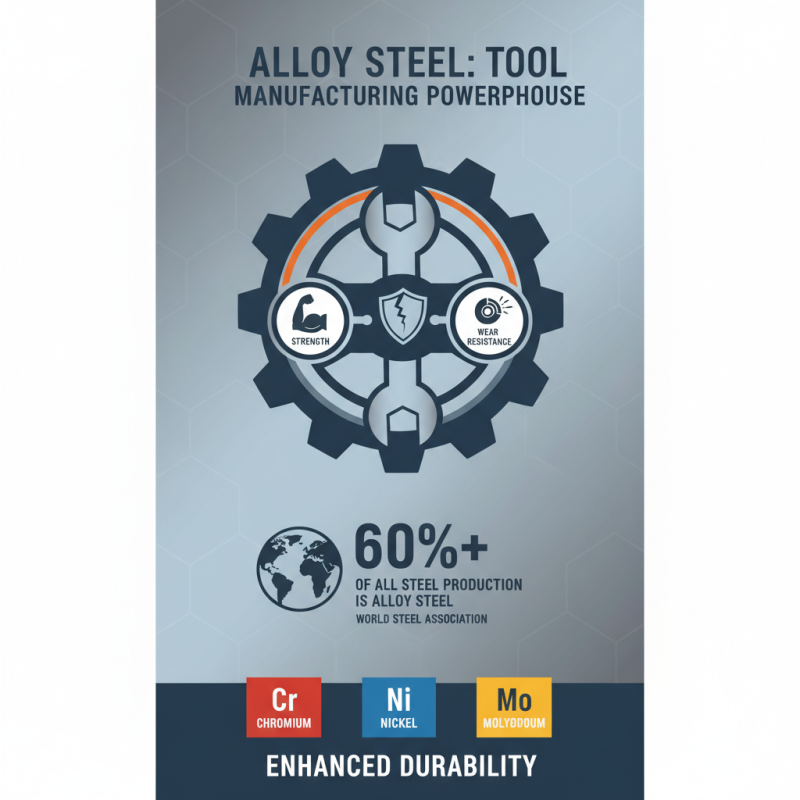
Alloy steel is pivotal in tool manufacturing. It provides a blend of strength, toughness, and wear resistance. According to the World Steel Association, over 60% of all steel production is alloy steel. This category includes various elements to enhance performance. Common additions are chromium, nickel, and molybdenum, which significantly improve tool durability.

The advantages of alloy steel are substantial. Tools made from alloy steel exhibit superior hardness, which allows for extended use without significant wear. A 2022 report from the International Journal of Materials Science noted that tools crafted from alloy steel can last up to 30% longer than those made from carbon steel. The ability to withstand high temperatures also makes alloy steel tools ideal for diverse environments.

Despite its benefits, there are challenges. Production costs for high-grade alloy steel can be higher than conventional materials. Additionally, sourcing raw materials can be inconsistent, leading to supply chain issues. Manufacturers must weigh these factors when considering alloy steel for their tool procurement needs in 2026. Understanding the balance between cost, performance, and durability is crucial for making informed decisions.


Key Properties of Alloy Steel Relevant to Tool Production

Alloy steel is essential for producing durable tools. Its unique properties make it a preferred material. When discussing tool production, hardness is crucial. Many industry reports note that alloy steels can achieve hardness levels of HRC 60 or higher. This leads to tools that can withstand high wear and tear.

Another significant property is toughness. Alloy steels maintain their strength at elevated temperatures. Reports suggest that these steels can resist deformation even under heavy loads. This characteristic is vital in industries like aerospace and automotive, where reliability is paramount. Companies often face the challenge of balancing hardness and toughness in tool design. Finding the right alloy composition can be complex but worthwhile.

Corrosion resistance is also an essential factor. Certain alloy formulations can resist rust and oxidation better than standard carbon steels. However, achieving this can sometimes compromise hardness. Recent studies indicate that hybrid alloys are emerging to address this issue. These alloys aim to offer both wear resistance and toughness. Tool designers must stay informed about these advancements. The evolving landscape of alloy steel presents both opportunities and challenges.

Top Alloy Steel Types for Various Tool Applications

When it comes to alloy steel, choosing the right type for tool applications is crucial. Different types of alloy steels offer unique properties. For example, chromium-molybdenum steel is often used for high-strength tools. It provides excellent toughness and wear resistance. This is important for demanding industrial environments.

Another notable type is manganese steel. It is known for its exceptional impact strength and ability to withstand deformation. This characteristic makes it ideal for tools used in heavy-duty applications. However, its hardness can make machining challenging. Users must consider this factor during production.

Nickel-chromium steel offers a balance of toughness and hardness. It is suitable for a variety of tools, including those needing high resistance to abrasions. Yet, corrosion resistance may not be as high compared to other alloys. Understanding the pros and cons of each type can help in making better procurement decisions. Proper evaluation will lead to enhanced performance and longevity of tools.

Considerations for Selecting Alloy Steel Tools for Procurement

Top Alloy Steel Tools for Your 2026 Procurement Needs?

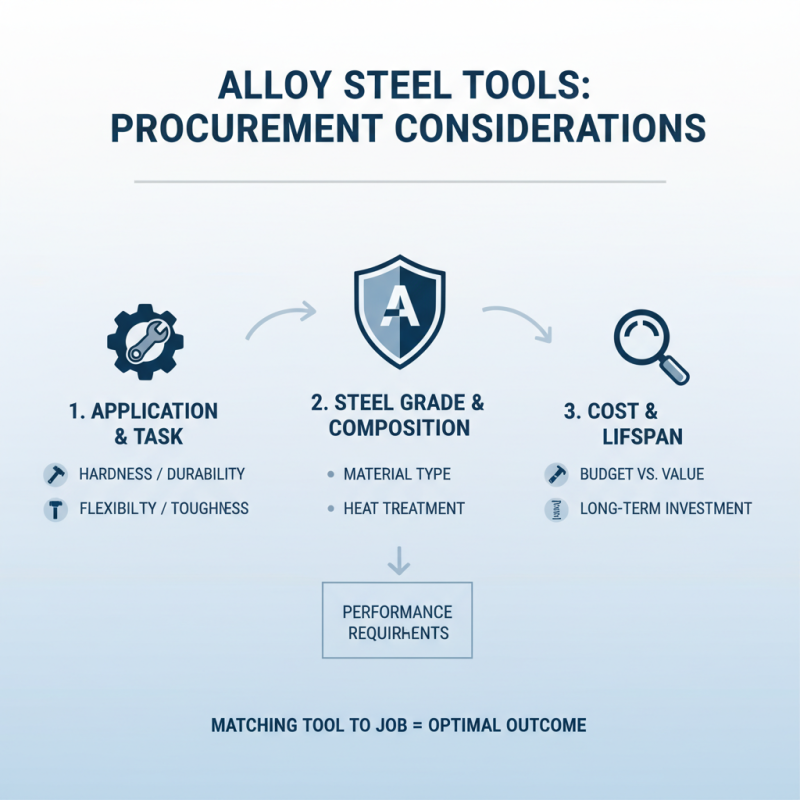
When selecting alloy steel tools for procurement, there are several considerations to keep in mind. First, the specific application of the tools is crucial. Different tasks require various steel grades. For example, some applications demand higher hardness, while others may focus on flexibility. Understanding the exact requirements can help narrow down options effectively.

Another factor to contemplate is the manufacturing process. Tools made through advanced techniques often perform better. Look for tools that have undergone processes like heat treatment or hardening. These steps can enhance their durability and resilience against wear. However, it is important to balance cost and quality. A cheaper tool might seem appealing but may lead to more frequent replacements.

Finally, evaluating supplier reliability is essential. A trustworthy supplier will offer tools with consistent quality and support. Research their history and customer feedback before making a decision. Also, consider the warranty options available. A robust warranty can provide peace of mind. Reflecting on these aspects can lead to better procurement choices for 2026.

Future Trends in Alloy Steel Tools for 2026 and Beyond

As the demand for precision and durability in manufacturing continues to rise, alloy steel tools are becoming essential. Research from the Global Market Insights indicates the alloy steel tools market will reach $22 billion by 2026. This growth reflects industries seeking improved performance and longevity in their tools.

One notable trend is the increased incorporation of advanced manufacturing techniques. The use of additive manufacturing is expected to enhance tool customization. Reports suggest that customization can improve tool lifespan by up to 30%. Nonetheless, companies must address challenges in integrating these new techniques into traditional production workflows.

Sustainability is another key focus. The move towards eco-friendly raw materials is gaining momentum. The shift to recyclable materials could redefine sourcing strategies. This transition may not be linear. Many companies struggle to balance cost efficiency with sustainability goals. Transitioning to greener practices can be complicated, demanding careful planning and adjustments.