Top 10 Benefits of Using Construction Steel Rebar in Projects?
Construction Steel Rebar plays a vital role in modern construction projects. This durable material enhances the strength of concrete structures. Builders and engineers rely on rebar to ensure safety and longevity.
One of the key benefits is its cost-effectiveness. Using Construction Steel Rebar can significantly reduce overall project expenses. A well-designed structure requires a solid foundation, and rebar provides that. It also improves resistance to natural forces like earthquakes.
Moreover, the versatility of Construction Steel Rebar makes it suitable for various applications. Its easy installation saves valuable time on site. However, challenges may arise in sourcing high-quality rebar. Each project should assess its specific needs to avoid pitfalls. Overall, the advantages of using Construction Steel Rebar are undeniable. These benefits contribute to more resilient and efficient construction practices.
Key Strength and Durability Advantages of Steel Rebar in Construction
Steel rebar is essential in modern construction. Its high tensile strength makes it a preferred choice for reinforcing concrete structures. According to the American Concrete Institute, concrete alone can withstand compressive forces well but struggles with tension. This is where steel rebar shines, providing the necessary strength to resist stretching and bending.
In terms of durability, steel rebar significantly enhances concrete’s resistance to cracking. Reports indicate that structures using steel rebar can last over 50 years with proper use. However, it is crucial to consider environmental factors. Corrosion can impact rebar’s effectiveness, especially in coastal areas. Using galvanized or epoxy-coated rebar can mitigate this risk, but these options may involve higher costs.
Moreover, while the benefits are clear, the construction industry still faces challenges. Not every project utilizes steel rebar correctly. Inadequate spacing or poor bonding can undermine its advantages. As construction methods evolve, ongoing education about proper application remains vital. Industry studies show that misapplication contributes to over 30% of structural failures. Addressing these issues will ensure that projects benefit fully from the strength and durability steel rebar offers.
Enhancing Structural Integrity with Steel Rebar: A Comprehensive Overview
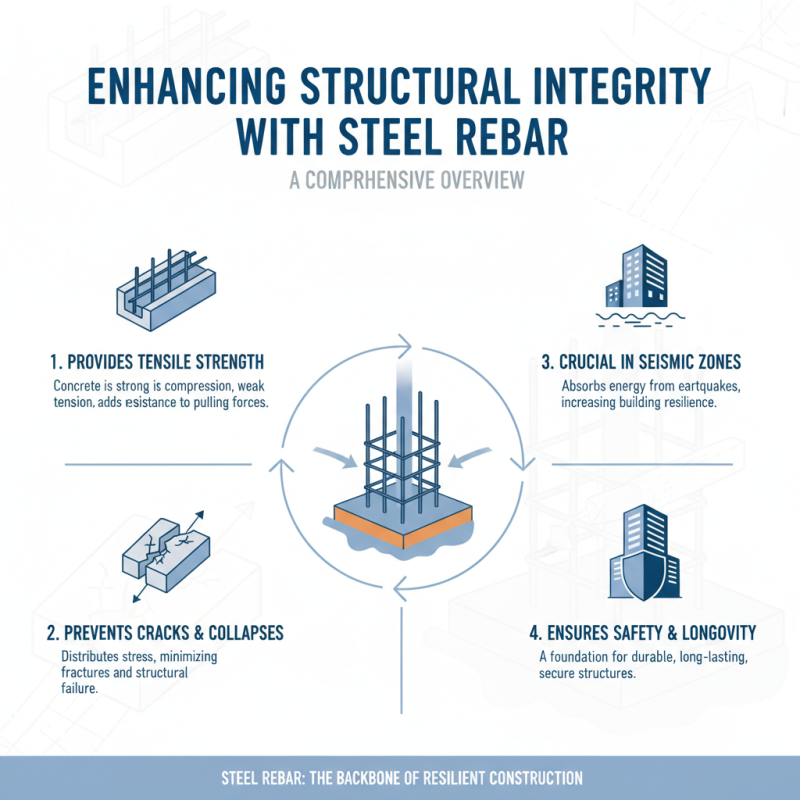
When constructing any structure, the integrity of the building must be a priority. Steel rebar significantly enhances this integrity. It provides the tensile strength that concrete lacks. Without rebar, structures may crack or even collapse under stress. This risk is especially high in areas prone to seismic activity. The use of steel rebar helps ensure safety and longevity.
*Tip:* Always calculate the appropriate amount of rebar needed for your specific project. Overestimating can lead to unnecessary costs, while underestimating can compromise safety.
Incorporating steel rebar creates a robust framework within concrete. It adapts to thermal expansion and contraction without losing strength. Surprisingly, not all projects use enough rebar. In some cases, builders skimp on this crucial material, thinking they can save money. However, the long-term risks often outweigh short-term savings.
*Tip:* Regularly inspect the rebar before pouring concrete. Ensure there are no rusted or damaged bars, as they can weaken the structure.
While the benefits of using steel rebar are clear, the execution can be flawed. Some workers may install it incorrectly or miss critical areas. Continuous training and adherence to guidelines can mitigate these risks. Remember, steel rebar is not just an add-on; it’s integral to building safety.
Cost-Effectiveness of Using Steel Rebar in Large-Scale Projects
In large-scale construction projects, choosing materials wisely can significantly impact costs. Steel rebar is often a cost-effective choice. It adds strength to structures, reducing the need for additional materials. In many cases, this combination can lead to lower overall project expenses.
Using steel rebar can also optimize labor costs. Workers can install rebar easily and quickly due to its lightweight properties. This efficiency may lead to shorter project timelines. However, ensuring proper installation is crucial. Poor placement can lead to structural weaknesses down the line, which can be a costly mistake.
Additionally, considering the lifecycle of a project is important. Steel rebar offers durability that minimizes long-term maintenance costs. Yet, misestimating the amount needed can create unnecessary waste. Balancing initial costs with future savings requires careful planning. This reflection can help teams avoid common pitfalls and achieve a more sustainable project outcome.
Environmental Benefits: Recycling and Sustainability of Steel Rebar
Steel rebar plays a significant role in sustainable construction. Its recyclability is a major benefit. According to the American Iron and Steel Institute, about 98% of steel rebar is recycled. This means that almost all rebar used in projects can be reclaimed and reused. The recycling process requires less energy than producing new steel, leading to lower carbon emissions.
Using recycled steel reduces waste and conserves natural resources. The production of new steel involves mining iron ore. This process can harm ecosystems and deplete minerals. By using recycled steel, construction projects decrease their environmental footprint. In fact, a report from the World Steel Association states that recycling steel saves around 1.5 tons of raw materials for every ton of recycled material used.
Despite these benefits, challenges exist. Not all rebar is sourced from recycled materials. Some suppliers may not follow sustainable practices. Additionally, the quality of recycled rebar can vary, requiring careful inspection. As the industry moves towards better sustainability practices, continued attention to sourcing is crucial. Better regulations and standards can help ensure that recycled steel rebar is consistently used in projects.
Top 10 Benefits of Using Construction Steel Rebar in Projects
| Benefit |
Description |
Environmental Impact |
| Recyclability |
Steel rebar can be recycled at the end of its life cycle, reducing waste. |
Less landfill waste and conservation of natural resources. |
| Sustainability |
Produced from recycled materials, contributing to sustainable practices. |
Lower carbon footprint compared to virgin materials. |
| Strength |
Steel rebar provides significant tensile strength to concrete structures. |
Increased durability leads to less frequent rebuilding and waste. |
| Cost-Effectiveness |
Using steel rebar can lower labor and material costs over time. |
Reduced resource consumption and waste minimize environmental costs. |
| Energy Efficiency |
Modern manufacturing of steel rebar uses advanced techniques to save energy. |
Lower energy consumption results in reduced greenhouse gas emissions. |
| Versatility |
Can be used in various applications from buildings to bridges. |
Longer-lasting structures reduce the need for replacements. |
| Reduced Transportation Impact |
Often sourced locally, decreasing transportation emissions. |
Lower transport emissions contribute to a reduced overall carbon footprint. |
| Fire Resistance |
Steel does not burn and can withstand high temperatures. |
Minimizes the risk of fire-related damage and waste. |
| Quality Control |
Manufactured under strict quality standards ensuring consistency. |
Reduced failures contribute to sustainability and resource efficiency. |
| Improved Aesthetics |
Modern treatments allow for a variety of finishes, enhancing beauty. |
Promotes the aesthetic appeal of reused materials. |
Versatility of Steel Rebar Across Various Construction Applications
Steel rebar is a vital element in modern construction. Its versatility makes it suitable for various applications. From foundational structures to intricate frameworks, steel rebar enhances durability and strength. You can find it in roads, bridges, and even residential buildings. This versatility extends the lifespan of many constructions.
However, using steel rebar isn't without challenges. Workers need to ensure proper placement; otherwise, structural integrity can suffer. Overlapping rebar incorrectly could lead to vulnerabilities. Decisions on the thickness and type of rebar can also complicate projects. Sometimes, it may feel overwhelming to navigate these choices.
Designers often appreciate the flexibility of steel rebar. It can be easily cut and shaped to fit different projects. Whether reinforcing walls or creating slabs, its adaptability is crucial. However, miscalculations can lead to waste. Keeping track of rebar specifications is essential in minimizing errors and maximizing efficiency. Proper planning and teamwork can help mitigate these issues, making steel rebar an indispensable ally in construction.
Top 10 Benefits of Using Construction Steel Rebar in Projects