Why Choose High Carbon Steel for Your Next Project?
High Carbon Steel is a remarkable material that engineers and designers increasingly favor for various projects. This steel type contains higher carbon content than regular steel, which enhances its strength and hardness. However, it can be challenging to work with due to its increased brittleness. Understanding the applications of High Carbon Steel is crucial for achieving desired outcomes in construction and manufacturing.
Using High Carbon Steel can be a game-changer in creating durable tools and components. Its ability to withstand wear and stress makes it ideal for applications such as cutting tools and machinery parts. Yet, it requires skilled fabrication techniques and proper heat treatment to prevent cracking. The balance between durability and machinability needs careful consideration.
When planning projects, weighing the pros and cons of High Carbon Steel is vital. Its exceptional properties can lead to longer-lasting products, but improper handling can result in failures. Thorough knowledge and expertise in material selection ensure successful project outcomes. Ultimately, High Carbon Steel can be a valuable asset when used appropriately.
Advantages of High Carbon Steel in Industrial Applications
High carbon steel is gaining traction in industrial applications due to its unique properties. It contains between 0.6% and 1.4% carbon, making it tougher than low carbon steels. This toughness allows high carbon steel to endure higher wear and tear, making it a robust choice for tools and machinery. Its ability to maintain sharp edges in cutting tools is a significant advantage. However, achieving this hardness requires careful heat treatment.
Manufacturers often prefer high carbon steel for its strength and durability. It can withstand significant stress and is less likely to deform under pressure. Additionally, these steels can be tempered for improved ductility. However, this process is not always straightforward. Improper treatment may lead to brittleness. Engineers must keep this in mind when selecting materials for demanding applications.
The versatility of high carbon steel makes it suitable for various uses. From cutting tools to automotive components, its applications are diverse. Despite its benefits, it may rust without proper coating. This possibility invites ongoing maintenance concerns. Thus, while high carbon steel is an excellent choice, its use demands careful consideration and expertise.
Comparison of High Carbon Steel with Other Steel Types
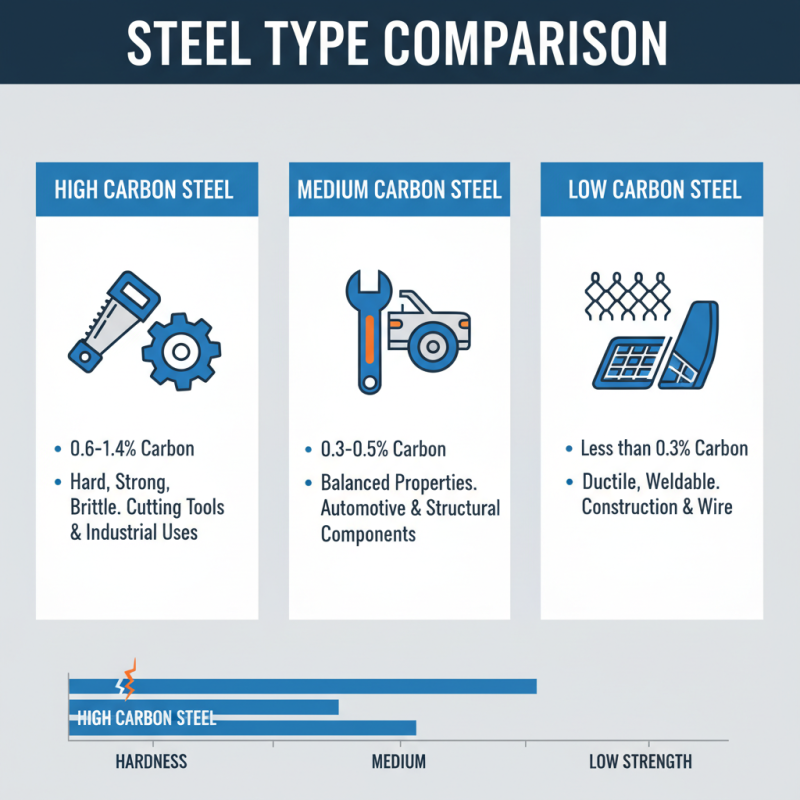
High carbon steel stands out when compared to other steel types. It offers increased hardness and strength, making it ideal for cutting tools and industrial applications. This type of steel contains a higher percentage of carbon, often between 0.6% to 1.4%. This composition gives it superior durability, but it can also make it brittle.
In contrast, low carbon steel is more malleable and easier to weld, which can be beneficial in construction. However, it does not provide the same level of hardness as high carbon steel. Medium carbon steel offers a balance of strength and ductility, but it may still not match the hardness of high carbon options. Understanding these differences is crucial when selecting materials for specific projects.
While high carbon steel excels in many respects, it does present challenges. Its brittleness can lead to failure under extreme stress, and it is less resistant to corrosion than stainless steels. Projects demanding flexibility may find high carbon steel limiting. Each steel type has its place, and careful consideration is vital for success. The right choice depends on project requirements and performance expectations.
Common Uses of High Carbon Steel in Manufacturing
High carbon steel is a versatile material widely used in manufacturing. Its high strength and durability make it ideal for various applications. According to a report by the American Iron and Steel Institute, high carbon steel has a carbon content of 0.6% to 1.5%. This composition results in greater hardness and wear resistance.
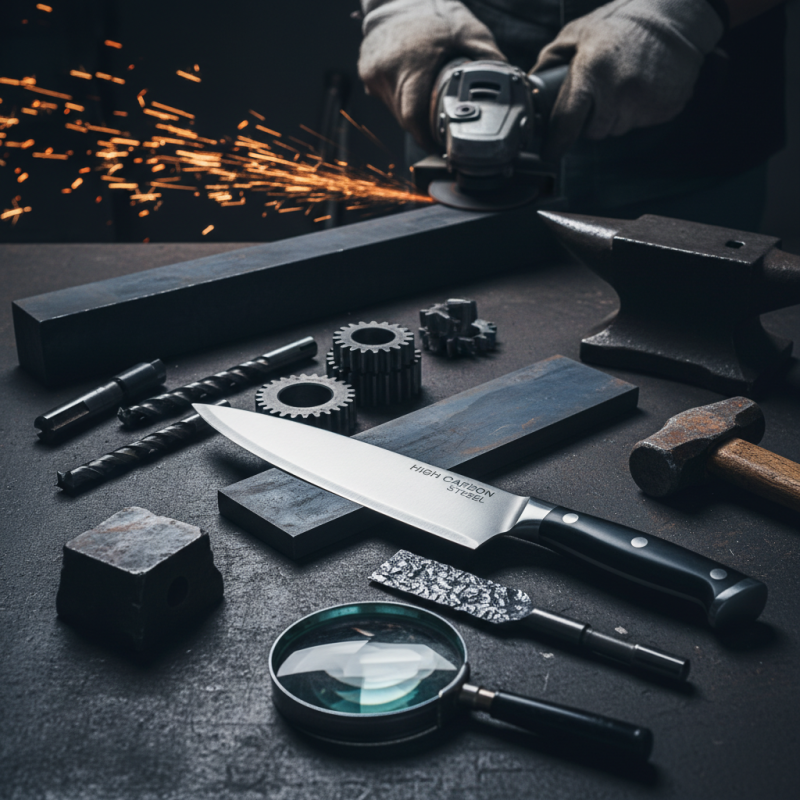
One common use of high carbon steel is in cutting tools. Tools crafted from high carbon steel are capable of maintaining sharp edges under heavy use. This is particularly essential in industries like machining and metalworking. Additionally, high carbon steel is often used in the manufacturing of springs and heavy-duty machinery components. Its ability to withstand high stress without deformation is unmatched.
Tips for working with high carbon steel: Ensure proper heat treatment to enhance hardness. This can avoid brittleness. Remember, the fabrication process can be challenging. Always use suitable tools to achieve optimal results.
Common Uses of High Carbon Steel in Manufacturing
Factors to Consider When Selecting High Carbon Steel
When selecting high carbon steel for a project, several key factors come into play. First, consider the material's carbon content. High carbon steel typically contains 0.6% to 1.4% carbon. This increased content enhances hardness and strength, but reduces ductility. According to industry studies, the tensile strength can exceed 200,000 psi with proper heat treatment. This makes high carbon steel ideal for tools, knives, and structural components.
Next, evaluate the applications of high carbon steel. It is widely used in manufacturing cutting tools and blades. A report from the American Society for Metals highlights its dominance in industrial applications. The heat treatment process is critical. It can influence wear resistance and overall performance. However, over-treating can lead to brittleness, limiting its practical use.
Additionally, consider factors like cost and availability. High carbon steel is more expensive than lower carbon variants. However, the benefits often outweigh the costs. The market demand for durable materials is growing. Balancing quality and expense is essential. In any project, understanding the specific demands will ensure the right choice of high carbon steel.
Maintenance and Care Tips for High Carbon Steel Products
High carbon steel is prized for its
durability and strength. However, its maintenance
and care can be daunting. To ensure longevity, one must be diligent. Regular cleaning is essential. Use
a mild detergent and warm water to remove dirt and grime. Remember to dry it thoroughly to prevent
rust.
Applying a protective oil can enhance the steel's resistance to moisture. This is especially vital in
humid conditions. For tools or blades, keep a sharpening
stone handy. Regularly inspect for any signs of wear. Small nicks can escalate if left unattended.
Store high carbon steel products in a dry environment.
Avoid exposure to moisture. Simple measures can yield significant results. Yet, even the best care won’t make
it entirely maintenance-free. Acknowledging this can guide your expectations. Embrace imperfections and learn
from them. Every scratch tells a story.