Top 10 Alloy Steel Tools in China You Should Know?
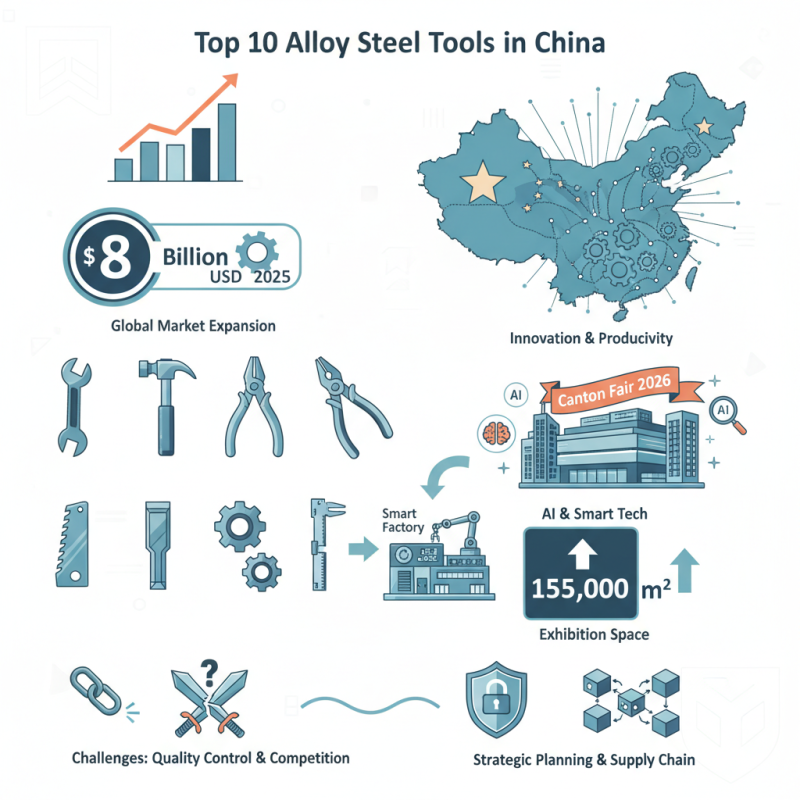
The global market for Alloy Steel Tools is expanding rapidly. By 2025, it's expected to reach $8 billion, driven by advancements in manufacturing. Among the top producers, China stands out with its impressive innovation and productivity. Industry expert Dr. Li Jianming emphasizes, "The future of Alloy Steel Tools lies in adaptability and precision." This highlights the need for continuous improvement in tool manufacturing.
Companies at the forefront of this sector are adopting smart technologies. For instance, the 139th Canton Fair in 2026 will showcase advancements in alloy steel tools. Utilizing AI for supplier selection and navigation will enhance efficiency. The fair expects over 155,000 square meters of exhibition space, promoting quality and innovation.
However, challenges remain. Quality control issues and market competition can hinder growth. In such a dynamic landscape, staying ahead requires strategic planning and robust supply chain management. Understanding the nuances of Alloy Steel Tools will be key for stakeholders looking to thrive.
Overview of Alloy Steel and Its Importance in Tool Manufacturing
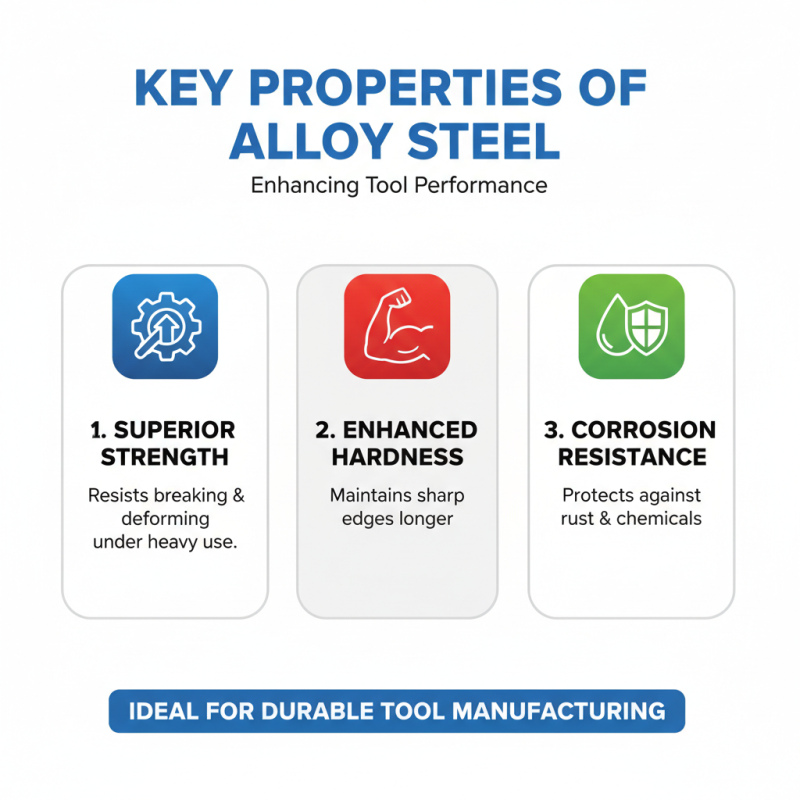
Alloy steel plays a crucial role in tool manufacturing. It is a metal blend that includes carbon and various other elements. These elements enhance strength, hardness, and durability. Consequently, tools made from alloy steel can withstand higher stress and wear.
In machine shops, technicians often prefer tools made from alloy steel for their reliability. Such tools excel in harsh conditions. They resist deformation and maintain sharp edges longer than many alternatives. However, not all alloy steel is created equal. The composition and treatment methods can vary significantly. It's essential to pay attention to the specific properties of different alloy steels.
Tips: When selecting an alloy steel tool, consider the intended use first. The right tool can make all the difference. Also, check the heat treatment of the steel. It can significantly affect performance. Lastly, remember that wear can still occur. Regular maintenance will prolong the life of your tools.
Top 10 Alloy Steel Tools in China You Should Know
| Tool Type |
Material Grade |
Applications |
Hardness (HRC) |
Tensile Strength (MPa) |
Common Use |
| Cutting Tool |
A2 |
Machining Hard Materials |
58-62 |
700 |
Metalworking |
| Drill Bit |
M2 |
Precision Drilling |
63-65 |
900 |
Construction |
| End Mill |
SPH |
Milling Operations |
60-64 |
800 |
Manufacturing |
| Tap |
HSS-E |
Thread Cutting |
64-67 |
950 |
Fastening |
| Reamer |
M35 |
Hole Finishing |
62-65 |
850 |
Engineering |
| Saw Blade |
W2 |
Cutting Metal |
65-67 |
900 |
Woodworking |
| Forming Tool |
D2 |
Shaping Materials |
58-60 |
700 |
Manufacturing |
| Punch |
S7 |
Punching Operations |
58-62 |
750 |
Sheet Metal |
| Die |
H13 |
Forming Materials |
55-60 |
600 |
Tooling |
Top 10 Alloy Steel Tools Available in China for Various Industries
Alloy steel tools have gained traction across various industries in China. Their enhanced durability and strength make them ideal for challenging environments. According to a recent report by the China Machine Tool Industry Association, the demand for alloy steel tools is projected to grow by 6% annually over the next five years. This increase can be attributed to advancements in manufacturing technologies.
In construction, alloy steel tools are preferred for their ability to withstand heavy loads. They offer resistance to wear and abrasion, leading to longer tool life. In automotive industries, they are crucial for precision machining. Many manufacturers are adopting alloy steel tools to improve productivity and reduce costs.
**Tip:** Always assess your specific needs before choosing tools. Not all alloy steel types suit every task. A mismatch can lead to inefficiencies.
Despite their advantages, some users report issues related to cost. Higher quality alloy steel tools can be significantly more expensive. This puts pressure on budgets but can lead to savings over time. Proper maintenance is vital. Neglecting this can shorten the tool's lifespan, leading to frequent replacements.
**Tip:** Regularly clean and inspect your tools. Care can prevent unexpected failures.
Choosing the right alloy steel tool can be daunting. It is essential to consider factors such as application, material composition, and desired lifespan. This complex decision may require additional research or expert consultation.
Factors to Consider When Choosing Alloy Steel Tools for Your Needs
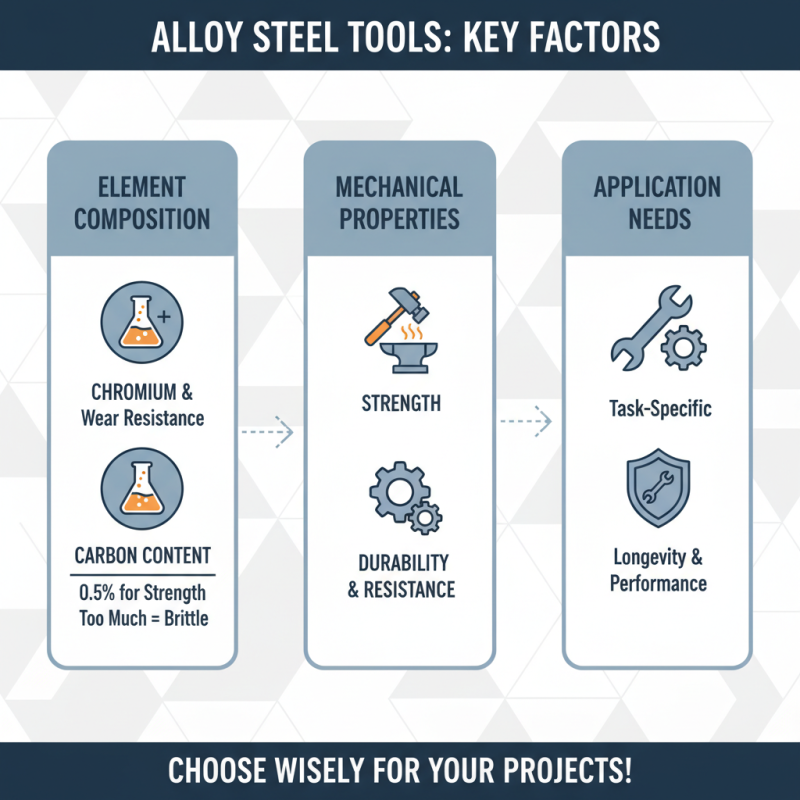
When choosing alloy steel tools, several factors come into play. The composition of the alloy is crucial. For example, chromium and molybdenum elements enhance hardness and resistance to wear. Tools with a 0.5% carbon content show increased strength, yet too much carbon can make them brittle. Understanding these elements helps buyers select tools suitable for their tasks.
Durability is another critical aspect. Reports indicate that alloy steel tools can last up to 50% longer than standard tools under similar conditions. However, this can vary based on usage. Heavy-duty applications may cause even the toughest alloy steel to fail sooner than expected. Users need to assess their specific needs to avoid premature wear.
Finally, consider the tool design and ergonomics. Research reveals that well-designed tools can reduce user fatigue significantly. This aspect often gets overlooked. Poor ergonomics can lead to ineffective usage, despite the tool's quality. Balance is key here. A good tool should feel right in your hand while performing the intended task effectively.
Future Trends in Alloy Steel Tool Production and Innovation in China
In the dynamic landscape of alloy steel tool production in China, significant trends are emerging. The market is projected to grow at a compound annual growth rate (CAGR) of approximately 5.2% from 2023 to 2030. This growth is driven by advancements in technology and increased demand from various industries, including automotive and aerospace.
Innovation is a key focus. Manufacturers are investing in new production techniques. This includes the integration of artificial intelligence and automation. Such developments aim to enhance precision and efficiency. However, challenges remain. The need for skilled labor to operate advanced machinery is pressing. The reliance on traditional manufacturing methods still exists, causing a potential skills gap.
Moreover, sustainability has become a priority. Companies are exploring eco-friendly materials and processes. Reports indicate that around 40% of firms are prioritizing sustainable practices in their production. While this shift is promising, many are struggling to balance cost and environmental responsibility. The future of alloy steel tools in China is bright, yet it requires ongoing reflection and adaptation to meet the evolving demands of the industry.
Top 10 Alloy Steel Tools in China - Production Volume Comparison