Top 10 China Hot Rolled Steel Bars for Global Buyers?
In the world of manufacturing, the significance of Hot Rolled Steel Bar cannot be overstated. According to industry expert Dr. Liam Chen, “The quality of Hot Rolled Steel Bar defines the strength of modern infrastructure.” This statement emphasizes the crucial role these steel bars play in construction and manufacturing globally.
China remains a powerhouse in the hot rolled steel industry, producing some of the finest steel bars available. These products have been vital for building projects worldwide, demonstrating their reliability and strength. Global buyers are increasingly seeking the top ten brands from China known for their quality and performance. The continuous advancements in production techniques have also led to improvements in durability and versatility.
However, challenges persist. Not all manufacturers maintain consistent standards. Some products may not meet the expectations set by leading brands. Buyers must carefully assess options to avoid subpar materials. This mindful approach can lead to selecting the best Hot Rolled Steel Bar for various applications, ensuring project success and longevity.
Overview of Hot Rolled Steel Bars in China
Hot rolled steel bars are fundamental to various industries in China. These bars are produced through a heating process that shapes steel into desired forms. According to a recent industry report, China dominates the global market, accounting for over 60% of total production. The demand for hot rolled steel bars is driven by construction and manufacturing sectors, which are vital for economic growth.
The specifications of these bars vary. Standard diameters range from 10mm to 50mm. Mechanical properties, such as yield strength, typically reach around 300 MPa to 600 MPa. This strength is crucial for applications in bridges and buildings. However, inconsistencies can occur in production, leading to variation in quality. Buyers should be aware of these potential issues when sourcing products.
During recent years, environmental regulations have impacted production methods. Manufacturers are encouraged to adopt greener practices, yet the transition is still ongoing. While investments in technology aim for improvement, challenges remain in balancing output with sustainability. Stakeholders must navigate these complexities for future success in the hot rolled steel bar market.
Key Manufacturers of Hot Rolled Steel Bars in China
China has established itself as a leader in the production of hot rolled steel bars. The country boasts a diverse range of manufacturers that cater to international markets. Many of these manufacturers emphasize quality and reliability. They follow rigorous standards, ensuring their products can compete on a global scale.
Among the key manufacturers, some focus on different segments. Some produce high-strength steel bars for construction, while others specialize in industrial applications. The variability in product specification often presents challenges for buyers. Understanding these nuances can be difficult. A buyer must engage deeply with suppliers to ensure the right fit for their needs.
Moreover, market dynamics can complicate purchasing decisions. Fluctuating raw material prices may affect manufacturing costs. This uncertainty can lead to variations in product availability. Buyers should monitor these trends closely and build strong relationships with manufacturers. Making informed decisions is crucial for maintaining a supply chain that is both efficient and cost-effective.
Top 10 China Hot Rolled Steel Bars for Global Buyers
| Rank |
Product Type |
Diameter (mm) |
Length (m) |
Material Grade |
Annual Production (tons) |
Certificate |
| 1 |
Hot Rolled Round Bar |
20 |
6 |
Q235B |
50000 |
ISO 9001 |
| 2 |
Hot Rolled Square Bar |
25 |
6 |
Q345B |
40000 |
ISO 14001 |
| 3 |
Hot Rolled Flat Bar |
30 |
6 |
SS400 |
30000 |
CE |
| 4 |
Hot Rolled Deformed Bar |
16 |
12 |
HRB335 |
60000 |
ISO 45001 |
| 5 |
Hot Rolled Wire Rod |
8 |
6 |
Q195 |
55000 |
ISO 9001 |
| 6 |
Hot Rolled Angle Steel |
50x50 |
6 |
Q345 |
28000 |
CE |
| 7 |
Hot Rolled I Beam |
200 |
12 |
Q235 |
65000 |
ISO 14001 |
| 8 |
Hot Rolled H Beam |
300 |
12 |
Q345 |
70000 |
CE |
| 9 |
Hot Rolled T Beam |
10 |
12 |
SS400 |
31000 |
ISO 9001 |
| 10 |
Hot Rolled Channel Steel |
100 |
6 |
Q235 |
48000 |
ISO 45001 |
Quality Standards for Hot Rolled Steel Bars in Global Markets
When discussing quality standards for hot rolled steel bars in global markets, several key metrics come into play. Manufacturers must adhere to specifications defined by organizations such as ASTM and ISO. These standards ensure that the steel bars meet criteria for mechanical properties and chemical composition. For instance, ASTM A615/A615M details the requirements for deformed and plain carbon steel reinforcement bars, emphasizing yield strength and elongation.
In addition, the market highlights the importance of surface quality. Hot rolled steel bars often undergo inspections for surface defects, including cracks or scale. According to industry reports, approximately 15% of rejected material can be traced back to surface imperfections. This statistic underscores the necessity for rigorous quality control measures during production. A reliable supplier must demonstrate compliance with these standards, which enhances the trust of global buyers.
Finally, traceability of materials plays a vital role in quality assurance. Suppliers need to maintain records of their raw materials and production processes. This practice allows for rapid response to quality concerns or recalls. However, many manufacturers struggle with this aspect, revealing a gap in transparency that needs addressing. Quality assurance is not merely a box to check, but an ongoing commitment to excellence in production.
Top 10 China Hot Rolled Steel Bars - Quality Standards Comparison
Market Trends for Hot Rolled Steel Bars in 2023
The hot rolled steel bar market in 2023 has witnessed significant shifts. According to recent industry reports, China's production has surged by 10% compared to last year. This increase is driven by strong demand from construction and manufacturing sectors. The overall market size for hot rolled steel bars is projected to reach USD 100 billion in 2023.
Despite the growth, challenges remain. For instance, rising raw material costs threaten profit margins. The price of scrap steel, a key input, has fluctuated significantly, impacting overall costs. Current data shows that 60% of manufacturers are struggling to maintain competitive pricing amid these changes.
Sustainability is becoming a critical topic. Buyers are increasingly seeking eco-friendly options. Manufacturers are exploring greener production technologies. According to a recent survey, 70% of consumers prefer suppliers with sustainable practices. This trend poses a dilemma for manufacturers balancing cost and environmental responsibility. The industry's path forward requires adaptation and innovation to meet these evolving demands.
Factors Influencing Export Demand for Chinese Steel Bars
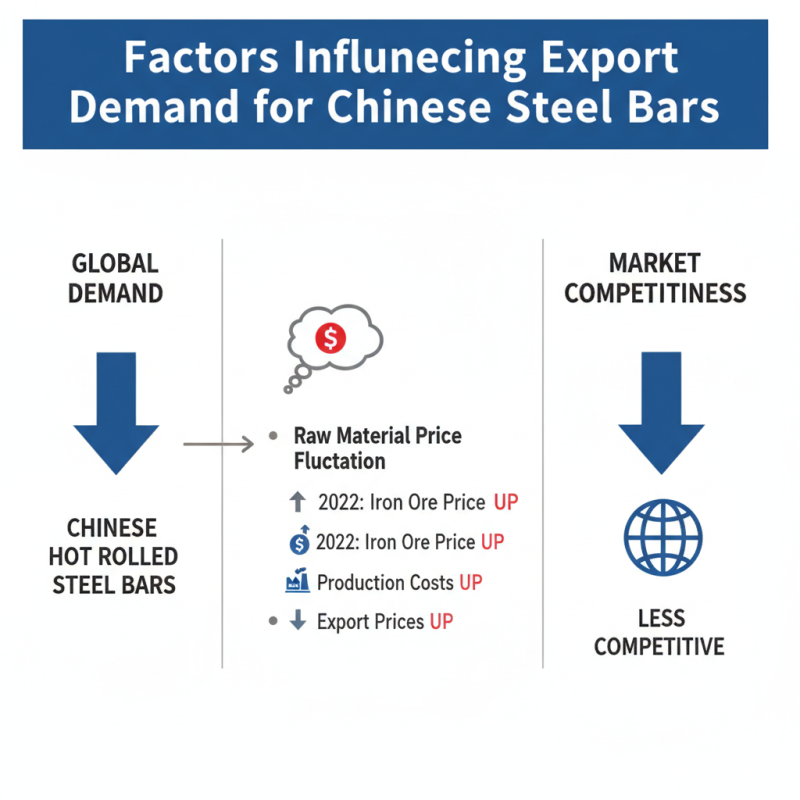
The global demand for Chinese hot rolled steel bars is shaped by various factors. Key among them is the fluctuation of raw material prices. In 2022, the price of iron ore increased significantly, driving up production costs for steel. This affected export prices, making Chinese products less competitive in certain markets.
Market trends play a crucial role as well. According to the World Steel Association, global steel demand is projected to grow by 2.7% in 2023. However, regional variances exist. For instance, demand in Europe is stabilizing due to construction projects, while growth in Asia remains robust. Understanding these dynamics is critical for buyers looking to source quality steel.
**Tip:** Always monitor the latest price data. Use industry reports from trusted sources to track market trends. Additionally, engage with suppliers regularly to discuss pricing strategies.
Another important factor is trade policies. Tariffs and quotas can significantly impact the flow of Chinese steel. In 2023, several countries have re-evaluated their trade agreements, leading to uncertainties. Buyers must stay informed about these changes to avoid potential disruptions.
**Tip:** Diversify your supply chain. Relying on a single source can expose you to risks. Build relationships with multiple suppliers for stability.