2026 How to Choose the Right Square Tube Steel for Your Projects?
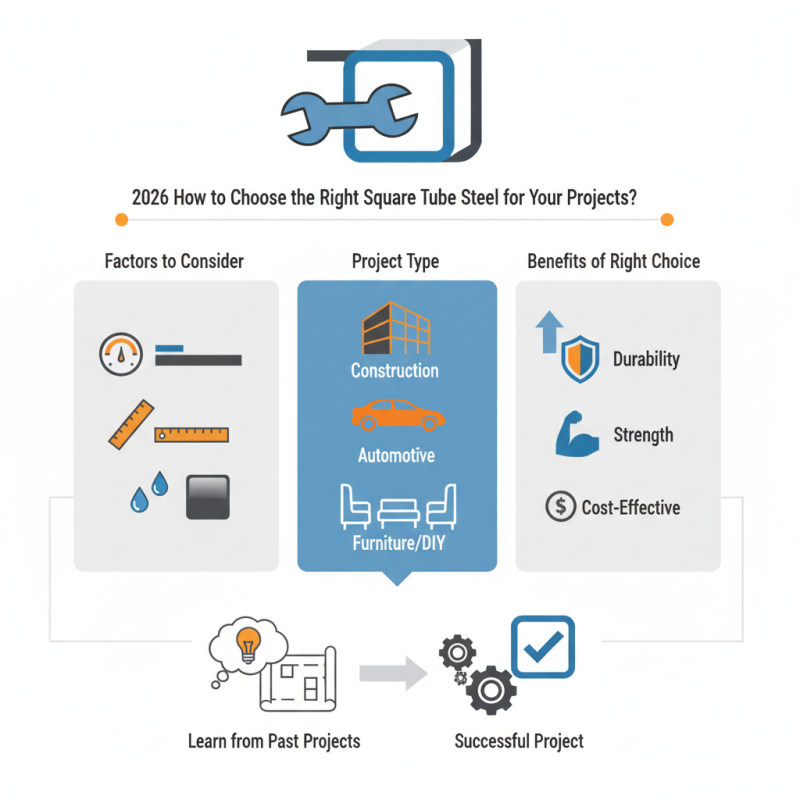
When embarking on a project, selecting the right materials is crucial. Square Tube Steel is a common choice due to its versatility and strength. However, the vast array of options can be overwhelming. Different projects demand different specifications, and not all square tube steel is created equal.
Understanding the properties and advantages of various types of square tube steel is vital. Thickness, width, and finish can all impact the final outcome of your work. For instance, choosing a thicker wall can enhance durability but may add weight. On the other hand, opting for a lighter gauge can simplify assembly.
Reflecting on past projects can guide better decisions. Have you considered whether your previous choices met your expectations? Mistakes can be informative. Perhaps a project didn't hold up as planned. Each misstep can lead to valuable insights. Properly evaluating square tube steel can prevent future issues and improve your project's success.
How to Assess Your Project's Structural Requirements for Square Tube Steel
When assessing your project's structural requirements for square tube steel, start by identifying the function of your structure. Consider its intended use. Will it bear heavy loads? Is it for support or merely framing? Determining the role of square tube steel is crucial. This directly impacts your choice in material and size.
Next, evaluate the environmental factors your project will face. Factors like moisture, temperature fluctuations, and exposure to chemicals can influence your steel's longevity. Choose a type of steel that can withstand these conditions. Durability should be a priority. However, you may need to compromise between durability and cost-effectiveness.
Lastly, reviewing engineering standards relevant to your project is essential. Gaps in understanding these requirements might lead to miscalculations. Conducting structural analysis can reveal necessary dimensions and material grades. Reflect on potential shortcomings in your initial planning. A detailed assessment ensures that your selections meet safety and performance standards.
Key Material Properties of Square Tube Steel: Strength, Weight, and Durability
When selecting square tube steel for projects, understanding its key material properties is crucial. Strength is at the forefront. Steel's yield strength typically ranges from 250 MPa to 450 MPa. This means it can endure various loads without deforming. Projects requiring structural integrity, like buildings or bridges, benefit from utilizing higher-grade steel. Yet, overestimating strength can lead to unnecessary costs.
Weight also plays an essential role in material choice. Square tube steel is available in different wall thicknesses, affecting its weight. For instance, a three-inch square tube with a wall thickness of 0.120 inches weighs about 2.76 pounds per foot. Lighter options might be preferable in applications where minimizing load is critical, such as in portable structures.
Durability is another crucial factor. Square tube steel is often treated to resist corrosion. Galvanized options are increasingly popular, providing a longer lifespan in outdoor settings. However, without proper maintenance, even the most durable steel can succumb to environmental challenges. Assessing the environmental conditions where the steel will be used is vital. It can influence the long-term performance and safety of your project.
Key Material Properties of Square Tube Steel
| Property |
Description |
Value |
| Tensile Strength |
The maximum stress a material can withstand while being stretched or pulled before breaking. |
350 MPa |
| Weight |
The mass of the square tube steel per unit length, which affects transportation and handling. |
3.85 kg/m |
| Durability |
The ability of the material to withstand wear, pressure, or damage. |
20+ years |
| Corrosion Resistance |
The ability to resist degradation caused by environmental factors. |
Moderate |
| Weldability |
The capacity of the material to be welded effectively. |
Good |
Understanding Steel Grades: Selecting the Right Specification for Your Needs
Choosing the right square tube steel requires understanding various steel grades. Each grade is designed for specific applications and can affect structural integrity. Common grades include A36, A500, and A572, each with unique properties. For instance, A36 is often used in construction, while A500 is preferred for its high strength in structural applications.
When selecting a grade, consider the project's requirements. The environment plays a big role. Will it face extreme temperatures or corrosive elements? These factors influence the steel you need. Inspecting mechanical properties such as yield strength and tensile strength is crucial. A lower grade may suffice for simple projects, but high-stress applications require more robust options.
Mistakes in grade selection can lead to project delays. It's essential to consult professionals if in doubt. Not all suppliers provide detailed specifications, which makes research vital. Seek advice from experienced engineers and consult reliable resources. Each project is unique, and understanding the materials is key to success.
Cost-Effectiveness: Analyzing Market Trends in Square Tube Steel Pricing
When selecting square tube steel for projects, understanding market trends in pricing is key. The cost-effectiveness of these materials can fluctuate significantly. Recent analyses show that prices are influenced by factors like material availability, demand, and manufacturing costs. Currently, the price trends point toward a gradual increase due to rising production costs.
Tips: Always stay updated on market news. This can help you anticipate price changes. Engage with local suppliers to gain insights. They often have the best understanding of upcoming trends.
One should also consider the quality of steel. Not all square tube steel is created equal. Subpar materials might save initial costs but can lead to greater expenses down the line. Reflect on the long-term impact of choosing lower-grade options. Balancing cost and quality is crucial in project planning.
Tips: Evaluate suppliers' reputations. Look for those with a history of reliable materials. Investigating reviews can provide clarity on quality. Always think about future costs, not just the immediate savings. Consider using recycled steel when feasible, as it can prove cost-effective.
Common Applications of Square Tube Steel in Various Industries and Projects
Square tube steel is widely used in
various industries due to its strength and versatility. In construction, it provides a reliable
framework for buildings and structures. It can support heavy loads, making it essential for both
residential and commercial projects. Moreover, its uniform shape
allows for easier assembly and installation.
In the automotive industry, square tube steel
plays a critical role in creating vehicle frames and components. Its durability ensures safety
and longevity in design. Additionally, furniture manufacturing has embraced square tube steel for
its modern aesthetic. Tables and chairs benefit from its sleek lines while offering structural integrity.
However, selecting the wrong size or thickness
for a project can lead to structural issues. It's important to understand specific project requirements
and load-bearing needs. Sometimes, even minor miscalculations can impact performance. Balancing
strength and weight is crucial. Exploring different grades and finishes
is necessary for optimal results.