What is Square Tube Steel and Its Applications in Industry?
Square Tube Steel is a versatile material widely used in various industries. Its unique shape offers structural integrity and allows for efficient assembly. This type of steel combines strength with lightweight properties, making it ideal for construction, manufacturing, and automotive applications.
The applications of Square Tube Steel are vast. Builders often use it for frames and supports in buildings due to its durability. In manufacturing, it’s essential for producing intricate parts and machinery. The automotive industry benefits from its use in chassis and bodywork. However, the selection of Square Tube Steel requires careful consideration of weight and strength requirements.
Knowledge of its properties is crucial. Users must understand how alloying elements can affect performance. Misjudgments in selection can lead to structural failures. Thus, experience and expertise in working with Square Tube Steel are invaluable. Overall, it remains an essential component in modern engineering and fabrication.
Definition and Properties of Square Tube Steel
Square tube steel, defined by its hollow cylindrical cross-section, features equal sides and offers remarkable strength-to-weight ratios. This geometry allows for various applications, making it popular in construction and manufacturing. Its rigidity provides enhanced stability and support, especially in load-bearing structures.
The properties of square tube steel include durability and resistance to impact. It withstands environmental stress, reducing wear and tear over time. This helps ensure longevity in various structures. However, its performance can vary based on thickness and material composition, which requires careful selection for specific tasks.
While square tube steel provides many benefits, one must be mindful of potential corrosion issues. Proper coatings or treatments may be needed, especially in harsh environments. Users should also consider welding methods as they can affect structural integrity. Understanding these factors is crucial for engineers and builders.
Common Grades and Specifications of Square Tube Steel
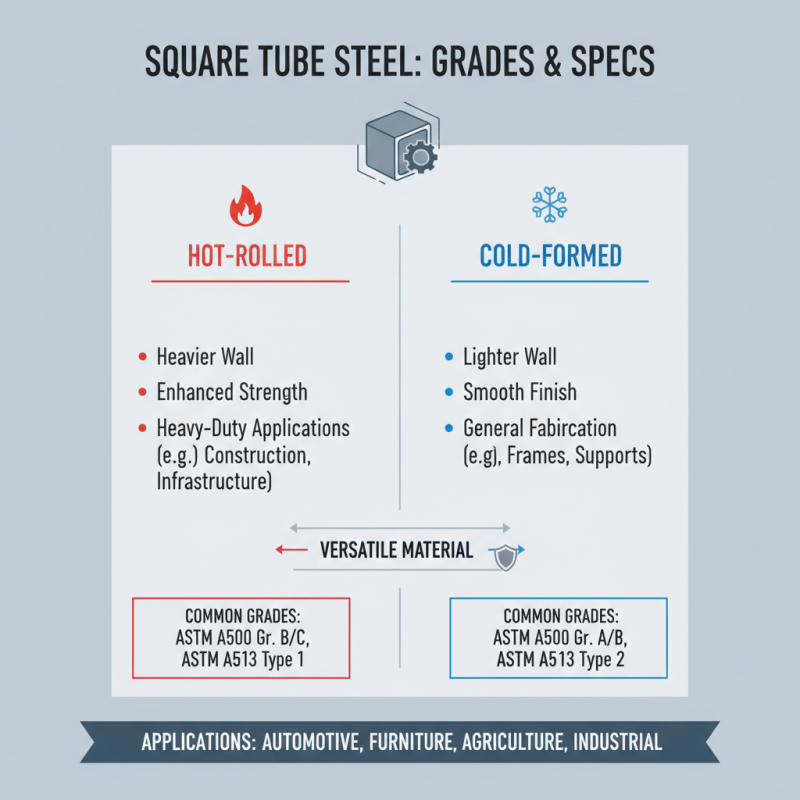
Square tube steel is a versatile material used widely in various industries. When discussing its common grades and specifications, we must focus on the variations that meet different structural needs. Generally, square tube steel is classified into hot-rolled and cold-formed categories. Hot-rolled square tubes typically have a heavier wall and better mechanical properties, making them suitable for heavy-duty applications.
Common grades of square tube steel include ASTM A500 and ASTM A36. ASTM A500 is known for its strength and is often used in construction applications. It provides excellent weldability and offers precise dimensions. On the other hand, ASTM A36 is more common for general structural purposes. Its lower carbon content results in good ductility, allowing it to perform well in various environments. While these grades meet many industry needs, not all projects will find them suitable. Consider the specific load requirements and environmental conditions before making a selection.
Many engineers often overlook the importance of proper specifications. Not matching the right grade to the application can lead to structural weaknesses. Each project is unique and requires careful consideration of factors like load-bearing capacity and resistance to corrosion. Therefore, understanding these grades is crucial for achieving optimal performance in the intended application.
Manufacturing Process of Square Tube Steel
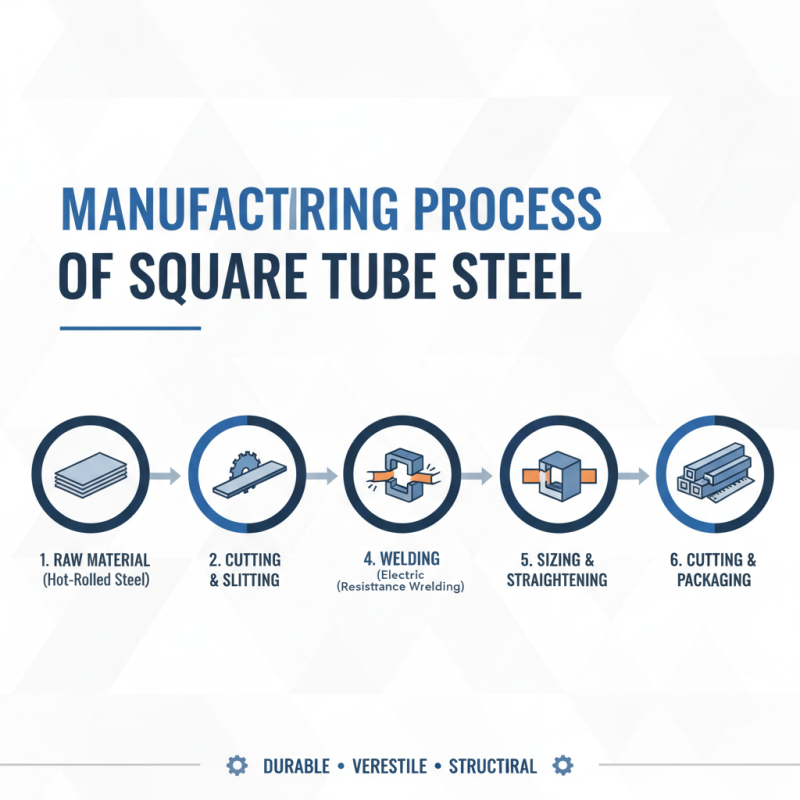
Square tube steel is a popular choice in various industries due to its unique shape and structural properties. The manufacturing process of square tube steel involves several precise steps. Typically, it begins with hot-rolled steel sheets or coils. These materials are cut and shaped into flat strips.
Next, these strips undergo a process called cold forming. The strips are fed through rollers that bend them into a square profile. This stage is crucial, as it determines the accuracy of dimensions. The corners of the tube are rounded, enhancing strength. Following this, the edges of the tube are joined together using welding techniques. Either electric resistance welding or laser welding is used, depending on the specifications and desired quality.
Cooling and finishing processes follow the welding step. The steel tube is cooled to enhance its structure. Afterward, surface treatments may be applied. This helps improve corrosion resistance and aesthetic appeal. Quality control is vital throughout these steps. Continuous monitoring ensures that the tubes meet industry standards. However, imperfections can occur in the process. Manufacturers often need to reassess and adjust methods to enhance product consistency.
Industrial Applications of Square Tube Steel
Square tube steel is widely used in various industrial applications due to its structural integrity and versatility. Its shape allows for efficient load distribution, making it ideal for building frames and supports. According to the American Institute of Steel Construction, square tubing can carry more load than equivalent round tubing, making it a preferred choice in construction and manufacturing.
In the automotive sector, square tube steel is essential for the production of vehicle frames. Reports indicate that using square tube steel can increase safety while reducing weight. This balance of strength and lightness contributes to fuel efficiency in vehicles. Additionally, square tube steel is often used in machinery and conveyor systems. It provides robust support for heavy equipment, ensuring stability during operation.
However, there are challenges. The production of square tube steel can be resource-intensive. Manufacturers need to carefully manage costs and environmental impact. Innovation in production methods is ongoing, striving for sustainability while meeting industrial demands. Various studies highlight that optimizing material use can reduce waste, but implementation varies across industries. Innovations still need more testing to ensure reliability and efficiency.
What is Square Tube Steel and Its Applications in Industry?
| Application Area |
Description |
Common Sizes |
Material Grades |
| Construction |
Used for structural support in buildings and bridges. |
20x20 mm, 40x40 mm, 50x50 mm |
A36, S235, S275 |
| Automotive |
Framework components for vehicles, providing structural integrity. |
30x30 mm, 50x100 mm |
API 5L, Grade 50 |
| Furniture |
Used in the manufacturing of modern furniture designs. |
20x20 mm, 40x40 mm |
SS400, A500 |
| Manufacturing |
Frames and supports for machinery and equipment. |
25x25 mm, 50x50 mm |
A572, Q235 |
| Agriculture |
Structural components for agricultural machinery. |
40x40 mm, 80x80 mm |
S355, A992 |
Benefits and Limitations of Using Square Tube Steel
Square tube steel has become increasingly popular due to its unique properties. It offers a blend of strength and versatility that suits various industrial applications. One significant benefit of square tube steel is its structural integrity. According to a report by the American Institute of Steel Construction, square tubes can bear high weight loads. They often have a higher strength-to-weight ratio than other shapes, making them ideal for construction and framing.
However, the use of square tube steel is not without limitations. Its fabrication can be more complex than using standard round pipes. This complexity sometimes leads to longer lead times, which can affect project schedules. Moreover, square tubes can require additional finishes or coatings to prevent corrosion. According to data from the Steel Construction Institute, these additional treatments can increase overall costs.
Some industries also find that square tube steel is less efficient in certain applications. For example, when flexibility is crucial, round tubes are often preferred. The decision to use square tube steel should be based on specific project requirements. Understanding the balance between benefits and limitations is key to effective material selection.
Applications of Square Tube Steel in Various Industries
This chart illustrates the various applications of square tube steel across different industries, highlighting its predominant use in construction, followed by automotive and manufacturing sectors.