2026 Top Alloy Steel Tools for Global Procurement Needs?
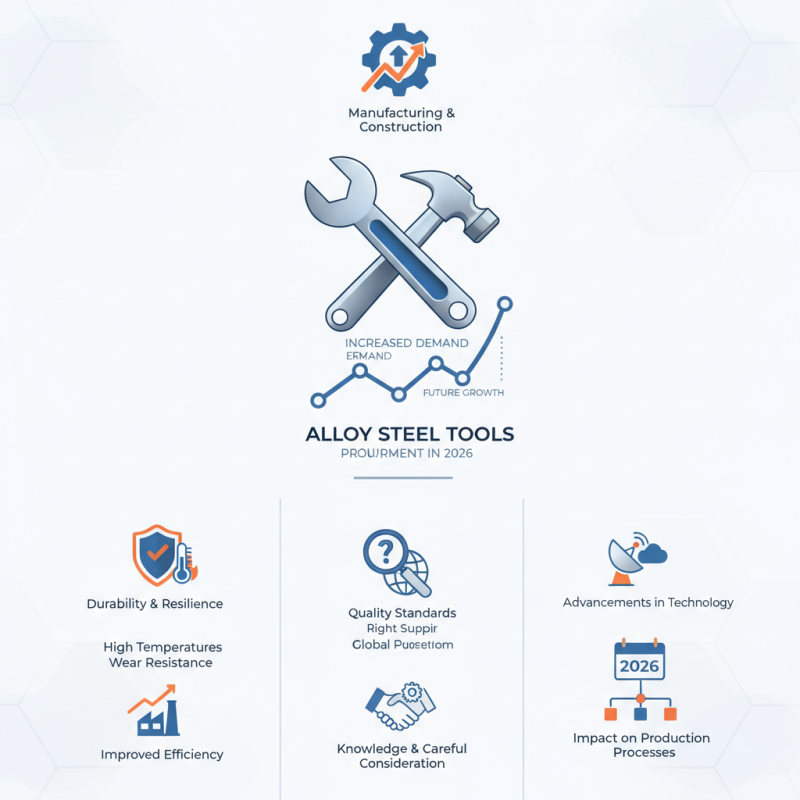
In the dynamic landscape of manufacturing and construction, the demand for Alloy Steel Tools is steadily increasing. These tools are essential in various industries, providing exceptional durability and resilience. As businesses adapt to changing procurement needs, understanding the best options for 2026 becomes critical.
Alloy Steel Tools offer a unique blend of properties that enhance performance. Their resistance to wear and ability to withstand high temperatures make them versatile for heavy-duty applications. Many companies rely on these tools to improve efficiency, yet not every option on the market meets quality standards. Choosing the right supplier requires knowledge and careful consideration.
Looking ahead, businesses must stay informed about advancements in alloy steel technology. This ensures they select tools that not only meet current needs but also support future growth. Manufacturers must reflect on their procurement practices to ensure they prioritize quality and reliability. Effective sourcing of Alloy Steel Tools can significantly impact production processes and overall success.
2026 Alloy Steel Market Overview: Trends and Global Demand Insights
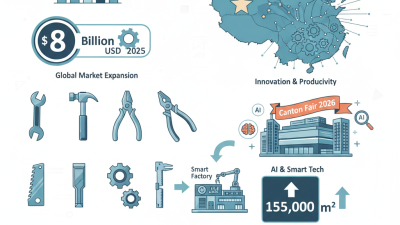
The alloy steel market is evolving rapidly. As we approach 2026, industry trends indicate increased demand for high-performance alloy steel tools. Manufacturers are focusing on durability and versatility. This is critical for various sectors, including automotive, construction, and aerospace. The global landscape reflects a significant shift towards renewable energy and smart machinery.
Tips: Consider the lifespan of tools. Tools created from high-quality alloy steel often perform better and last longer. This translates into lower costs over time. Always assess market needs before procurement.
Furthermore, consumer preferences are shifting. There is a growing interest in sustainable and eco-friendly materials. Companies that adapt will likely see better sales. Inefficiencies can occur if businesses misjudge market trends. Staying informed is vital to aligning production with demand.
Tips: Regularly evaluate supplier practices. A reliable supplier can enhance quality assurance. Develop relationships with suppliers who prioritize sustainable practices and can guarantee the quality of their alloy steel products.
2026 Alloy Steel Market Overview: Global Demand Insights
Key Properties of Alloy Steel Tools: Essential Features for Global Procurement
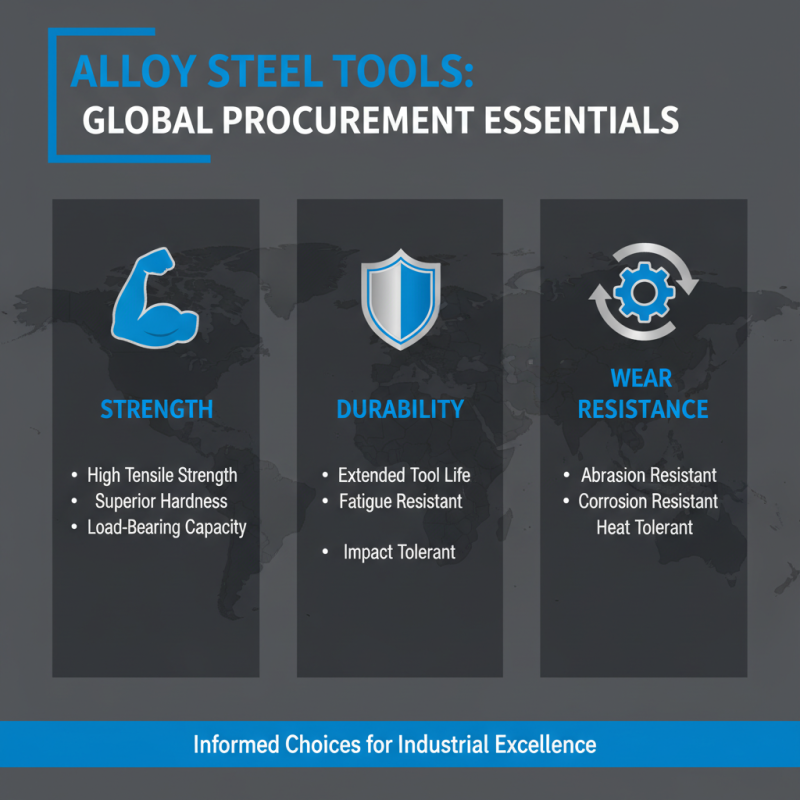
Alloy steel tools are integral to various industries. Their strength, durability, and resistance to wear make them highly sought after. Key properties of these tools play a crucial role in global procurement. Understanding these features is essential for making informed choices.
One important property is hardness. Harder tools can withstand severe conditions, extending their lifespan. Additionally, alloy steel's toughness allows tools to absorb shock without breaking. This combination is vital in manufacturing environments where tools face heavy use. Corrosion resistance is another key feature. Tools with this property reduce maintenance costs and downtime.
However, there can be challenges. The specific alloy composition can affect performance. Overlooking this aspect may lead to suboptimal procurement decisions. Buyers need a deep understanding of how different alloys behave under various conditions. Experience in selecting appropriate tools can greatly influence overall efficiency and productivity. Effective global procurement hinges on recognizing both strengths and potential weaknesses in alloy steel tools.
Top Global Suppliers of Alloy Steel Tools: Competitive Landscape Analysis
The global market for alloy steel tools is evolving.
Suppliers are diversifying their offerings to meet various procurement needs.
This competitive landscape highlights the importance of adaptability.
Many companies are focusing on innovation while keeping production costs in check.
Quality remains a critical factor when selecting suppliers.
Buyers often seek tools that demonstrate durability and effectiveness.
However, not all suppliers maintain these standards consistently.
Some may struggle with quality control, leading to disparities in performance.
This can make procurement a challenging task.
Geographical location also impacts reliability.
Suppliers in regions with robust manufacturing infrastructures tend to excel.
Yet, buyers must navigate logistical challenges that arise from long distances.
Ultimately, understanding supplier capabilities allows businesses to make informed choices.
This understanding can lead to better outcomes in sourcing alloy steel tools.
Impact of Alloy Composition on Tool Performance: Industry Standards and Data
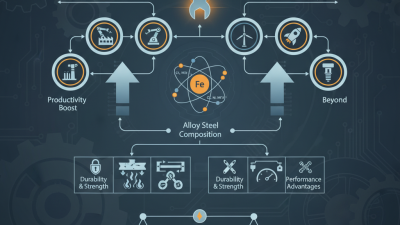
Alloy composition plays a pivotal role in determining tool performance across various industries. Different elements in the alloy contribute unique properties, affecting hardness, toughness, and wear resistance. For instance, adding chromium enhances hardenability, while nickel boosts ductility. Each alloy formulation offers distinct advantages, tailored to specific applications.
However, the relationship between composition and performance isn't straightforward. Variables like heat treatment and manufacturing process can alter the expected outcomes. For instance, two tools made from the same alloy might diverge in performance based on how they were processed. This inconsistency can present challenges for procurement.
Industry standards provide essential guidance but are not exhaustive. Manufacturers often rely on empirical data to evaluate tool performance in real-world conditions. The landscape continues to evolve, prompting experts to rethink established norms. Understanding the nuances of alloy composition requires ongoing education and adaptation. This complexity reminds us that there is always more to learn in the realm of material science.
2026 Top Alloy Steel Tools for Global Procurement Needs
| Tool Type |
Alloy Composition |
Hardness (HRC) |
Tensile Strength (MPa) |
Applications |
Industry Standards |
| Drill Bits |
High-Speed Steel (HSS), 10% Cobalt |
65 |
2800 |
Metalworking, Construction |
ISO 9001 |
| Cutting Tools |
Alloyed Steel, M2 Grade |
62 |
3100 |
Machining, Aerospace |
DIN 2799 |
| Molding Tools |
Tool Steel, D2 Type |
61 |
2500 |
Plastic Injection, Die Casting |
ASTM A681 |
| Shearing Blades |
Alloy Steel, S7 Grade |
58 |
2300 |
Sheet Metal, Recycling |
ISO 14001 |
Future Innovations in Alloy Steel Tool Manufacturing: Predictions for 2026
The future of alloy steel tool manufacturing looks promising as we approach 2026. Innovations will focus on enhancing durability and efficiency. New heat treatment methods could lead to stronger tools. With advancements in surface coatings, we could see tools that resist wear better than ever.
Sustainability is also becoming essential. Manufacturers might shift to eco-friendly materials and processes. This could lower environmental impact while meeting the increasing demand for high-quality tools. However, adapting to these changes will take time and resources. Not all companies may keep pace with innovation.
Research and development in alloy composition is crucial. New alloys may provide specific advantages for different industries. Yet, experimentation comes with risks. Some innovations may fail to deliver expected performance. Continuous feedback and adaptation will be key to success in this evolving market. The journey towards 2026 promises excitement, but it also requires careful consideration of both opportunities and challenges.