Top 10 Types of Low Carbon Steel for Global Buyers
Choosing the right Low Carbon Steel can influence product strength, fabrication speed, cost, and service life. For global buyers, the decision involves more than comparing prices on a supplier quotation. Grade, thickness, surface condition, delivery form, and certification all affect the final result.
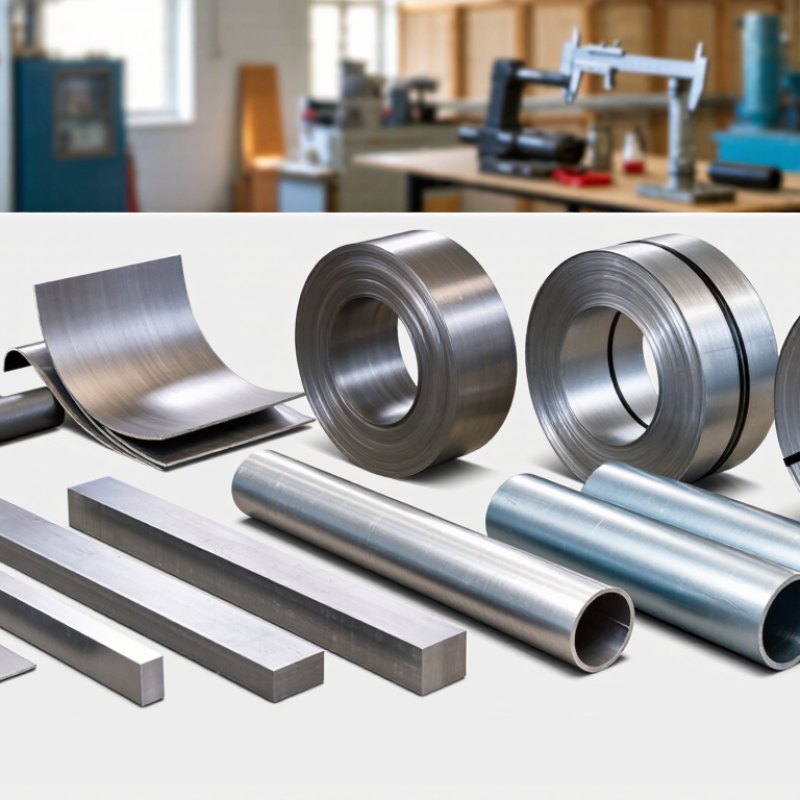
This guide examines ten widely used types of low carbon steel for construction, machinery, automotive parts, general fabrication, and industrial equipment. It considers practical differences between sheet, plate, bar, tube, and coil products. Common examples may include structural grades, drawing-quality steels, and engineering grades used for machining or forming. Details matter.
A buyer may need A36 for a simple frame, DC01 for deep forming, or 1018 for parts requiring reliable machining. However, grade names are not always interchangeable across ASTM, EN, JIS, and other standards. Chemical limits and mechanical properties can differ. Always verify the material certificate.
Real purchasing experience shows that surface defects, inconsistent thickness, and unclear packaging can create larger losses than a small price difference. Supplier audits, sample testing, and traceable inspection records provide useful protection. Still, no checklist is perfect. A neat specification can overlook actual production conditions. That limitation matters.
The comparisons ahead focus on strength, weldability, formability, machinability, corrosion considerations, and typical applications. They also highlight where each type may be unsuitable. Buyers should confirm project requirements with qualified engineers and accredited testing laboratories. Regional standards, transport conditions, and end-use risks deserve careful review. This article offers a practical starting point, not a substitute for technical validation.
Low Carbon Steel: Definition, Composition, and Key Properties
Low carbon steel is an iron-based alloy with a small carbon addition, commonly below 0.25% by mass. Exact limits vary by grade and governing standard. Its chemistry normally includes iron, carbon, manganese, silicon, and controlled traces of sulfur and phosphorus. Carbon improves strength, but excessive carbon reduces ductility and weldability. This balance supports its use in sheets, plates, tubes, bars, wire, and fabricated frames.
Its key advantage is practical formability. It can be bent, stamped, drilled, and welded with relatively simple procedures. Tensile strength is moderate, while elongation is often suitable for forming operations. It is not naturally corrosion resistant. A damp warehouse can leave orange rust on an unprotected surface. Paint, oil, plating, or galvanizing may be selected according to exposure and maintenance plans. Performance also changes with thickness, rolling condition, and heat treatment.
For global purchasing, chemistry alone is insufficient. Request a material certificate showing carbon content, mechanical results, dimensions, heat number, and test method. Compare yield strength and elongation with the actual design requirement. A low quoted price may reflect thinner gauge or weaker dimensional tolerance. I have seen specifications appear identical until coating mass and flatness were checked. That detail matters. Real sourcing is messier. Buyers should also confirm weld procedure compatibility and packaging for humid transit. Standards are useful, but the purchase specification must state measurable acceptance criteria.
How Low Carbon Steel Types Are Classified for Global Trade
Top 10 Types of Low Carbon Steel for Global Buyers
How Low Carbon Steel Types Are Classified for Global Trade
Global buyers usually classify low carbon steel by chemistry, strength, form, and intended use. Carbon content commonly remains below about 0.25%, but standards define boundaries differently. The World Steel Association reported approximately 1.89 billion tonnes of crude steel production in 2023, showing the scale of this international market.
Common trade categories include ultra-low-carbon steel, commercial-quality steel, drawing-quality steel, deep-drawing steel, mild steel, structural steel, plate steel, pressure-vessel steel, galvanized steel, and weather-resistant low-carbon steel. Typical grades include 1006, 1008, 1010, 1018, 1020, A36, S235, DC01, and equivalent regional grades. These names are not always interchangeable. A buyer should compare carbon, manganese, yield strength, elongation, thickness, and surface condition.
Small details matter.
ASTM, EN, JIS, and GB standards may describe similar products with different testing rules. Product shape also changes classification: coil, sheet, plate, bar, tube, or wire. The World Steel Association’s World Steel in Figures 2024 highlights steel’s broad industrial use, while the International Energy Agency notes that steel production contributes roughly 7–9% of global energy-related carbon dioxide emissions. This makes recycled content and production route relevant procurement data, not just marketing language. In practice, certificates, heat numbers, dimensional reports, and independent testing offer stronger evidence than grade labels alone. Classification remains imperfect, especially when traders simplify several standards into one commercial term.
Ten Common Types of Low Carbon Steel and Their Applications
Low carbon steel is valued for its weldability, formability, and practical cost. SAE 1008 suits wire, nails, and lightly formed parts. SAE 1010 works well for brackets, tubes, and simple machined components. SAE 1015 offers slightly higher strength for shafts and pins. SAE 1020 supports frames, bolts, and general engineering parts. Carbon limits can vary by specification.
ASTM A36 is widely used for structural plates, beams, base plates, and welded supports. EN S235JR serves similar construction needs, including frames and platforms. EN DC01 is designed for cold forming, such as panels, cabinets, and appliance housings. EN DC03 provides better deep-drawing performance for shaped panels and metal covers. JIS SPCC is common in cold-rolled sheets, enclosures, and electrical cabinets. ASTM A283 Grade C fits tanks, brackets, and low-stress welded structures.
The grade alone is not enough. Thickness, surface finish, impact requirements, and delivery condition can change the best choice. A practical warning: similar names do not guarantee identical chemistry. Buyers should check the mill test certificate and applicable standard. That detail matters. I have seen a suitable grade fail because its forming performance was overlooked. The list is useful, but not perfect. For safety-critical structures, engineers should verify design loads, welding procedures, and local compliance before ordering.
Top 10 Types of Low Carbon Steel for Global Buyers
Ten common low carbon steel grades are compared by their representative maximum carbon content. Lower carbon levels generally improve formability and weldability, while applications vary by strength, product form, and governing standard.
Values are representative specification limits or commonly published grade ranges; exact chemistry and mechanical properties depend on the applicable standard and product condition.
How to Compare Grades, Standards, and Performance Requirements
Top 10 Types of Low Carbon Steel for Global Buyers
Comparing low carbon steel requires more than reading a grade name. Buyers should check chemistry, yield strength, impact testing, thickness range, and delivery condition. Common choices include ASTM A36, EN S235JR, S275JR, S355JR, JIS SS400, GB Q235B, Q275, SAE 1008, SAE 1018, and EN DC01. Their performance overlaps, but they are not automatically interchangeable.
Standards matter. ASTM A36 typically specifies a minimum yield strength near 250 MPa, while EN S235JR starts around 235 MPa. S355JR offers about 355 MPa, but its welding procedure and impact requirements need closer review. DC01 suits forming work, not heavy structural loading. SAE 1008 is often selected for drawing and light fabrication. These figures come from the relevant ASTM, EN, JIS, GB, and SAE specifications, not supplier summaries.
Performance depends on use.
A bridge plate needs traceable toughness, weldability, and thickness control. A pressed panel needs elongation and surface quality. The World Steel Association reported about 1.89 billion tonnes of crude steel production in 2023, showing the scale of global supply variation. The International Energy Agency also identifies steel as responsible for roughly 8% of global energy-related emissions. Buyers should therefore request mill certificates, heat numbers, carbon-equivalent calculations, and independent inspection where risk is high. A small weakness remains: grade comparisons can fail when local editions or delivery conditions differ. Guessing from the label is not technical purchasing.
Global Buying Factors: Certification, Supply, Pricing, and Fabrication
Choosing among the top 10 types of low carbon steel requires more than comparing grades. Buyers should match carbon content, thickness, and product form with the final application. Sheet, plate, tube, wire, structural sections, and drawing-quality steel each support different fabrication needs. A procurement engineer should request chemical limits, tensile strength, yield strength, elongation, and dimensional tolerances before approval.
Certification protects the buying decision. Ask for a material test certificate with heat number traceability and third-party inspection when risk is high. EN 10204 3.1, ASTM, and EN documents may apply, depending on the destination and contract. Verify whether the certificate covers the exact shipment, not only a similar production batch. This detail is often missed.
Supply reliability also affects real cost. Check monthly capacity, minimum order quantities, production slots, export packing, port schedules, and replacement procedures for rejected material. Pricing should include freight, duties, testing, cutting, surface treatment, and currency changes. A cheap quote can mislead. Fabrication performance matters just as much: low carbon steel usually welds and forms well, but excessive thickness variation can disrupt laser cutting or bending. Trial pieces are useful, although smaller buyers may consider them expensive. That hesitation can create larger losses later. Recheck weld procedures, bend radii, coating compatibility, and storage conditions before placing a recurring order.