Gangtuo
Integrity, Innovation, And Win-Win
Contact us

Top Square Tube Steel Suppliers for Global Buyers

Global buyers need more than a low quotation when selecting Square Tube Steel suppliers. They need consistent dimensions, traceable materials, dependable delivery, and clear technical communication. The World Steel Association’s World Steel in Figures 2024 reports global crude steel production near 1.9 billion tonnes in 2023. This scale creates extensive sourcing opportunities, but it also increases variation between mills, exporters, and regional distributors. Quality is measurable.

Reliable suppliers should provide mill test certificates, chemical composition data, mechanical properties, dimensional tolerances, and applicable testing standards. Buyers should also verify production capacity, coating options, welding quality, packaging methods, and export experience. The OECD Steel Outlook 2024 highlights continuing concerns about global steel overcapacity, making supplier verification more important than promotional claims. A large factory is not automatically a suitable partner. That matters.

Environmental performance deserves practical attention. The International Energy Agency identifies steelmaking as a major industrial source of carbon dioxide emissions, so buyers may request recycled content, emissions information, and energy-related disclosures. These records support responsible procurement and future reporting requirements. However, supplier rankings can mislead when they rely only on website visibility, annual volume, or price. A better evaluation combines audited evidence, product samples, delivery history, and customer references. Some data may remain incomplete. Buyers should acknowledge that weakness, then compare suppliers using the same checklist. This guide examines leading Square Tube Steel suppliers through quality control, production capability, customization, logistics, certifications, and long-term reliability.
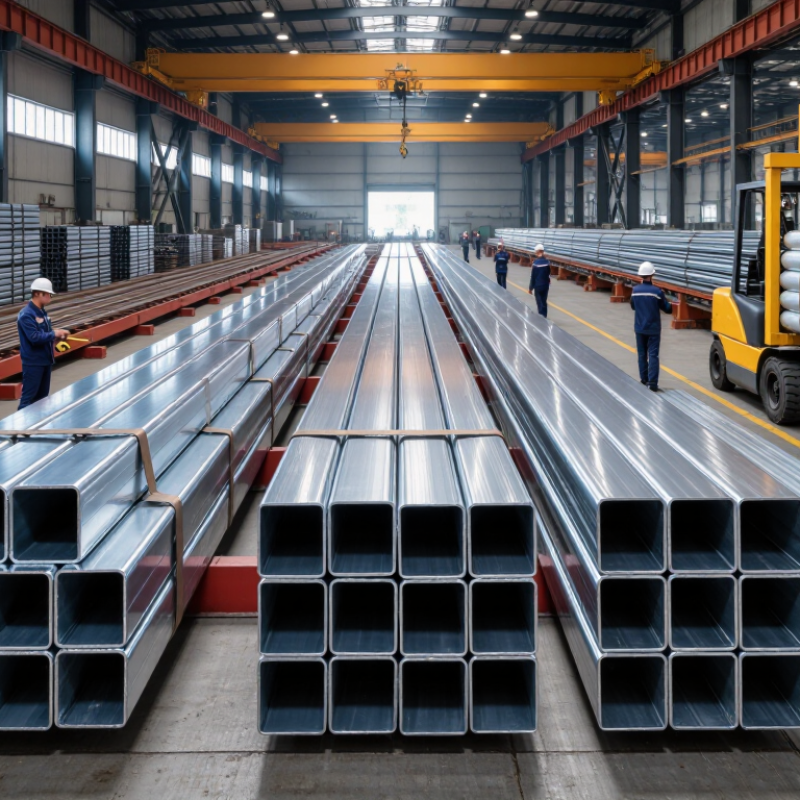
Top Square Tube Steel Suppliers for Global Buyers

Global Square Tube Steel Market Scope and HS Code 730661 Trade Data

Top Square Tube Steel Suppliers for Global Buyers

Global Square Tube Steel Market Scope and HS Code 730661 Trade Data

Square tube steel is traded worldwide for construction frames, machinery, storage systems, and transport equipment. Under HS Code 730661, customs schedules generally cover welded hollow sections with square or rectangular cross-sections, made from iron or non-alloy steel. Buyers should confirm local tariff notes before ordering.

UN Comtrade trade data provides shipment values, quantities, origins, and destinations for HS 730661. However, reporting quality differs between economies. Re-exports can also distort supplier rankings. This is not a minor detail. A country may appear to lead supply while processing imported material first.

Industry demand remains closely linked to steel consumption. The World Steel Association forecast global steel demand at about 1.75 billion tonnes in 2024. Its 2025 forecast reached roughly 1.77 billion tonnes. These figures support continued demand for fabricated tube products, but they do not measure square tubes alone.

Professional buyers should compare mill certificates, wall-thickness tolerance, welding quality, coating condition, and bundle weight. A 6-meter bundle can look compliant while hiding inconsistent thickness. Check the inspection method. Ask for heat numbers and third-party verification when shipment value is high.

Trade Map and national customs portals can refine HS 730661 comparisons. Still, statistics need context. Currency changes, freight costs, and different unit declarations may weaken direct supplier comparisons. Experienced sourcing teams review at least three reporting periods before changing an approved supply route.


Top Square Tube Steel Suppliers for Global Buyers

Global export scope for HS Code 730661: welded square or rectangular hollow profiles of iron or non-alloy steel.

Loading reported 2023 export data from UN Comtrade...

The chart shows the ten largest reporting economies by export value for HS 730661. Values are reported in US dollars and may reflect each economy’s customs reporting practices.

How ASTM A500, EN 10219, and JIS G3466 Define Supplier Quality

For global buyers, square tube steel quality starts with the standard behind the product. ASTM A500 specifies structural carbon steel tubing in square and rectangular shapes, including strength, chemistry, dimensions, and testing requirements. Buyers should verify the grade, wall thickness, outside dimensions, and heat number on each mill certificate. A clean surface is useful, but it does not prove structural performance.

EN 10219 covers cold-formed welded structural hollow sections. It places close attention on dimensional tolerances, weld quality, mechanical properties, and impact performance for applicable grades. Suppliers should provide inspection records that match the production batch. Check corner radius, straightness, and weld appearance during receiving inspection. Small deviations can create serious fitting problems.

JIS G3466 defines carbon steel square and rectangular hollow sections for structural and general applications. It includes requirements for chemical composition, tensile strength, yield strength, dimensions, and testing. Reliable suppliers can explain how their inspection process follows the selected edition and grade. Ask for traceability from raw material to finished bundle.

Certificates matter. They are not enough.

Independent testing can confirm tensile results, coating thickness, and wall measurements. In practice, buyers sometimes focus too heavily on price or polished documentation. That is a weak habit. A supplier may meet one standard but still provide inconsistent packaging, labeling, or delivery control. Factory audits, sample checks, and clear purchase specifications reveal those gaps before containers leave the port.

Comparing Yield Strength: 46–50 ksi for ASTM A500 Square Tubes

Top Square Tube Steel Suppliers for Global Buyers

For global buyers, yield strength is a practical filter when comparing ASTM A500 square tubes. Grade B typically provides a minimum yield strength of 46 ksi, while Grade C reaches 50 ksi. That four-ksi difference may affect column sizing, deflection control, and material efficiency. It is not a substitute for engineering calculations.

Ask suppliers for the current material test report, heat number, wall thickness, and production standard. Check whether the stated values apply to square tubing, not only round products. A 2-inch square tube with a 0.125-inch wall can look uniform, yet small thickness variations may influence its actual performance. Confirm dimensions with calibrated tools and review the reported test method.

Experienced purchasing teams also compare weldability, surface condition, straightness, and delivery consistency. Yield strength alone cannot reveal every manufacturing risk. A supplier may quote 50 ksi, but incomplete traceability should raise questions. I have seen attractive spreadsheets hide missing chemistry data and unclear testing dates. That deserves a second review. Requirements can also differ by project, loading pattern, and local specification. Before approving a shipment, match the certificate, tube markings, inspection records, and design assumptions line by line.

Top Supplier Regions: China, India, Turkey, and Europe in Export Supply

China, India, Turkey, and Europe form major export regions for square tube steel. Each region offers a different purchasing advantage. China usually provides broad production capacity, many wall thickness options, and competitive container pricing. India is strong in carbon steel fabrication, customized lengths, and project-based orders. Turkey serves European, Middle Eastern, and North African markets with practical transit times. European suppliers often emphasize traceability, tighter documentation, and compliance with regional standards.

A reliable supplier should provide mill certificates, dimensional reports, chemical data, and clear coating specifications. Buyers should compare outside dimensions, wall thickness tolerance, steel grade, bundle weight, and loading methods. Port distance can change the real purchase cost. Turkey may reduce inland delivery time for nearby markets, while China may suit larger volume orders. India can be useful for customized production, but lead times need careful confirmation. These are general patterns, not guarantees. Factory capacity and inspection discipline still vary.

Tips: Request recent inspection records and production photos. Confirm whether measurements follow the required standard. Ask for sample lengths before signing a large contract. Check rust protection inside bundles, especially during humid sea transport. A third-party inspection can reveal uneven corners, poor weld seams, or inaccurate wall thickness. Small details matter.

Top Square Tube Steel Suppliers for Global Buyers - Top Supplier Regions: China, India, Turkey, and Europe in Export Supply
Supplier Region Common Product Standards Typical Structural Steel Grades Indicative Outside Dimensions Indicative Wall Thickness Common Surface Finishes Typical Product Forms Export Supply Strengths Key Buyer Verification Points
China GB/T 6725 GB/T 6728 ASTM A500 EN 10219 Q235B, Q355B, Q420B; ASTM A500 Grades B and C are also commonly requested for export orders. Approximately 10 × 10 mm to 500 × 500 mm for commonly exported square hollow sections; larger sizes may be available by project. Approximately 1.2–25 mm, depending on production method, section size, standard, and order requirements. Black, pickled and oiled, galvanized, pre-painted, and externally coated finishes. Electric-resistance-welded square tubes, cold-formed hollow sections, galvanized tubes, and cut-to-length sections. Broad size availability, large production capacity, competitive pricing for container and project quantities, and extensive international shipping experience. Confirm the governing standard, steel grade, mill test certificate, weld quality, dimensional tolerances, coating mass, packing method, and third-party inspection requirements.
India IS 4923 ASTM A500 EN 10219 IS 1161 IS 4923 grades such as YST 210, YST 310, and YST 355; ASTM A500 and S275/S355 grades may be supplied for export applications. Approximately 12 × 12 mm to 300 × 300 mm for frequently traded square sections; project-specific sizes can vary. Approximately 1.6–16 mm for common commercial and structural ranges. Black mill finish, galvanized, zinc-coated, painted, and oiled finishes. ERW square tubes, structural hollow sections, galvanized hollow sections, and precision or mechanical tubing. Strong availability of carbon-steel tubing, English-language export documentation, flexible production for standard sizes, and established supply routes to Asia, the Middle East, Africa, Europe, and North America. Verify chemical composition, yield and tensile strength, elongation, dimensional tolerances, galvanizing specification, heat number traceability, and compliance with the destination-market standard.
Turkey EN 10219 EN 10210 ASTM A500 TS EN standards S235JRH, S275J0H, S355J2H, and comparable ASTM structural grades subject to the purchase specification. Approximately 15 × 15 mm to 400 × 400 mm for commonly exported welded square hollow sections. Approximately 1.5–20 mm, with heavier sections available for structural and infrastructure projects. Black, galvanized, painted, powder-coated, and externally coated surfaces. Cold-formed welded hollow sections, hot-finished hollow sections, galvanized tubes, and fabricated cut-to-size products. Geographical proximity to Europe, the Mediterranean, and the Middle East; strong regional logistics; and broad use of European structural standards. Check CE or other required conformity documentation, EN 10219 or EN 10210 classification, impact-test temperature, weld inspection, surface condition, and transport route.
Europe EN 10219 EN 10210 EN 10305 EN 10255 S235JRH, S275J0H, S355J2H, and other grades specified under European structural and mechanical-tubing standards. Approximately 20 × 20 mm to 500 × 500 mm for widely available structural hollow sections; availability differs by country and mill. Approximately 2–25 mm for common structural ranges. Black, hot-dip galvanized, painted, powder-coated, pickled, and specialized protective coatings. Cold-formed welded hollow sections, hot-finished hollow sections, precision tubes, galvanized tubes, and project-fabricated sections. Strong standardization, detailed technical documentation, short intra-European delivery routes, high traceability, and suitability for regulated construction projects. Confirm CE marking where applicable, Declaration of Performance, factory production control, EN grade designation, impact-test requirements, tolerances, and applicable safeguard or import measures.

Note: Dimensions, wall thicknesses, grades, finishes, and certifications are representative export-supply ranges rather than guaranteed offerings from every producer. Buyers should confirm the exact specification, applicable national standard, tolerance class, coating requirement, inspection plan, and delivery terms before placing an order.

Buyer Checklist: Mill Certificates, Tolerances, MOQ, Incoterms, and Lead Time

For global buyers sourcing square tube steel, documentation should be checked before price. Ask for a mill certificate showing heat number, chemical composition, mechanical results, product standard, and test method. Match the heat number to the bundle tag and invoice. A certificate without traceability is only paper.

Measure more than outside dimensions. Confirm wall thickness, corner radius, straightness, length tolerance, and squareness against the agreed standard. Request recent inspection records, not a generic tolerance table. A six-meter tube can look straight on a pallet yet fail during fabrication. Sampling matters. In practice, I inspect several bundles, although time pressure sometimes encourages too small a sample.

MOQ affects cash flow, storage, and trial orders. Ask whether the minimum applies per size, grade, finish, or shipment. Clarify cut-length charges and packing requirements. Incoterms must identify the named place, because “FOB” alone can create costly misunderstandings. Confirm who handles export clearance, inland transport, insurance, and unloading risk. Lead time should separate production, testing, and transit. Get a written schedule with a delay notice procedure. Add buffer days. Steel plans rarely survive every port disruption. I once treated an estimated date as firm, and that mistake weakened an otherwise careful purchase.