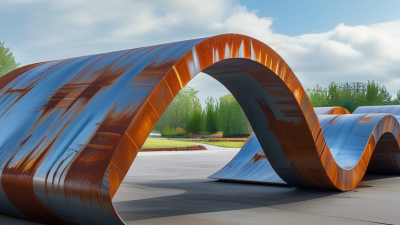
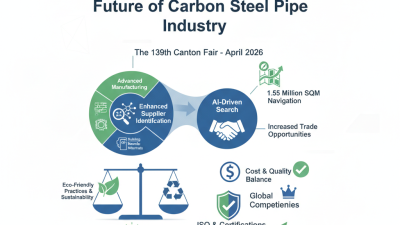
Global buyers are entering 2026 with wider choices in Weathering Steel products. Corten A, Corten B, ASTM A588, ASTM A606, and European S355 weathering grades serve different project needs. Their surfaces may look similar, yet their chemistry, strength, thickness ranges, and delivery documents can differ considerably. That difference matters beside a coastal bridge or a garden façade.
This guide examines the top types of Weathering Steel for international purchasing decisions. It connects material grades with real applications, including bridges, rail structures, architectural screens, containers, and outdoor sculptures. Experienced buyers usually check atmospheric exposure, drainage, welding requirements, fabrication limits, and expected patina development. Chloride-rich air deserves special caution. Weathering steel is not maintenance-free everywhere. Some assumptions fail.
Reliable sourcing also requires more than comparing prices. Buyers should review standards, mill test certificates, dimensional tolerances, surface condition, and traceability. Suppliers may describe equivalent grades too casually, even when their technical limits are not identical. Independent inspection can reduce costly surprises. It also helps confirm chemical composition and mechanical performance before shipment.
The following sections compare major grade families, practical selection criteria, and common purchasing risks. They consider regional standards without treating one specification as universally interchangeable. Climate data, engineering design, and local building requirements still control the final decision. This is a working guide, not a substitute for qualified engineering review. Details can be missed. Careful verification remains essential.
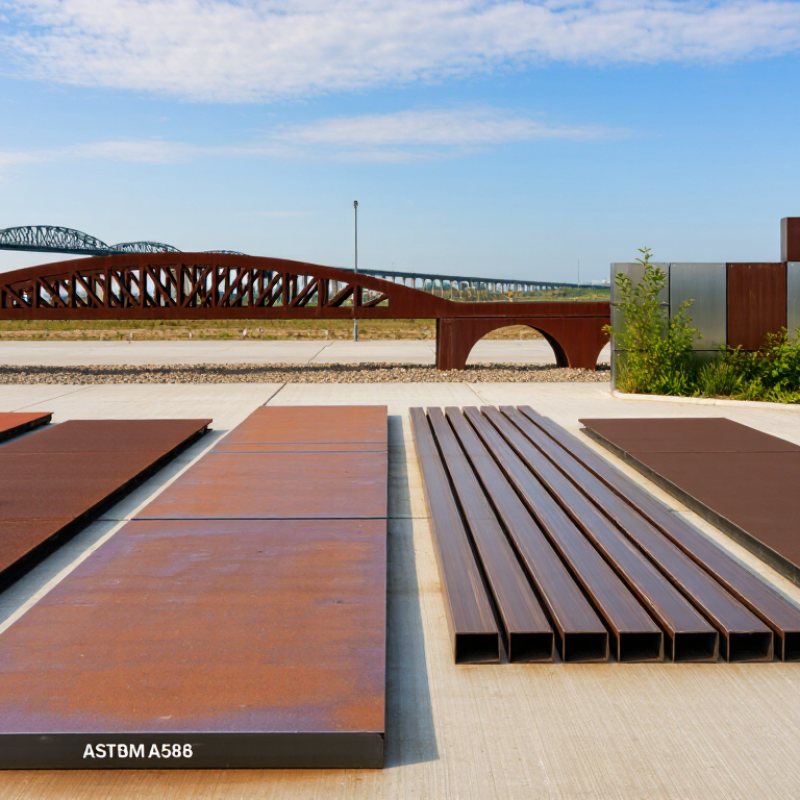
Weathering steel develops its protective surface through controlled corrosion. Copper, chromium, nickel, and phosphorus slow further oxidation after repeated wetting and drying. The surface changes from orange-brown to a darker, stable patina. Patina is not paint. It forms naturally, but only when the environment supports regular drying.
ASTM A242/A242M defines chemical limits and mechanical requirements for high-strength, low-alloy weathering steel. Its criteria control carbon, manganese, phosphorus, sulfur, and selected alloying elements. Buyers should verify the exact grade, thickness, tensile strength, yield strength, and elongation on the mill certificate. Chemical compliance alone is insufficient.
FHWA technical guidance on weathering steel emphasizes drainage, ventilation, and exposure conditions. Water trapped behind stiffeners, at joints, or beneath debris can prevent protective patina formation. Chloride-rich coastal air may also accelerate corrosion beyond design expectations. A laboratory coupon can look perfect; a bridge corner may not. Field inspection remains essential. The Steel Construction Institute similarly links successful performance to alternating wet-dry cycles and careful detailing, rather than alloy content alone. Drainage matters.
Global buyers should compare ASTM requirements with project climate, fabrication quality, and maintenance access. Some suppliers describe “weathering steel” too broadly. That wording deserves scrutiny. Request heat analysis, mechanical test results, surface-condition records, and traceable inspection documentation before purchase.
ASTM A242 weathering steel grades are designed to develop a protective oxide patina through repeated wetting and drying. The chart compares the minimum yield strength and tensile strength requirements for Grades 42, 46, and 50, expressed in ksi. Actual patina development depends on exposure conditions, drainage, humidity, chloride levels, and surface contamination.
Data basis: ASTM A242/A242M minimum mechanical-property requirements for structural weathering steel plate.
ASTM A588 weathering plate remains a practical choice for structural projects requiring strength and reduced maintenance. Its commonly specified minimum yield strength reaches 345 MPa, depending on grade, thickness, and applicable requirements. This strength supports bridge members, building frames, towers, and exposed architectural structures. Buyers should confirm the exact grade before placing an order.
The steel develops a protective oxide layer when exposed to alternating wet and dry conditions. The surface changes from bright mill scale to brown, then deeper rust tones. However, this process is not automatic protection in every location. Constant moisture, salt spray, or trapped water can accelerate corrosion. Drainage details matter greatly. They often decide whether the material performs well.
Experienced buyers should review the mill test certificate, plate dimensions, impact requirements, and heat analysis. Weldability also deserves attention, especially for thick sections and restrained joints. Qualified procedures and controlled preheating may be necessary. A visual inspection cannot confirm 345 MPa yield strength. Laboratory testing is more dependable. It is easy to oversell weathering steel as maintenance-free, but that description is incomplete. Check regional exposure conditions, fabrication limits, and project specifications before approval. One detail is often missed: the rust runoff may stain nearby concrete, stone, or finished surfaces.
| Weathering Steel Type | Common Standard | Product Form | Minimum Yield Strength | Minimum Tensile Strength | Typical Thickness Range | Typical Applications | Key Buying Consideration |
|---|---|---|---|---|---|---|---|
| High-Strength Weathering Plate | ASTM A588 Grade A/B/C/K | Plate, sheet, structural sections | 345 MPa minimum up to 100 mm thickness | 485 MPa minimum | Typically 2–200 mm, subject to mill capability | Bridges, buildings, rail infrastructure, industrial structures | Confirm grade, thickness-specific mechanical values, welding procedure, and supplementary notch-toughness requirements. |
| Weathering Structural Plate | ASTM A242 Type 1 | Plate and structural shapes | Approximately 345 MPa for thinner sections | Approximately 485 MPa for thinner sections | Product limits vary by section and thickness | Architectural structures, bridges, towers, exposed frames | Check the applicable product form and thickness table because properties vary with section size. |
| Cold-Forming Weathering Sheet | ASTM A606 Type 4 | Sheet and strip | Typically specified by product thickness and grade | Typically specified by product thickness and grade | Generally thin-gauge sheet and strip | Roofing, siding, flashing, enclosures, light-gauge components | Select based on forming radius, coating-free exposure, profile geometry, and corrosion environment. |
| Weathering Bridge Steel | ASTM A709 Grade 50W | Bridge plate and structural members | 345 MPa minimum | 485 MPa minimum | Commonly supplied in bridge-plate thicknesses | Highway bridges, overpasses, bridge girders, transportation structures | Review project bridge specifications, Charpy impact requirements, fracture-critical provisions, and weldability. |
| High-Performance Weathering Bridge Steel | ASTM A709 Grade 50W / HPS 50W where specified | Bridge plate and fabricated members | 345 MPa minimum for Grade 50W | 485 MPa minimum for Grade 50W | Project-specific plate thicknesses | Long-span bridges and demanding transportation projects | Verify the exact HPS designation, toughness class, chemistry limits, and delivery condition in the contract. |
| Weathering Structural Tubing | ASTM A847 | Cold-formed welded square, rectangular, and round tubing | Specified by size, wall thickness, and applicable grade | Specified by size, wall thickness, and applicable grade | Tubing wall thickness varies by section | Canopies, pedestrian bridges, frames, architectural supports | Confirm outside dimensions, wall tolerance, corner radius, weld quality, and corrosion-exposure conditions. |
| Weathering Reinforcing Steel | ASTM A706 with weathering-capable chemistry where approved | Deformed reinforcing bar | Grade-dependent; commonly 420 MPa for Grade 60 | Grade-dependent; commonly 550 MPa minimum for Grade 60 | Bar diameters vary by reinforcement schedule | Concrete bridges, marine-adjacent structures, transport infrastructure | Do not assume weathering performance from the bar standard alone; verify chemistry, exposure suitability, and project approval. |
Technical note: Weathering steel develops a protective oxide layer under suitable alternating wet-and-dry atmospheric exposure. It is generally unsuitable for continuously wet, submerged, salt-contaminated, or poorly drained conditions without project-specific corrosion assessment. Mechanical properties can vary by grade, product form, and thickness; the governing ASTM standard and purchase specification should always be checked.
For bridge projects, ASTM A709 weathering grades offer a practical balance between strength, durability, and reduced coating needs. A709 Grade 50W typically provides a minimum yield strength near 345 MPa, while HPS 70W reaches 485 MPa. This difference matters when designers need longer spans, lighter members, or higher load capacity.
HPS 70W can reduce plate thickness, but higher strength does not solve every design problem. Welding procedures, joint details, fracture toughness, and fabrication control still require careful review. In the field, the steel develops a dark protective patina through repeated wet and dry cycles. It performs poorly in continuously damp locations or areas exposed to heavy salt. I have seen attractive patinas fail to develop evenly near drainage points. Small details can create large maintenance concerns.
Tips: Confirm the specified yield strength before purchasing. Request mill test certificates and review weld procedures early. Check drainage, ventilation, and chloride exposure during design. A709 50W may suit moderate loads, while HPS 70W can support demanding bridge members at 485 MPa. Neither grade should be selected by strength alone.
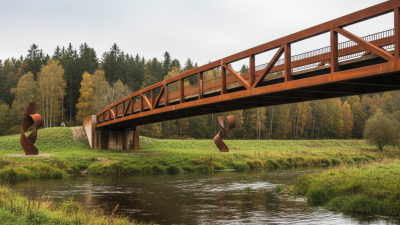
European weathering grades deserve careful comparison before global buyers issue a purchase order. EN 10025-5:2019 specifies S355J0WP, S355J2WP, and S355K2W for structural applications. Their nominal yield strength reaches 355 MPa for thicknesses up to 16 millimetres. Thicker sections have lower specified values. Check the table. S355J0WP provides 27 joules at 0°C, while S355J2WP provides 27 joules at −20°C. S355K2W provides 40 joules at −20°C. These impact values matter in cold regions, especially for bridges, façades, and exposed frames. Tensile strength commonly ranges from 470 to 630 MPa, depending on grade and thickness.
The “WP” grades contain higher phosphorus levels, supporting atmospheric patina formation. However, patina is not guaranteed in every environment. ISO 9223 classifies atmospheric corrosivity through humidity, pollution, and salt exposure. Coastal air can remain aggressive, particularly where chloride deposits collect beneath ledges. The NACE IMPACT study reported global corrosion costs near US$2.5 trillion annually, equal to about 3.4% of global GDP. That figure explains why drainage and detailing deserve equal attention. Avoid water traps, trapped debris, and incompatible runoff. Reality is messier. In sheltered zones, the surface may weather unevenly. Buyers should request heat certificates, impact-test results, thickness records, and exposure-condition reviews. Selecting S355K2W only because it sounds stronger may be poor engineering. Temperature, section thickness, welding procedure, and site atmosphere should control the final choice.
For 2026 sourcing, confirm the governing standard before comparing prices. ASTM A588 and EN 10025-5 cover common weathering-steel plate grades. Their chemical limits and mechanical properties differ. Ask for the original mill certificate, heat number, and third-party test results. Check the plate thickness range, not only the grade name. Thickness matters.
ISO 9223:2012 classifies atmospheric corrosivity from C1 to CX. Use this system to assess humidity, sulfur compounds, and airborne chlorides at the installation site. FHWA’s Steel Bridge Design Handbook warns that persistent moisture, salt deposits, and poor drainage can prevent a stable protective patina. Coastal exposure needs careful review. Weathering steel is not maintenance-free steel. A 2022 European Federation of Corrosion review also stresses that local pollutants can accelerate corrosion beyond broad environmental classifications.
Specify the supply form early: coil, cut-to-length plate, fabricated sections, or CNC-ready blanks. Confirm maximum bundle weight, flatness tolerance, edge condition, and surface preparation. For thick plates, request ultrasonic testing where structural risk justifies it. Check the mill. Delivery documents should identify heat treatment, dimensions, coating status, and inspection results. I would not treat any checklist as flawless; drainage details and actual exposure often defeat a perfect specification. A cheaper thinner plate can be the wrong bargain. Test the assumptions.