How to Choose Nickel Alloy Steel Pipe for Global Sourcing?
Choosing a Nickel Alloy Steel Pipe for global sourcing requires more than comparing price lists. The correct selection depends on corrosion conditions, pressure, temperature, fluid chemistry, and service life. A pipe used near seawater may need different nickel content than one handling acidic process fluids. Small specification errors can create expensive failures.
Experienced buyers usually begin with the operating environment, not the supplier’s catalog. Confirm the required alloy grade, outside diameter, wall thickness, manufacturing method, and end connection. Review standards such as ASTM, ASME, or equivalent regional requirements. Mill certificates should identify chemical composition, heat numbers, mechanical properties, and test results. Traceability matters.
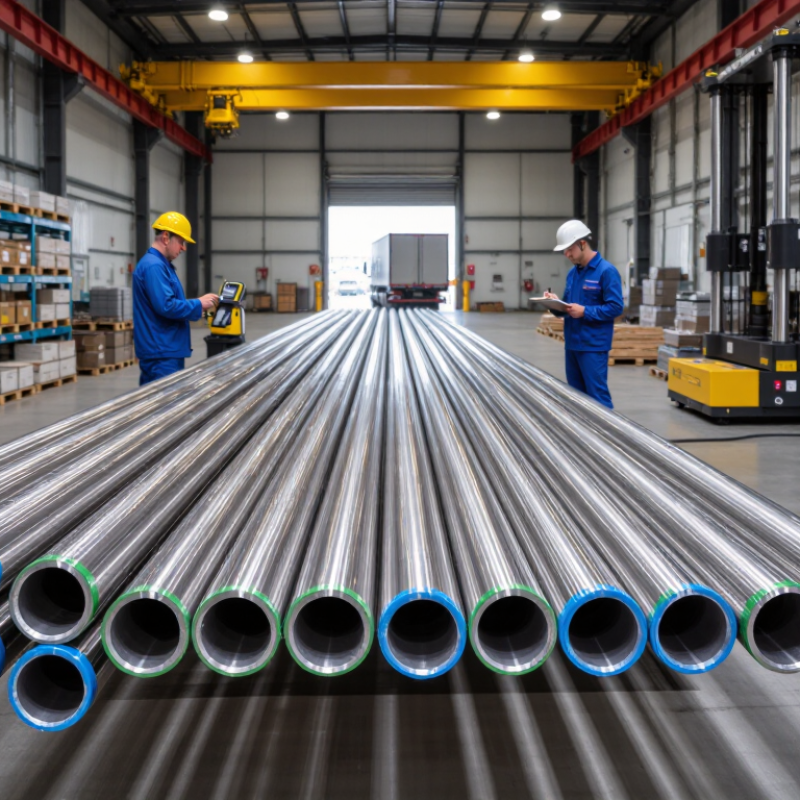
Ask for independent inspection when the project is critical. Visual checks, dimensional measurement, hydrostatic testing, and positive material identification can reveal problems before shipment. Supplier audits also deserve attention. Examine production equipment, quality procedures, export experience, and corrective-action records. A polished website proves little.
Global sourcing adds practical risks. Packaging must protect pipe ends from impact and moisture during long ocean transport. Lead times may change because of alloy availability, customs procedures, or production delays. Build realistic inspection and logistics buffers. Cheap offers can become costly after rework, testing, or rejected deliveries.
There is no universal best pipe. Even a technically suitable alloy may be uneconomical for a low-risk application. Conversely, a cheaper grade may fail quickly in aggressive media. Recheck assumptions with a qualified materials engineer and request documented evidence. Some purchasing decisions still involve uncertainty. Recognizing it is part of responsible sourcing.
Define Alloy Grades by Nickel Content and Service Chemistry
How to Choose Nickel Alloy Steel Pipe for Global Sourcing?
Define Alloy Grades by Nickel Content and Service Chemistry
Nickel content is a useful starting point, not a final selection rule. Alloy 625 contains about 58% nickel, while Alloy 825 typically contains 38–46%. These differences affect resistance to chloride attack, reducing acids, and high-temperature oxidation. The USGS Mineral Commodity Summaries 2025 estimated global nickel mine production at about 3.7 million metric tons in 2024. Supply remains concentrated, so grade availability and certification deserve equal attention.
Read the service chemistry before requesting quotations. Chloride-rich seawater can trigger pitting and stress corrosion cracking. Sulfur-bearing, reducing acids may require higher nickel and molybdenum levels. Caustic solutions create another risk. Temperature changes the result. A pipe performing well at 25°C may fail at 200°C. ASME material specifications and ASTM product standards should define dimensions, heat treatment, testing, and tolerances. For sour service, review NACE MR0175/ISO 15156 requirements.
Do not compare nickel percentages alone. Chromium, molybdenum, iron, carbon, and stabilizing elements can change weldability and corrosion behavior. Request the UNS designation, heat number, chemical analysis, mechanical results, and positive material identification. The 2024 International Energy Agency Global Critical Minerals Outlook also highlights growing pressure on critical mineral supply chains. That pressure can encourage substitutions, sometimes too quickly. A polished certificate is not proof of suitability. Verify it against the actual fluid, pressure, temperature, and fabrication process. Mistakes often begin with an incomplete chemistry sheet.
How to Choose Nickel Alloy Steel Pipe for Global Sourcing?
Define Alloy Grades by Nickel Content and Service Chemistry
Nickel content is a useful first filter for pipe selection, but service chemistry is equally important. Lower-nickel stainless grades are commonly used for general corrosion and moderate chloride exposure, while higher-nickel alloys provide improved resistance in acidic, high-temperature, seawater, and mixed-contaminant environments. Actual selection should also consider temperature, concentration, pressure, welding requirements, and applicable material standards.
Match Pipe Size, Schedule, Pressure, and Temperature to ASME B31.3
Global sourcing begins with the process conditions, not the supplier’s catalog. ASME B31.3 requires design pressure, temperature, material strength, corrosion allowance, and cyclic service to be evaluated together. Record the actual operating range first. Then add credible upset conditions. A pipe rated for 200°C may face a brief 260°C excursion. That difference matters.
Match the outside diameter and wall thickness with ASME B36.19M dimensions. Schedule numbers are not universal pressure ratings. For each candidate, check the B31.3 pressure design equation, listed allowable stress, weld efficiency, and mill tolerance. Nickel alloy data from the Nickel Institute and ASTM specifications, such as ASTM B407 and ASTM B423, provide chemistry, tensile strength, and heat-treatment requirements. These values support qualification, but they do not replace project calculations.
Temperature changes the answer.
At higher temperatures, allowable stress usually falls. At low temperatures, toughness and impact requirements may control. Select the alloy after checking chlorides, acids, caustic service, velocity, and contamination risks. A thinner pipe can appear economical, yet erosion or corrosion may consume its margin quickly. A thicker schedule can complicate welding and increase residual stress. I have seen procurement sheets list pressure but omit transient temperature. That is a costly gap.
Request material certificates, heat numbers, dimensional inspection records, and pressure-test evidence. Confirm the test standard and acceptance criteria before comparing quotations. ASME B31.3 compliance is a design responsibility, not a marketing phrase.
How to Choose Nickel Alloy Steel Pipe for Global Sourcing? - Match Pipe Size, Schedule, Pressure, and Temperature to ASME B31.3
Nickel Alloy Pipe Sourcing and ASME B31.3 Design-Screening Matrix
| Application / Service |
Typical Nickel Alloy Selection |
Common Product Standard Route |
Temperature Screening Range |
Pressure / Schedule Starting Point |
B31.3 Verification Required |
| Chloride-bearing process water and brine |
UNS N06625 or UNS N08825 |
ASTM B444/B423, subject to the selected alloy and product form |
Confirm chloride concentration, pH, oxygen level, and design temperature; avoid relying on temperature alone |
Schedule 40S is a common procurement starting point for moderate pressure; use 80S or a calculated wall for higher pressure |
Allowable stress at design temperature, corrosion allowance, weld quality, external pressure, fittings, and flange rating |
| Reducing acid, chemical processing, and mixed oxidizing environments |
UNS N06022 or another alloy selected through corrosion testing |
ASTM B622 for seamless pipe or the applicable welded-pipe specification |
Establish the actual process envelope, including upset and cleaning conditions |
Schedule 40S or 80S may be used for initial budgeting only; final thickness must be calculated |
Corrosion rate, localized corrosion, material compatibility, minimum design metal temperature, and cyclic service |
| Hydrocarbon, alkali, and marine service |
UNS N04400 or UNS N08825, depending on the medium |
ASTM B165/B423 or the applicable alloy-specific specification |
Check thermal cycling, stress-corrosion risks, and the complete chemical composition |
Schedule 10S may suit low-pressure utility lines; Schedule 40S or heavier is normally screened for process lines |
Design pressure, temperature derating, erosion, vibration, supports, and joining method |
ASME B36.19M-Style Stainless and Corrosion-Resistant Alloy Pipe Dimensions Commonly Used for Nickel Alloys
| NPS |
DN |
Outside Diameter
(mm) |
Schedule 10S
Wall (mm) |
Schedule 40S
Wall (mm) |
Schedule 80S
Wall (mm) |
Approx. Internal Diameter at 40S (mm) |
Typical Sourcing Use |
| 1 |
25 |
33.4 |
2.77 |
3.38 |
4.55 |
26.64 |
Instrument branches and small-bore process lines |
| 2 |
50 |
60.3 |
2.77 |
3.91 |
5.54 |
52.48 |
Utility and moderate-flow process piping |
| 4 |
100 |
114.3 |
3.05 |
6.02 |
8.56 |
102.26 |
Main process headers and transfer lines |
| 6 |
150 |
168.3 |
3.40 |
7.11 |
10.97 |
154.08 |
High-flow process and utility piping |
| 8 |
200 |
219.1 |
3.76 |
8.18 |
12.70 |
202.74 |
Large-flow manifolds and process headers |
| 12 |
300 |
323.9 |
4.57 |
10.31 |
17.45 |
303.28 |
Bulk transfer, cooling-water, and large process lines |
Pressure and Temperature Matching Checklist
| Design Input |
What to Specify in the RFQ |
Effect on Pipe Selection |
ASME B31.3 Action |
| Design pressure |
Maximum internal pressure, units, pressure-test condition, and vacuum cases |
Controls required wall thickness and may require a heavier schedule |
Calculate pressure design thickness using the selected material's allowable stress and applicable B31.3 rules |
| Design temperature |
Normal, maximum, minimum, startup, shutdown, and upset temperatures |
Changes allowable stress, thermal expansion, gasket choice, and toughness requirements |
Use temperature-dependent allowable stresses and perform flexibility evaluation where applicable |
| Corrosion allowance |
Expected corrosion rate, service life, erosion risk, and inspection interval |
Adds thickness or may justify a more corrosion-resistant alloy |
Include the specified allowance and verify localized-corrosion risks separately |
| Pipe size and flow |
NPS/DN, flow rate, velocity limit, pressure drop, and connection type |
Determines inside diameter, velocity, erosion potential, and pump energy |
Confirm hydraulic sizing before locking the nominal size and schedule |
| Manufacturing and joining |
Seamless or welded, weld procedure, NDE level, heat treatment, and end preparation |
Affects quality factor, delivery availability, inspection, and total landed cost |
Verify weld quality requirements, examination category, and fabrication controls |
Engineering note: Schedule numbers and wall dimensions are not universal pressure ratings. Final pipe selection must be checked for the actual alloy, product specification, design pressure, design temperature, corrosion allowance, weld quality, external pressure, fittings, valves, and applicable ASME B31.3 requirements.
Verify ASTM B444 Dimensions, Seamless Construction, and Mechanical Data
Choosing nickel alloy steel pipe for global sourcing requires more than comparing prices. ASTM B444/B444M covers seamless pipe and tube in specific nickel-chromium-molybdenum-columbium grades. Confirm the exact UNS grade, not merely “nickel alloy.” Verify outside diameter, wall thickness, length, ovality, and straightness against the purchase specification. ASTM B444 does not replace every dimensional standard. NPS and schedule requirements may also require ASME B36.19M reference.
Seamless construction should be supported by the mill certificate and inspection records. Check heat number traceability, heat-treatment condition, hydrostatic or nondestructive testing, and surface inspection. Mechanical data must match the supplied grade and condition. Review tensile strength, yield strength, and elongation at room temperature. A certificate showing only tensile strength is incomplete. The required values should be checked against ASTM B444 tables, because similar alloy names can hide different limits.
A practical sourcing review should compare reported data with independent market evidence. The U.S. Geological Survey reported approximately 3.7 million metric tons of global mined nickel production in 2024, showing a large but complex supply chain (USGS, Mineral Commodity Summaries 2025). The International Energy Agency also identifies nickel as a critical mineral for energy technologies (Global Critical Minerals Outlook 2024).
These reports describe market pressure, not pipe quality. That distinction matters. A recurring mistake is accepting polished paperwork without checking dimensions physically. One missed wall-thickness tolerance can affect welding, pressure performance, and installation fit. Retesting may be necessary when documentation looks unusually generic.
Audit Suppliers Using ISO 9001, EN 10204 3.1 MTCs, and PMI Testing
When sourcing nickel alloy steel pipe globally, supplier auditing should begin before price negotiation. I have found that a clean factory floor is not enough evidence. Ask for the supplier’s ISO 9001 certificate, scope, issuing body, and validity dates. Then compare that scope with actual pipe production. A certificate covering trading activities may not prove manufacturing control.
Request an EN 10204 3.1 material test certificate for every relevant heat or batch. Check the heat number against pipe markings, packing lists, and purchase documents. The MTC should identify chemical composition, mechanical results, dimensions, and applicable testing standards. Nickel, chromium, molybdenum, and iron values deserve careful review. Small inconsistencies can reveal weak traceability. Do not accept a scanned certificate without checking its connection to the delivered material.
PMI testing adds practical protection at receiving inspection. Use calibrated equipment and test several pipes from different bundles, not only one visible sample. Record the location, heat number, alloy grade, and test result. A supplier that welcomes witnessed PMI usually understands accountability. Still, PMI cannot replace tensile, hydrostatic, or corrosion-related testing. I once treated matching paperwork as sufficient evidence; that assumption was too optimistic. Production pressure, sampling limits, and transcription errors can affect results. Independent inspection may cost more, but it can expose problems before installation. Supplier performance should be reviewed again after delivery, because one successful shipment proves less than many consistent records.
Compare Landed Cost, Incoterms, Lead Time, and Global Compliance рис
Choosing nickel alloy steel pipe globally requires more than comparing the mill price. Landed cost includes material, inspection, inland transport, ocean freight, insurance, duties, customs fees, and possible rework. The OECD’s Trade Facilitation Indicators report estimates that stronger border procedures can reduce trade costs by up to 14.3%. Small errors compound. A missing heat number can delay clearance or force expensive retesting.
Incoterms 2020 should match the buyer’s control and risk tolerance. Under DDP, the seller manages import delivery, but the buyer must verify local tax and compliance responsibilities. Under FCA or FOB, the buyer gains freight control but carries more coordination risk. The World Bank’s Logistics Performance Index 2023 shows significant differences in customs efficiency and shipment reliability across economies. Therefore, a low FOB quote may become costly when port congestion, currency changes, or demurrage appear.
Lead time needs a written breakdown: production, testing, certification, packing, booking, and customs release. UNCTAD’s Review of Maritime Transport 2023 notes that over 80% of global merchandise trade moves by sea, making vessel schedules and port capacity important sourcing variables. Request EN 10204 3.1 certificates, chemical analysis, mechanical results, dimensional records, and traceability documents before production. Documents matter. Compliance checks should cover applicable pressure, safety, environmental, and import requirements in the destination market. A spreadsheet can still lie; test assumptions against recent shipment records and realistic buffer days.