Choosing the right Marine Steel begins with the conditions your project must face. A harbor railing, a vessel hull, and an offshore platform encounter different combinations of salt spray, immersion, impact, and maintenance access. The wrong grade may look adequate on a drawing, then show early corrosion around welds or cut edges. Small details matter.
Corrosion engineer Roger Francis has written about corrosion control in marine and industrial environments. The following is an editorial paraphrase, not a verified verbatim quotation: “Choose steel for its exposure, fabrication, and maintenance conditions—not strength alone.” That principle keeps selection grounded in service conditions. It also reminds project teams to consider coatings, cathodic protection, welding procedures, and inspection plans alongside the steel grade.
A useful comparison starts with the location and expected service life. Will the steel face continuous seawater, occasional splashes, or humid air? What loads, fabrication methods, and repair options apply? A specification should identify relevant standards and testing requirements, then be checked with the steel supplier and a qualified materials professional. No single grade fits every marine project. Trade-offs remain. A higher-strength option may complicate welding; a protective coating may need careful surface preparation and regular inspection. The sections ahead explain how to assess exposure, compare grades, review fabrication needs, and avoid common selection mistakes. A careful choice is not just a material decision. It is a plan for years of use, inspection, and upkeep.
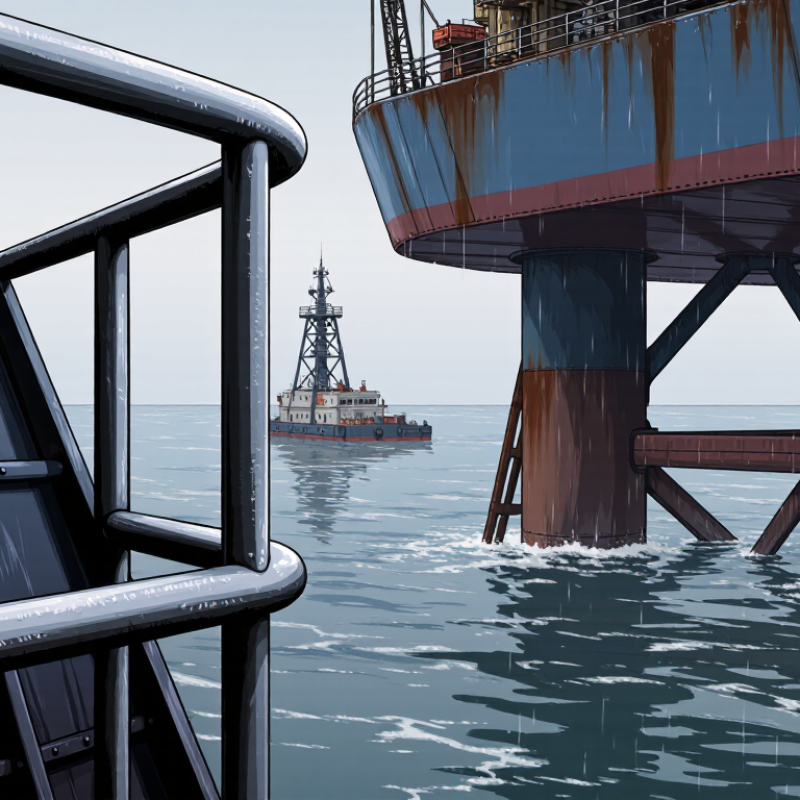
Marine exposure is not one condition. A sheltered harbor, an open deck, and a tidal piling create different corrosion demands. Map where each component sits: continuously submerged, in the splash zone, or exposed to salt spray and drying cycles. The splash zone often needs close attention because wetting, oxygen, and salt deposits change quickly. A thin salt film on a handrail is not equivalent to years of immersion.
Record water salinity, temperature, pollutants, and likely chemical contact. Consider abrasion from sand, cargo, or moving equipment, along with structural loads, impact, and fatigue. Details matter. A plate inside a warm, poorly ventilated tank may face different risks from an exposed hull panel. Do not select steel by “marine grade” wording alone; it does not define the exact environment or protection system.
Compare candidate grades against fabrication needs, coating plans, and any cathodic protection system. These choices can affect performance as much as the base metal. Also check whether the steel can be inspected and maintained in place. There is no perfect grade. One uncertainty often remains: real exposure may differ from the design estimate, especially near splash zones or dissimilar-metal joints. Have a qualified marine materials engineer review the conditions and applicable design standards before final selection.
Marine steel grades suit different loads and exposure levels. Grade A is common in general hull plating and structural parts with moderate strength demands. For heavier loads, AH36 offers higher tensile strength and is often specified for hull sections, decks, and stiffeners. It is not automatically the best choice everywhere; design loads and approved vessel specifications still matter.
Stainless grades serve a different role. Grade 316 is used for handrails, fasteners, and deck fittings where salt spray is frequent, but stagnant seawater can still cause pitting or crevice corrosion. Duplex stainless steel is often selected for demanding seawater piping and components because it combines strength with improved corrosion resistance. Welding and fabrication need careful control. Small details matter.
Tips: Match the grade to the actual exposure: splash zone, sheltered deck, or continuous immersion. Check thickness, weldability, and the project’s classification requirements before ordering. Keep in mind that coatings and maintenance affect service life too. I have seen material choices look right on paper, yet falter at joints where water collects. That trade-off deserves a second look.
Compare Marine Steel Grades and Their Typical Applications
The chart compares minimum yield strength: standard-strength grades A, B, D, and E are typically 235 MPa, while high-strength grades AH36, DH36, and EH36 are typically 355 MPa. Grade selection also depends on impact toughness, design temperature, thickness, and classification-society requirements. Grade A is commonly used for general ship structures; B, D, and E are selected where progressively more demanding impact-toughness requirements apply. AH36, DH36, and EH36 are commonly used for higher-strength hull structures, with the suffix indicating differing toughness requirements.
Choose marine steel by matching certified strength to the loads it will actually carry. Check the mill test certificate for yield strength, tensile strength, and impact-test results at the project’s service temperature. A high yield value alone does not guarantee safe performance. Plate thickness and welded-joint details matter, too.
Corrosion exposure can change the required steel grade and coating system. ISO 9223:2012 gives first-year carbon-steel thickness-loss ranges of 80–200 micrometres for C5 environments and 200–700 micrometres for CX. These are atmospheric classification values, not lifetime predictions. Salt spray, wet-dry cycles, and sheltered crevices can produce different conditions. A splash-zone detail deserves closer review than a dry, enclosed compartment.
Weldability depends on chemistry as well as strength. The International Institute of Welding’s carbon-equivalent formula helps flag steels that may need tighter welding controls. Higher carbon equivalent can increase hardening and cracking risk, but it is not a complete weldability verdict. Thickness, hydrogen control, restraint, and heat input affect preheat decisions. Ask the fabricator to review the material certificate and proposed welding procedure before ordering. Fit matters. I would not treat a single carbon-equivalent number as permission to skip that review.
| Steel Type | Typical Strength | Corrosion Resistance | Weldability | Common Marine Uses | Selection Considerations |
|---|---|---|---|---|---|
| Shipbuilding Grade A | Minimum yield strength: 235 MPa. Typical specified tensile range: 400–520 MPa. | Low when exposed to seawater; normally requires a protective coating system and, where appropriate, cathodic protection. | Generally good with suitable consumables and procedures. Follow requirements for plate thickness, joint design, and welding conditions. | General ship structures and other applications where moderate strength is sufficient. | A practical baseline grade. Confirm the applicable classification rules, plate thickness limits, and toughness requirements. |
| AH36 | Minimum yield strength: 355 MPa. Typical specified tensile range: 490–620 MPa. | Low as bare carbon steel. Coatings and maintenance are important in marine exposure. | Generally weldable using approved procedures. Control heat input and assess preheat needs based on material chemistry, thickness, and conditions. | Higher-strength hull and structural components, commonly in areas designed for normal impact-test conditions. | Offers higher strength than Grade A without changing to a different corrosion-protection strategy. “A” grade designation is associated with a 0°C impact-test temperature for this strength level. |
| DH36 | Minimum yield strength: 355 MPa. Typical specified tensile range: 490–620 MPa. | Low as bare carbon steel; use an appropriate marine coating and inspection plan. | Generally weldable with qualified procedures. Pay attention to consumable selection, hydrogen control, and heat input. | Structural components requiring higher strength and improved low-temperature toughness. | “D” grade designation is associated with a −20°C impact-test temperature for this strength level. Confirm the project’s required test and certification conditions. |
| EH36 | Minimum yield strength: 355 MPa. Typical specified tensile range: 490–620 MPa. | Low as bare carbon steel; corrosion protection is still required in marine service. | Generally weldable, but welding procedure qualification and control of heat input are important, particularly for thick or highly restrained joints. | Higher-strength structural parts subject to demanding low-temperature toughness requirements. | “E” grade designation is associated with a −40°C impact-test temperature for this strength level. Specify it where design temperatures and governing rules call for this toughness level. |
| 316L Stainless Steel | Typical minimum yield strength: 170 MPa; typical minimum tensile strength: 485 MPa in the annealed condition, subject to product specification. | Good resistance in many atmospheric and splash-zone environments, but susceptible to pitting and crevice corrosion in seawater, especially in stagnant or warm conditions. | Generally good. Use suitable low-carbon filler and procedures; consider distortion, cleaning, and post-weld contamination control. | Selected fittings, piping, equipment, and components where stainless-steel properties are useful. | Not a direct substitute for structural ship plate without design review. Do not assume it is immune to seawater corrosion; crevices and deposits can be critical. |
| Duplex 2205 Stainless Steel | Typical minimum yield strength: 450 MPa; typical minimum tensile strength: 620 MPa in the solution-annealed condition, subject to product specification. | Better resistance to chloride pitting and stress-corrosion cracking than common austenitic stainless steels, but not immune to localized corrosion in seawater. | Weldable with qualified procedures and matching or suitable filler metal. Heat input and interpass temperature control help maintain the required phase balance. | Selected seawater piping, process equipment, and components exposed to chloride environments. | Assess fabrication capability, design code, product form, and localized-corrosion risks. It may require more careful welding control than conventional shipbuilding steel. |
Important: Strength values are typical minimum or specified values for commonly cited product specifications; they can vary with standard edition, product form, thickness, and certification requirements. Shipbuilding grades AH36, DH36, and EH36 have the same nominal strength level but different toughness test temperatures. Carbon steel does not become corrosion-resistant simply by choosing a higher-strength grade. Confirm material certificates, applicable class or design rules, corrosion-protection requirements, and qualified welding procedures for the specific project.
Marine steel selection starts with the water, not the grade name. A sheltered harbor, splash zone, and open coast create different corrosion demands. Record exposure, design life, maintenance access, and operating temperature before comparing specifications. A common gap is describing a vessel as “marine” without identifying where its steel will sit. Small details matter.
Match mechanical properties to real loads. Check yield strength, plate thickness, impact toughness, and fatigue conditions against the project design. A thin deck panel and a heavily loaded support do not need identical specifications. Welding and forming also matter: confirm that the selected steel can be fabricated using the planned procedures. Ask for material certificates and verify that the grade and test requirements match the drawings. Measure twice.
Corrosion protection should be specified alongside the steel, not added as an afterthought. Coatings, drainage, weld details, and access for inspection all affect service life. For example, a narrow pocket that traps seawater may corrode faster than an exposed, well-drained surface. Higher strength is not automatically the better choice; it can add cost or complicate fabrication without solving the actual risk. Review the proposed specification with the design engineer and fabricator. Some project assumptions may still be wrong, so document uncertainties and resolve them before ordering.
Choosing marine steel begins with the project specification, not a familiar grade name. Check the required standard, grade, thickness, delivery condition, and certification documents. Requirements can differ between hull plates, decks, and offshore structures. Confirm that the steel meets the relevant design rules and inspection requirements. Small details matter. A certificate should match the actual heat and plate markings, not just the purchase description.
Fabrication needs shape the choice. Ask the fabricator about cutting, bending, and welding before ordering material. For welded structures, review toughness and weldability alongside strength; a higher-strength grade may demand tighter welding controls. Thick sections can behave differently from thin plate during forming. Trial pieces help reveal problems early. Still, shop conditions vary, so a successful test does not guarantee every joint will behave identically.
Maintenance demands deserve equal attention. Salt spray, standing water, and damaged coatings can accelerate corrosion, especially around seams and hard-to-reach corners. Match the steel and protective system to the exposure, then plan access for inspection and coating repairs. Consider how dissimilar metals meet, since contact can contribute to galvanic corrosion in wet conditions. A practical maintenance schedule beats a perfect-looking specification that nobody can inspect. One detail is easy to overlook: drainage around stiffeners.