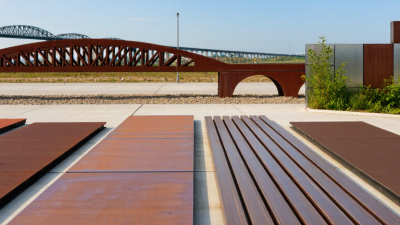
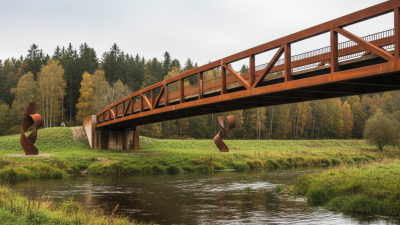
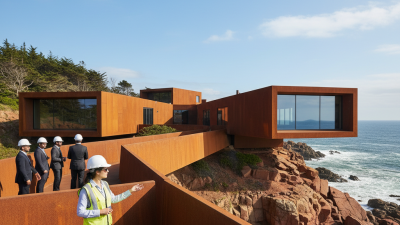
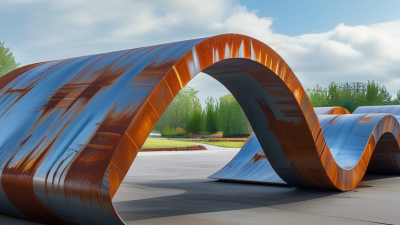
Weathering Steel is often described as steel that protects itself. That description is useful, but incomplete. Its surface slowly oxidizes and develops a stable, tightly bonded patina. The patina can appear orange, red-brown, or deep brown. It resembles rust, yet it behaves differently under suitable conditions.
Corrosion scientist Dr. Robert E. Melchers has stated, “Corrosion is a natural process that cannot be stopped, only controlled.” That principle matters here. Weathering Steel does not last forever, and its service life cannot be predicted from appearance alone. Exposure, moisture, pollutants, salt, and detailing all influence performance. A wall that dries quickly may remain sound for decades. A hidden joint that traps water can deteriorate much sooner.
The material performs best when rain can wash the surface and air can circulate around it. Continuous dampness is a warning sign. Coastal spray creates another challenge. Chlorides may prevent the protective patina from stabilizing, especially in poorly detailed structures. ASTM specifications, including A588 and A709 grades, provide useful starting points, but they do not replace engineering judgment.
This article examines what Weathering Steel is, how its protective layer forms, and how long it may last in real projects. It also considers drainage, maintenance, staining, and local climate. Some claims about “maintenance-free” steel are too confident. The honest answer is less dramatic: with suitable design and exposure, Weathering Steel can provide a long service life, but neglect can shorten it sharply.
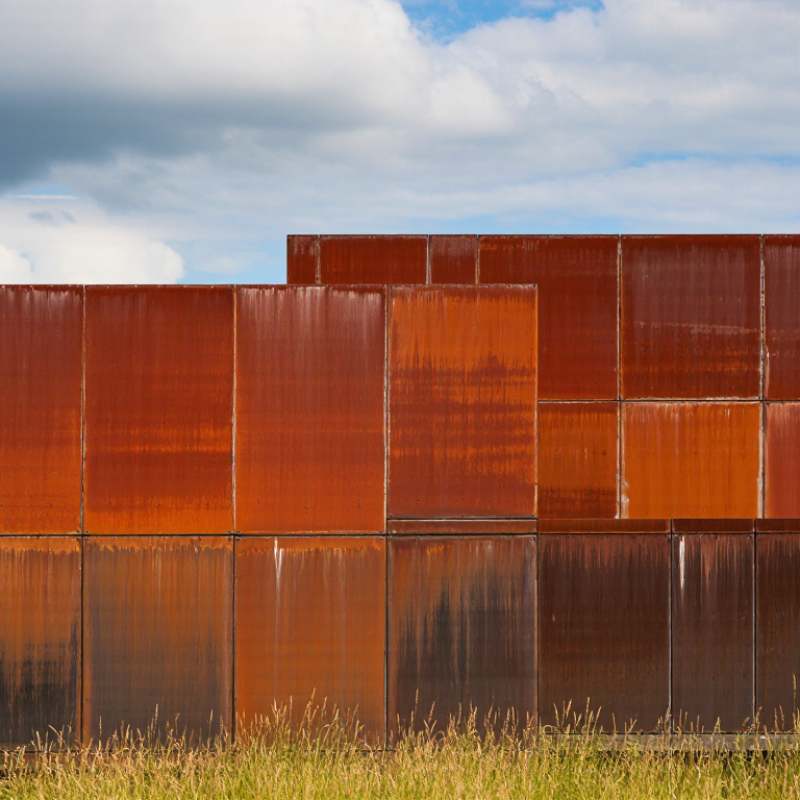
Weathering steel is a low-alloy steel designed to develop a protective surface layer. It commonly contains small amounts of copper, chromium, nickel, and phosphorus. When rain reaches the exposed surface, the steel reacts with oxygen and moisture. Rust forms first, often in bright orange or red tones. Over time, repeated wetting and drying create a darker, tighter patina.
This patina slows further corrosion by reducing direct contact with water and air. It is not paint. The protection depends on regular drying, so drainage and ventilation are essential. Water trapped beneath ledges can keep the steel damp and cause deeper corrosion. Salt spray, industrial pollution, and constantly humid conditions may also weaken the protective process. The metal can look finished before its protection is mature.
Weathering steel may last for several decades in a suitable outdoor environment, but no fixed lifespan applies everywhere. Thickness, structural loading, cut edges, fasteners, and local climate all matter. Field inspections should check joints, crevices, and areas where runoff stains nearby materials. A sheltered panel may weather unevenly. That is easy to overlook. Designers sometimes expect the patina to solve every corrosion problem, yet good detailing remains more important than appearance.
| Dimension | Typical Data | What It Means |
|---|---|---|
| Material type | Low-alloy structural steel | It contains small amounts of alloying elements that encourage the formation of a protective surface patina. |
| Common alloying elements | Copper, chromium, nickel, and phosphorus; exact limits depend on the applicable steel specification | These elements help produce a dense layer of corrosion products that can slow further atmospheric corrosion. |
| How weathering works | Repeated wetting and drying forms a progressively tighter patina | The steel is not rust-free; instead, the patina can reduce the rate of corrosion when the exposure conditions are suitable. |
| Initial appearance | Metallic gray, orange, or reddish-brown during early exposure | Color changes are normal and vary with climate, surface preparation, moisture, and exposure orientation. |
| Patina development time | Approximately 6 months to several years | A stable appearance develops faster in alternating wet-and-dry conditions and more slowly in sheltered or continuously damp locations. |
| Typical minimum yield strength | About 345 MPa for many structural weathering-steel grades | The actual value depends on the grade, product form, thickness, and governing specification. |
| Typical minimum tensile strength | About 485 MPa for many structural weathering-steel grades | Mechanical properties should always be confirmed from the material certificate and applicable standard. |
| Expected service life | Commonly 50–100 years or more in suitable atmospheric exposure | Service life depends on steel thickness, design, drainage, climate, pollutants, maintenance, and the required structural limit state. |
| Corrosion-rate behavior | Usually higher at first, then lower as the patina matures | There is no single universal corrosion rate; measurements must reflect the local environment and exposure history. |
| Best exposure conditions | Open air with regular wetting and drying, good ventilation, and effective drainage | These conditions allow the protective patina to form and limit prolonged water retention. |
| High-risk environments | Marine spray, de-icing salt, persistent condensation, industrial pollutants, and continuously wet joints | Chlorides and trapped moisture can prevent a stable patina and cause localized or accelerated corrosion. |
| Drainage requirement | Essential; avoid water traps, narrow crevices, and concealed surfaces that remain wet | Good detailing is one of the most important factors affecting the long-term performance of unpainted weathering steel. |
| Runoff during early weathering | Rust-colored runoff can occur for months or years | Design should protect adjacent concrete, stone, paving, glass, and other surfaces from staining. |
| Maintenance approach | Usually low-maintenance, but requires periodic inspection | Inspect for standing water, salt deposits, debris, abnormal section loss, and corrosion at connections. |
| Paint requirement | Often used unpainted in appropriate atmospheric conditions | Painting or another protective system may be necessary where chloride exposure, continuous moisture, or design requirements make unpainted use unsuitable. |
Note: Service-life figures are indicative ranges rather than guarantees. Final material selection should be based on site-specific corrosion assessment, structural design requirements, and the applicable steel standard.