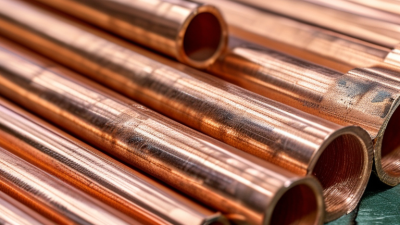
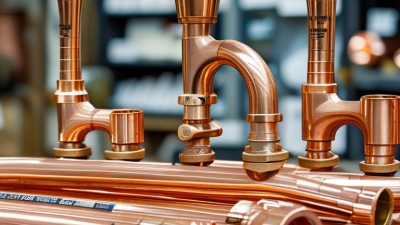
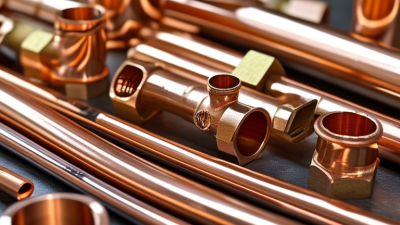
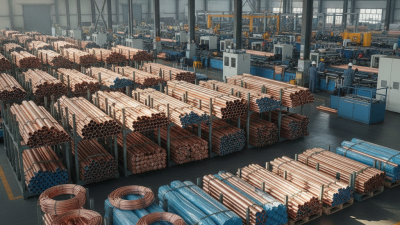
Choosing the right piping material can shape a project’s safety, service life, and maintenance costs. Copper Pipes remain a trusted option for international construction and infrastructure work. Their long record supports confidence among engineers, contractors, and facility owners.
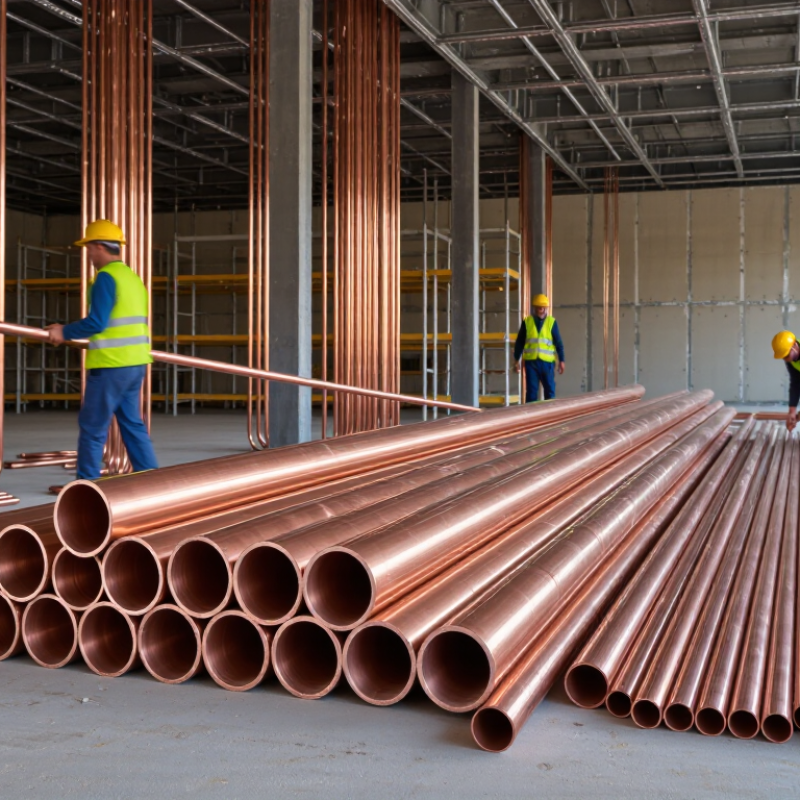
Copper resists many common forms of corrosion when correctly specified and installed. It also tolerates temperature changes in water supply, heating, and cooling systems. Its smooth internal surface can support efficient flow and easier system inspection. On a busy construction site, installers can cut, join, and test copper sections with familiar tools. That practical experience matters when schedules cross borders and local skills differ.
Copper also offers strong dimensional stability during transport and installation. Standardized tube sizes can simplify coordination between designers, suppliers, and contractors. However, global projects cannot rely on reputation alone. Teams must check local water chemistry, pressure ratings, jointing methods, and applicable standards, including relevant ASTM, EN, or ISO requirements. Specifications still matter.
No material is perfect.
Copper can cost more than some alternatives, and theft risks may affect exposed installations. Poor workmanship can also cause leaks, especially around joints and fittings. These limitations deserve honest attention. A reliable decision compares lifecycle performance, labor availability, procurement conditions, and environmental priorities. Copper’s recyclability may reduce material waste, but recycling outcomes depend on effective collection systems. In practice, experienced project teams use copper where its durability, heat performance, and established installation methods create measurable value. The best choice is not automatic. It is carefully verified for each climate, building type, and service requirement.
The benefit is visible during operation. A copper pipe can move heat with less material than many lower-conductivity alternatives. Engineers can design responsive systems for hospitals, factories, data facilities, and residential buildings. Shorter heat-up times may also improve temperature control. However, conductivity is not the only design factor. Pipe diameter, fluid speed, insulation, wall thickness, and ambient conditions still influence performance. Small details matter.
Copper also offers predictable fabrication and reliable joining when qualified methods are used. Its smooth internal surface can help manage flow resistance, although poor installation may introduce contamination or unwanted pressure loss. Project teams should verify local codes, water chemistry, operating temperatures, and connection procedures before specification. Copper is not automatically the best choice for every site. It may require careful protection in aggressive environments, and material cost can affect the project budget. I would not select it from conductivity alone. A complete engineering review remains necessary, especially when shipping distances, maintenance access, and long-term energy use are included.
ASTM B88 and EN 1057 give international projects a practical basis for selecting copper tubes. ASTM B88 covers seamless copper water tube for plumbing, potable water, and related services. It defines tube types, dimensions, and required performance characteristics. EN 1057 addresses copper tubes for water, gas, sanitation, heating, and similar building systems. It also specifies dimensions, mechanical properties, and testing requirements.
The details matter on site. A tube may look suitable, yet its outside diameter or wall thickness can differ between standards. That difference affects fittings, pressure performance, bending, and installation clearance. Engineers should check the project specification before ordering materials. They should also confirm temper, size, jointing method, and certification records. Clear documentation reduces costly substitutions.
During inspections, measure sample tubes and compare markings with the approved standard. Look for clean surfaces, consistent walls, and undamaged ends. Copper resists corrosion well, but poor water chemistry can still create problems. Insulation, drainage, and compatible fittings deserve equal attention. Standards improve reliability, but they cannot correct weak design decisions. A common mistake is assuming ASTM B88 and EN 1057 are interchangeable in every detail. They are not. Regional codes and local approval requirements may still change the final choice.
For international plumbing projects, material consistency matters as much as price. C12200 copper tube contains at least 99.9% copper, with phosphorus added for deoxidation. This composition supports reliable forming, joining, and service performance. Installers can cut, bend, solder, or braze the tube when approved procedures are followed. That flexibility helps on crowded mechanical-room runs and narrow ceiling spaces. Clean edges matter. So does correct support spacing.
Copper also transfers heat efficiently, benefiting hot-water distribution and compact heat-exchanger connections. Its established plumbing use provides engineers with extensive reference data and installation guidance. In practice, performance still depends on water chemistry, temperature, pressure, and joint quality. A high copper percentage does not remove every risk. Chlorides, poor workmanship, or mixed-metal connections may accelerate problems. Project teams should verify wall thickness, dimensions, pressure ratings, and local code requirements before procurement.
Global supply chains add another practical concern. C12200 documentation should identify chemical composition, temper, dimensions, test results, and traceability. Independent inspection can catch labeling errors before pipes reach the site. Field reviews may focus heavily on purity while overlooking handling damage and storage conditions. That is an incomplete approach. Protect tube ends from dirt, cap open sections, and keep materials dry. Copper is dependable, but dependable installation is never automatic.
Why Choose Copper Pipes for Global Projects?
Service Life: Copper Piping Commonly Exceeds 50 Years in Buildings
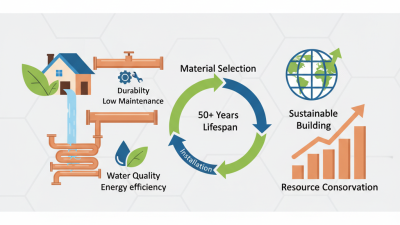
Copper piping is widely selected for buildings because its service life can exceed 50 years. In stable conditions, it may last much longer. This durability reduces replacement work behind walls, floors, and ceilings. That matters in hospitals, offices, hotels, and apartment buildings where repairs disrupt daily operations.
Copper also tolerates heat, pressure changes, and many common water conditions. Its smooth internal surface can help maintain steady flow and limit buildup. Experienced contractors still check water chemistry before installation. Acidic or unusually aggressive water can shorten the expected service life. The material is reliable, but it is not indestructible.
Installation quality remains critical. Clean cutting, correct joint preparation, and careful support prevent many early failures. On large international projects, engineers must also verify local plumbing codes, pressure ratings, and approved joining methods. A pipe may perform well in one climate and require additional protection in another. Coastal air, freezing temperatures, and soil conditions deserve attention. The weakest point is often a neglected connection. Regular inspections can reveal staining, movement, or early corrosion before a small issue becomes expensive. Fifty years is a practical benchmark, not a guarantee. Project teams should record installation details and review them honestly over time.
| Project Consideration | Copper Piping | Galvanized Steel | CPVC Piping | PEX Piping |
|---|---|---|---|---|
| Typical service life in buildings | Commonly exceeds 50 years when correctly designed, installed, and protected from aggressive water conditions. | Often approximately 20–50 years, with service life strongly affected by corrosion, water chemistry, and coating condition. | Frequently designed for long-term building service; actual life depends on temperature, pressure, ultraviolet exposure, and installation quality. | Frequently designed for long-term building service; actual life depends on temperature, pressure, sunlight exposure, and installation quality. |
| Temperature capability | Suitable for hot and cold water systems and can tolerate high operating temperatures when the system is properly engineered. | Suitable for hot and cold water, although corrosion resistance may limit long-term performance in some water conditions. | Commonly used for hot and cold water; many systems have a maximum continuous operating temperature near 82°C, subject to the applicable standard. | Commonly used for hot and cold water; many systems are rated for temperatures up to approximately 93°C, subject to the applicable standard. |
| Corrosion and chemical resistance | Generally resistant to many naturally occurring water conditions, but can be affected by acidic water, high flow velocity, erosion-corrosion, or incompatible materials. | More vulnerable to rust and internal scaling after the protective zinc layer is depleted. | Does not rust and offers good resistance to many water-treatment chemicals; compatibility must be checked for specific chemicals. | Does not rust and has good resistance to many chemicals; compatibility and permeation requirements should be reviewed for the application. |
| Fire performance | Non-combustible metal and does not produce smoke or toxic combustion gases. | Non-combustible metal and does not produce smoke or toxic combustion gases. | Combustible polymer; fire-stopping, concealment, and local building-code requirements may apply. | Combustible polymer; fire-stopping, concealment, and local building-code requirements may apply. |
| Mechanical durability | Strong and rigid, with good resistance to impact and dimensional stability across common building temperatures. | Strong and rigid, but heavier and more susceptible to corrosion-related wall loss. | Lightweight and corrosion-resistant, but may be more vulnerable to impact, crushing, and thermal expansion. | Flexible and resistant to freeze-related expansion damage in some situations, but requires protection from puncture and abrasion. |
| Installation characteristics | Requires skilled cutting, joining, and support; soldering, brazing, or approved mechanical press connections may be used. | Heavy and labor-intensive to cut and thread; handling and corrosion protection can increase installation effort. | Lightweight and relatively easy to solvent-weld; adequate curing time and ventilation are important. | Lightweight and flexible, allowing fewer joints in many layouts; bending radius, supports, and connection methods must follow the system requirements. |
| Thermal conductivity at approximately 20°C | Approximately 398 W/m·K, so insulation is often needed to reduce heat loss and surface condensation. | Approximately 45 W/m·K, lower than copper but still conductive enough to require insulation in many hot-water systems. | Approximately 0.14–0.17 W/m·K, which reduces heat transfer compared with metals. | Approximately 0.35–0.45 W/m·K, which reduces heat transfer compared with metals. |
| Recyclability | Highly recyclable and can be recycled repeatedly without losing its fundamental material properties. | Recyclable as steel, although coatings, corrosion, and mixed materials may affect recovery efficiency. | Recycling options vary by region and are generally less established than metal recycling systems. | Recycling options vary by region and are generally less established than metal recycling systems. |
| Global project suitability | Well suited to long-life residential, commercial, institutional, industrial, and infrastructure projects when local water chemistry, codes, and workmanship are evaluated. | May be suitable for selected applications, but corrosion risk and maintenance requirements should be assessed carefully. | Useful where low weight, corrosion resistance, and polymer installation methods are preferred and local fire and temperature requirements are satisfied. | Useful where flexibility, rapid installation, and reduced joint counts are priorities and local code requirements are satisfied. |
Why Choose Copper Pipes for Global Projects?
When engineers compare pipe materials, copper offers a practical balance of strength, service life, and recoverability. It handles temperature changes well and resists corrosion in many building systems. Its long service record also gives contractors useful installation experience across different climates. A copper pipe can remain in service for decades when designed and installed correctly.
Recycling gives copper a distinctive advantage. After recovery and proper processing, copper can retain 100% of its original material properties. Its conductivity, strength, and corrosion resistance do not disappear after one use. Scrap from a renovation may return as new pipe, electrical components, or industrial material. This reduces dependence on newly mined resources and keeps valuable metal in circulation. The recovery process is not effortless. Mixed alloys, coatings, and contamination require careful sorting and controlled refining.
Project teams should still examine local conditions. Water chemistry, soil contact, joint methods, and maintenance access can affect performance. Experienced installers usually check these details before selecting pipe dimensions and protection measures. Cost estimates should include collection and recycling pathways, not only the purchase price. Copper is not always the cheapest option at the beginning. That point deserves honest review. Yet its long usable life and high recovery value may improve the wider project calculation. A damaged section can also be removed, identified, and recycled instead of becoming permanent construction waste.
When recovered copper is refined to the same grade, its key engineering properties can be restored to the original specification. This supports repeated recycling without a permanent loss of electrical conductivity, thermal performance, ductility, or corrosion resistance.
Reference basis: 100% represents the equivalent property level of refined copper meeting the same material specification after recovery.