In 2026, global buyers face a wider range of brass pipe options than ever before. Seamless, welded, straight, coiled, and precision-drawn products serve different industrial needs. A Brass Pipe may look suitable on a supplier’s page, yet its alloy, wall thickness, and manufacturing tolerance can change performance significantly. That difference matters in plumbing systems, heat exchangers, refrigeration lines, compressed air equipment, and architectural applications.
This guide examines practical choices for international procurement teams. It considers common alloys, including brass grades selected for strength, machinability, corrosion resistance, and thermal conductivity. It also reviews dimensions, surface finish, connection methods, pressure requirements, and traceability documents. Buyers should compare supplier test reports with applicable ASTM, EN, ISO, or project-specific requirements. Certificates alone are not enough.
Details matter.
An experienced purchasing team should request sample measurements, chemical composition data, and hydrostatic or dimensional inspection records. Packaging deserves attention too. Plastic caps, dry wrapping, and strong wooden cases can protect pipe ends during long ocean transport. However, no product suits every market. A cost-effective pipe for indoor water service may fail to meet demanding heat-transfer or marine conditions. Even experienced buyers can overlook joining compatibility or local approval rules. That weakness deserves honest review. Supplier claims should be checked against independent inspections and actual application conditions. A reliable decision balances price, service life, delivery stability, documentation quality, and technical support. This comparison helps global buyers choose with greater confidence, while recognizing that a cheaper quote may create higher costs later.
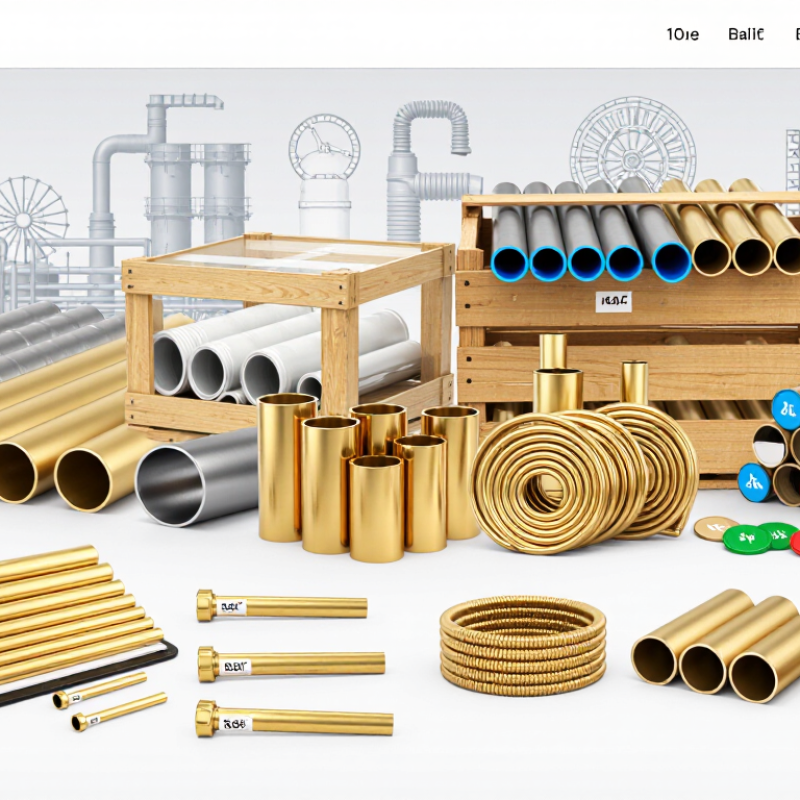
For global buyers, brass pipe selection starts with service conditions, not appearance.
Seamless, welded, and DZR pipes serve different risk profiles.
Seamless brass pipe
Seamless brass pipe is drawn from a solid billet, so it has no longitudinal weld. This structure supports consistent pressure performance and clean internal flow. It suits compact plumbing, instrumentation, and applications with frequent pressure changes.
Inspectors should check outside diameter, wall thickness, hardness, and straightness. Small dimensional errors can complicate threading or compression fitting.
Welded brass pipe
Welded brass pipe can reduce material and production costs, especially in larger sizes. Its longitudinal seam needs careful control.
Ask for weld inspection records, dimensional reports, and pressure-test results. Poor seam alignment may create local turbulence or weaken installation joints.
The cheaper quote is not always cheaper after rework.
DZR brass
DZR brass is designed to resist dezincification in vulnerable water conditions. It is often considered for drinking-water systems, humid environments, and networks with long stagnation periods.
However, DZR is not a universal solution. Water chemistry, chloride levels, temperature, and installation quality still matter. Confirm the required approvals and test standards before ordering.
A polished surface can hide internal risk.
That detail deserves more attention.
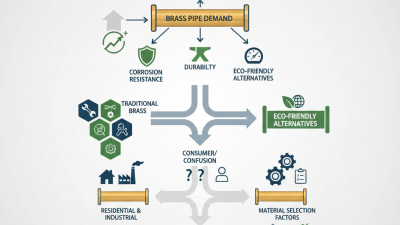
2026 Top Brass Pipe Types: What Should Global Buyers Choose?
For global buyers, brass pipe selection should begin with alloy chemistry, not surface color. CuZn37 contains about 63% copper and 37% zinc, with small permitted variations under the governing standard. This composition offers practical formability and useful corrosion resistance for many water, air, and industrial applications. Yet chemistry alone does not guarantee reliable pipe performance. Wall thickness, temper, manufacturing method, and pressure requirements also matter. A bright yellow surface can mislead.
Ask for a recent material certificate tied to the production batch. Check the heat number on the certificate, pipe label, and packing list. Independent XRF screening can quickly confirm the copper-zinc balance, while laboratory analysis may support tighter verification. Review limits for lead, iron, and other residual elements under destination-market requirements. I have seen attractive samples fail when batch records were incomplete. That is an uncomfortable but useful warning.
Tips: Request a cut sample before approving bulk production. Compare measured chemistry with the purchase specification, not only the nominal CuZn37 name. Confirm dimensions at several points, especially near pipe ends. Store samples and inspection photos. Small evidence helps later. If the supplier cannot explain the testing method, pause the order and ask better questions.
| Brass Pipe Type | Common Alloy Designation | Typical Chemical Composition by Mass | Key Mechanical or Physical Data | Corrosion and Service Profile | Typical Applications | Recommended Buyer Priority |
|---|---|---|---|---|---|---|
| Standard cartridge brass | CuZn30 EN CW505L |
Copper: approximately 69–71% Zinc: balance, approximately 29–31% Other elements: normally limited to residual levels |
Density: about 8.5 g/cm³ Thermal conductivity: approximately 120 W/m·K Excellent cold-forming capability in annealed condition |
Good general atmospheric and water corrosion resistance. Suitable for forming, but not normally selected where strong dezincification resistance is required. | Formed tubes, heat-transfer components, decorative tubing, and general low-to-medium pressure fluid service. | Formability |
| Alpha brass pipe | CuZn37 EN CW507L / CW508L family |
Copper: about 62–64% Zinc: about 36–38% Lead and other elements: normally limited by the applicable product standard |
Density: about 8.4 g/cm³ Nominal composition: approximately 63% copper and 37% zinc Good ductility and weldability compared with higher-zinc brasses |
Balanced strength, ductility, machinability, and corrosion resistance for general engineering use. Water chemistry should be checked for dezincification risk. | Plumbing components, fittings, heat exchangers, instrumentation tubing, and general industrial piping. | Best all-round balance |
| Leaded free-machining brass | CuZn39Pb3 EN CW614N / UNS C36000 family |
Copper: approximately 57–60% Zinc: balance Lead: commonly about 2.5–3.5% Iron: generally limited to low levels |
Excellent machinability due to finely distributed lead particles Typical density: about 8.5 g/cm³ Not intended for welding-intensive fabrication |
Good general corrosion resistance, but lead content may restrict use in potable-water systems and environmentally controlled markets. | Precision-machined connectors, valves, threaded parts, adapters, and components requiring high production efficiency. | Machining efficiency |
| Dezincification-resistant brass | CuZn36Pb2As EN CW602N / DZR brass |
Copper: approximately 60–63% Zinc: balance Lead: commonly about 1.7–2.8% Arsenic: typically about 0.02–0.15%, depending on the standard |
Designed for improved resistance to selective zinc removal Good machinability and stable performance in many water systems |
Stronger resistance to dezincification than ordinary brass when correctly manufactured and approved. Application approval must be verified for drinking-water contact. | Water meters, valves, sanitary fittings, plumbing components, and hot-water systems in aggressive water environments. | Water corrosion control |
| Naval brass pipe | CuZn39Sn1 UNS C46400 family |
Copper: approximately 59–62% Zinc: balance Tin: commonly about 0.5–1.5% Lead: normally limited or specified at a low level |
Higher strength than many simple alpha brasses Good resistance to seawater-related corrosion when properly selected and maintained |
Tin improves resistance to dezincification and seawater exposure. Crevice conditions, velocity, and galvanic coupling still require engineering review. | Marine piping, condensers, shipboard components, seawater-service fittings, and coastal industrial equipment. | Marine exposure |
| Aluminium brass pipe | CuZn20Al2 UNS C68700 family |
Copper: approximately 76–80% Zinc: approximately 18–22% Aluminium: commonly about 1.5–3.0% Arsenic or other additions may be specified for seawater performance |
High strength-to-weight ratio Good erosion-corrosion resistance when velocity and water chemistry are controlled Density: typically around 8.3 g/cm³ |
Suitable for many condenser and seawater applications. Performance depends strongly on flow velocity, sulfide content, temperature, and tube condition. | Heat-exchanger tubes, condenser tubes, desalination equipment, seawater cooling systems, and marine engineering. | Heat transfer and seawater |
| High-strength manganese brass | CuZn40Mn3 or related manganese brass grades |
Copper: commonly about 57–62% Zinc: balance Manganese: often about 1–4% Exact limits depend on the governing alloy standard |
Higher strength and hardness than standard alpha brass Lower ductility and more demanding forming requirements Suitable for heavy-duty mechanical components |
Good general engineering corrosion resistance, but alloy selection must consider stress, water chemistry, and joining method. | Heavy-duty fittings, structural tube components, mechanical sleeves, hydraulic parts, and wear-resistant assemblies. | Strength and wear resistance |
Buyer verification note: Chemical percentages are typical reference values, not a substitute for the material certificate. Actual limits vary by alloy designation, product standard, temper, tube size, and manufacturing route. For every order, request a heat-analysis certificate, mechanical test results, dimensional tolerances, pressure or leak-test records, and confirmation of potable-water or marine approval where applicable.
Global buyers should match the standard before comparing brass pipe prices. ASTM B43 covers seamless red brass pipe, commonly selected for water, drainage, and low-pressure service. ASTM B135 covers seamless brass tube, with broader tube-sizing options and closer attention to outside diameter and wall thickness. EN 12449 covers seamless round tubes made from copper and copper alloys, including brass grades defined by European material designations and temper requirements.
A practical warning: “1 inch” is not universal. ASTM dimensions may follow nominal pipe size, while EN 12449 purchasing often relies on exact outside diameter and wall thickness. Ask for both values, plus alloy grade, temper, length, straightness, and permitted tolerances. A 28 mm tube is not automatically a 1-inch replacement. That shortcut causes trouble.
The International Copper Study Group’s October 2024 forecast placed global refined copper usage above 26 million tonnes in 2025, reflecting continued demand from construction, equipment, and energy systems. However, demand data cannot replace engineering checks. Confirm pressure, temperature, joining method, corrosion exposure, and required test certificates. For standard water lines, ASTM B43 may be practical. For formed components, ASTM B135 can offer better dimensional flexibility. For European projects, EN 12449 usually fits the documentation framework more naturally. I would still verify each dimension against the latest edition; older purchasing tables remain surprisingly common.
For global buyers comparing brass pipe types in 2026, thermal conductivity deserves close attention. Brass commonly delivers about 100–120 W/m·K, depending on alloy composition, temperature, and manufacturing condition. That range supports efficient heat transfer in condensers, plumbing assemblies, and compact cooling circuits. It also helps screens and internal passages respond quickly when operating temperatures change.
Seamless brass pipe is often selected where pressure stability and clean internal surfaces matter. Welded pipe can be practical for larger sizes, but its seam requires careful inspection. In real purchasing work, I would request conductivity data, chemical composition, wall-thickness tolerance, and hydrostatic test records. A polished surface looks convincing. It proves little by itself. Ask for traceable laboratory results and production certificates.
Conductivity alone cannot decide the correct pipe. A higher-zinc alloy may reduce cost, yet it can show different corrosion behavior in aggressive water. Marine or industrial service may require dezincification-resistant brass and suitable protective controls. I have seen specifications focus heavily on heat transfer while ignoring joint quality and installation stress. That is a costly oversight. Buyers should compare thermal performance, pressure rating, corrosion resistance, and joining compatibility together. The stated 100–120 W/m·K range is useful, but it should be verified for the actual alloy and service temperature.
For 2026 global sourcing, brass pipe selection should begin with service conditions, not catalog labels. Seamless pipes suit pressure-sensitive systems and demanding forming work. Welded pipes can offer efficient production for less severe applications. Lead-free or low-lead grades may support potable water requirements, depending on local regulations. Wall thickness, temper, diameter tolerance, and corrosion exposure still require careful review.
Documentation separates a dependable shipment from an expensive delay. Require an EN 10204 3.1 inspection certificate for every relevant batch. It should identify the material grade, heat number, chemical composition, mechanical results, dimensions, and testing status. The certificate must be issued by the manufacturer’s authorized inspection representative, not copied from an unrelated order. Traceability matters. Match the heat number on the certificate with pipe markings and packing records.
REACH compliance also needs evidence, not a casual email. Ask for a current supplier declaration, substance screening information, and confirmation of applicable SVHC obligations. European projects may demand additional records from importers or downstream users. Requirements can change, and some suppliers interpret them too broadly. That is worth checking. A practical purchasing file should include drawings, approved specifications, 3.1 certificates, REACH documents, and inspection photos. Keep samples from the first shipment when possible. They can expose surface defects, inconsistent wall thickness, or labeling mistakes before larger orders are released. Cheap documentation often becomes costly correction.