Why Choose Brass Pipe for Global Industrial Projects?
Why choose Brass Pipe for global industrial projects? The answer begins with practical performance, not marketing language. Brass combines corrosion resistance, machinability, and dependable strength in demanding water, HVAC, fuel, and process systems. Its copper content also supports efficient heat transfer. Inside a plant, that can mean clean threads, accurate fittings, and fewer installation delays.
The market context is significant. The U.S. Geological Survey’s Mineral Commodity Summaries 2025 identifies copper as a globally essential industrial metal, supported by extensive mining, refining, and manufacturing networks. The International Energy Agency’s Global Critical Minerals Outlook 2024 also highlights copper’s growing importance in electrification and infrastructure. Brass depends on copper and zinc supply, so procurement teams should review alloy availability, lead times, and regional certification requirements. Supply chains are strong, but not immune to disruption.
That matters on-site.
Technical selection must remain disciplined. ASTM B43 covers seamless red brass pipe, while project specifications may also require ASTM, EN, or ISO compliance. Engineers should verify pressure ratings, wall thickness, temperature limits, joining methods, and resistance to dezincification. Water chemistry deserves special attention, especially in warm or aggressive environments. Brass Pipe is durable, but it is not universally ideal. Incorrect alloy selection, poor installation, or neglected inspection can shorten service life. That honest limitation strengthens the business case. When designers match alloy, standards, and operating conditions carefully, Brass Pipe offers a practical balance of reliability, serviceability, and global project compatibility.
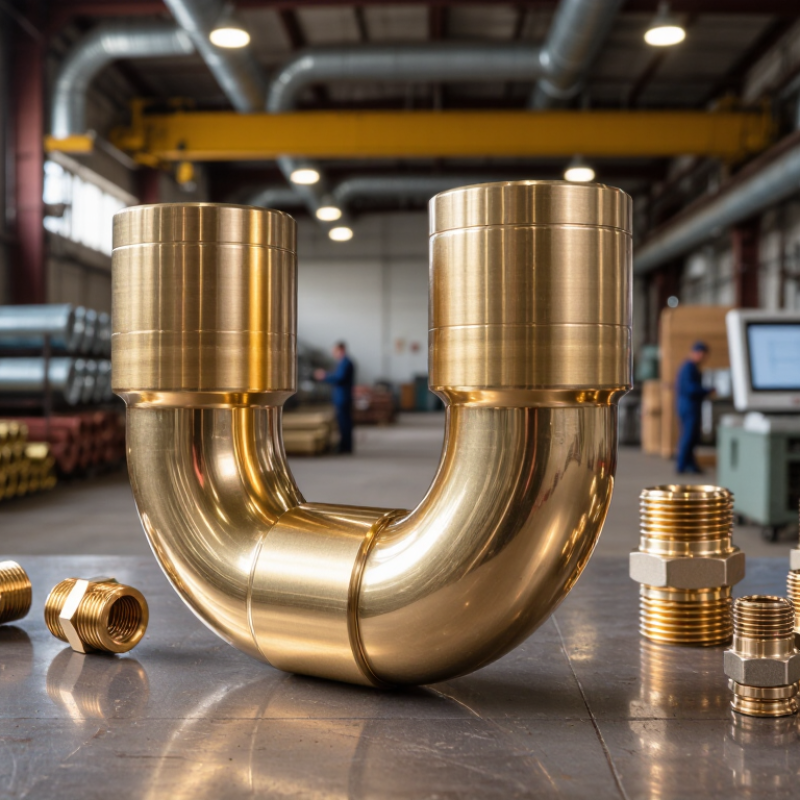
Brass Composition: UNS C26000 Contains 70% Copper and 30% Zinc
Why Choose Brass Pipe for Global Industrial Projects?
Brass Composition: UNS C26000 Contains 70% Copper and 30% Zinc
UNS C26000, commonly called cartridge brass, contains 70% copper and 30% zinc. This balanced composition gives the alloy useful strength, formability, and corrosion resistance. Copper supports thermal conductivity and helps brass perform in many water and air systems. Zinc increases hardness and improves manufacturing efficiency. The result is a practical material for shaped pipe sections and moderate-pressure components.
Fabrication teams value C26000 because it can be formed with relatively consistent results. It also offers a clean, familiar surface for inspection. In workshops, its warm yellow color can help workers identify the material quickly, although color alone is never reliable verification. Chemical analysis and certified material records remain important for international projects.
The alloy is not suitable for every service. Aggressive chemicals, high temperatures, or demanding pressure cycles may require another brass grade or a different alloy family. That assumption can fail.
Engineers should check fluid compatibility, wall thickness, joining methods, and local project standards before approval. Copper and zinc proportions affect performance, but the pipe design matters just as much. C26000 may support efficient installation, yet poor threading, contamination, or incorrect support can still cause early leakage. Careful inspection makes its advantages more dependable across varied industrial environments.
Why Choose Brass Pipe for Global Industrial Projects?
UNS C26000 cartridge brass has a nominal composition of 70% copper and 30% zinc. This copper-zinc balance provides a practical combination of strength, ductility, machinability, and corrosion resistance for industrial piping and formed components.
Global Standards: ASTM B43 Covers Seamless Brass Pipe from NPS 1/8 to 12
Why Choose Brass Pipe for Global Industrial Projects?
ASTM B43 provides a recognized reference for seamless red brass pipe in global procurement. It covers standard sizes from NPS 1/8 through NPS 12. This range supports small instrument lines, utility connections, and larger industrial piping systems. Seamless construction removes a welded longitudinal seam, which can simplify inspection and reduce one potential weakness in demanding service.
The specification addresses key requirements such as chemical composition, dimensions, mechanical properties, and testing. It also gives buyers a common technical language across different countries. That matters when drawings, purchase orders, and inspection reports cross several time zones. However, ASTM B43 does not replace engineering design or local installation rules. Service temperature, pressure, fluid chemistry, joining method, and corrosion exposure still require separate review.
Details matter. NPS is a nominal size, not a direct measurement of outside diameter. A half-inch pipe does not necessarily measure 0.500 inches outside. Confirm the required wall thickness, end preparation, length, and dimensional tolerances before ordering. Request material certificates and verify heat or lot traceability during receiving inspection. A clean surface can still hide a dimensional problem. I have seen specifications appear complete while omitting the actual pressure basis. That omission deserves attention. ASTM B43 may fit the material and size requirement, yet another standard or project document may govern testing, fabrication, or final acceptance.
Thermal Efficiency: C26000 Brass Conducts About 116 W/m·K at 20°C (CDA)
Why Choose Brass Pipe for Global Industrial Projects?
Thermal Efficiency: C26000 Brass Conducts About 116 W/m·K at 20°C (CDA)
C26000 brass offers useful thermal performance in industrial piping systems. CDA reference data lists conductivity near 116 W/m·K at 20°C. That value helps transfer heat through pipe walls efficiently. It can support cooling circuits, heat exchangers, hot-water lines, and temperature-controlled equipment. In a factory, this may reduce cold spots around bends and connection areas.
Thermal conductivity is only part of the engineering decision. Pipe wall thickness, flow speed, fluid temperature, and joint design also influence real performance. A clean, properly fitted surface improves heat transfer. Poor contact can waste the advantage. Small details matter.
C26000 brass also provides practical strength and corrosion resistance for many service environments. It is workable during cutting, bending, and installation, which can simplify field adjustments. However, it should not be treated as universally suitable. Chloride exposure, water chemistry, pressure cycles, and galvanic contact require careful review. The 116 W/m·K figure is a reference point, not a guaranteed site result. Engineers should confirm current material data, operating conditions, and applicable standards before specifying the pipe. Some early assumptions may need correction.
Water Safety: NSF/ANSI 61 Sets Health Limits for Brass Components
Why Choose Brass Pipe for Global Industrial Projects?
Water safety begins where metal meets water. Brass remains useful in industrial piping because it is strong, machinable, and resistant to many service conditions. Yet its composition demands careful control. Lead and other metals can migrate from wetted surfaces, especially when water remains stagnant or becomes unusually acidic.
NSF/ANSI/CAN 61 evaluates contaminant extraction from drinking-water system components under defined laboratory conditions. Its limits are based on health-risk assessments, not appearance or material reputation. In the United States, the Safe Drinking Water Act defines lead-free plumbing as a maximum weighted average of 0.25% lead across wetted surfaces. That figure is a design requirement, not proof that every installation performs identically.
The World Health Organization’s Guidelines for Drinking-water Quality set a provisional lead guideline of 0.01 mg/L and a copper guideline of 2 mg/L. These values show why alloy selection, surface condition, and water chemistry must be reviewed together. A compliant brass component should carry appropriate NSF/ANSI 61 evidence, while engineers should also verify pressure ratings, joining methods, and installation conditions.
A certificate is not the whole answer. Stagnation, low pH, temperature, and poor flushing can change field results. That limitation matters. Project teams should request current test documentation and traceable material information, then assess the actual water profile. Brass can support global projects, but only when safety is engineered into the complete system.
Project Selection: Match Pressure, Diameter, and Wall Thickness to ASME Standards
Brass pipe suits many global projects because it combines machinability, corrosion resistance, and dependable dimensional control. The International Copper Study Group forecast refined copper production near 26.5 million tonnes in 2024. That scale supports a mature, widely traded material supply chain. However, availability does not prove suitability.
Selection begins with pressure and temperature. ASME B31.3 requires engineers to establish design pressure, operating temperature, allowable stress, joint efficiency, and corrosion allowance. These values determine the required wall thickness. ASTM B43 covers seamless red brass pipe, while ASTM B135 covers seamless brass tube. Their dimensional tables should not be treated as automatic ASME approval. The engineer must confirm the material specification and allowable stress at the project temperature. Small mistakes matter.
Diameter must match flow demand, velocity limits, and connection geometry. A larger bore can reduce pressure loss, but it may increase weight and cost. Wall thickness also affects threading, joining, vibration resistance, and future corrosion allowance. ASME B16.5 helps coordinate compatible flanges, but it does not replace pressure design calculations. I would not select a nominal size from a supplier table alone. Review the material certificate, test pressure, dimensional tolerance, and traceability records. Then check the complete calculation against the governing ASME code and local project requirements. Published data guides the decision; field conditions decide whether the design remains credible.
Why Choose Brass Pipe for Global Industrial Projects? – Project Selection: Match Pressure, Diameter, and Wall Thickness to ASME Standards
Reference dimensions are typical ASTM B43 seamless red brass pipe dimensions. Confirm the applicable edition, material grade, manufacturing tolerance, and project specification before procurement.
| Nominal Pipe Size (NPS) |
Outside Diameter
(in / mm) |
Typical Nominal Wall
(in / mm) |
Approx. Internal Diameter
(in / mm) |
Selection Consideration |
Relevant Code or Standard |
| 1/2 |
0.840 / 21.34 |
0.083 / 2.11 |
0.674 / 17.12 |
Suitable for compact instrument, utility, and low-flow process branches where velocity and pressure loss are acceptable. |
ASTM B43; design review under ASME B31.3 where applicable |
| 1 |
1.315 / 33.40 |
0.109 / 2.77 |
1.097 / 27.86 |
A practical size for general plant services; verify flow capacity, allowable velocity, and thermal expansion. |
ASTM B43; ASME B31.3 for process piping design |
| 2 |
2.375 / 60.33 |
0.154 / 3.91 |
2.067 / 52.50 |
Balances flow capacity and material usage for medium-duty industrial distribution lines. |
ASTM B43; ASME B16.22 for compatible solder-joint fittings |
| 3 |
3.500 / 88.90 |
0.216 / 5.49 |
3.068 / 77.93 |
Useful for higher-volume services; check support spacing, pressure drop, joining method, and installation loads. |
ASTM B43; ASME B31.3; fitting standard must match the connection type |
| 4 |
4.500 / 114.30 |
0.237 / 6.02 |
4.026 / 102.26 |
Appropriate only when the selected brass alloy, wall design, joining system, and project economics satisfy the service conditions. |
ASTM B43; ASME B31.3; ASME B16.5 where flanged joints are specified |
Pressure and wall-thickness note: ASME B31.3 does not assign one universal pressure rating to every brass pipe size. The required wall thickness must be calculated from design pressure, design temperature, allowable stress for the selected alloy, corrosion or erosion allowance, weld or joint efficiency where applicable, and mechanical loads. Do not select a pipe from nominal wall thickness alone.
Project Selection Checklist
- Define design pressure, operating pressure, design temperature, fluid composition, and operating cycle.
- Select the brass or copper-alloy material specification and verify its allowable stress at the design temperature.
- Size the internal diameter for required flow rate, velocity limits, and allowable pressure drop.
- Calculate minimum required wall thickness under the applicable ASME piping design rules and add the specified allowance.
- Match fittings and joints to the pipe dimensions; ASME B16.22 covers wrought copper and copper-alloy solder-joint fittings, while other connection types require their applicable standards.
- Check local regulatory requirements, potable-water restrictions, fire-code requirements, and compatibility with the conveyed medium before final approval.
Dimensional basis: Outside diameters and nominal wall examples are shown in both U.S. customary and metric units for international project coordination. Approximate internal diameter is calculated as outside diameter minus twice the nominal wall and should not replace the manufacturer’s certified dimensional data.